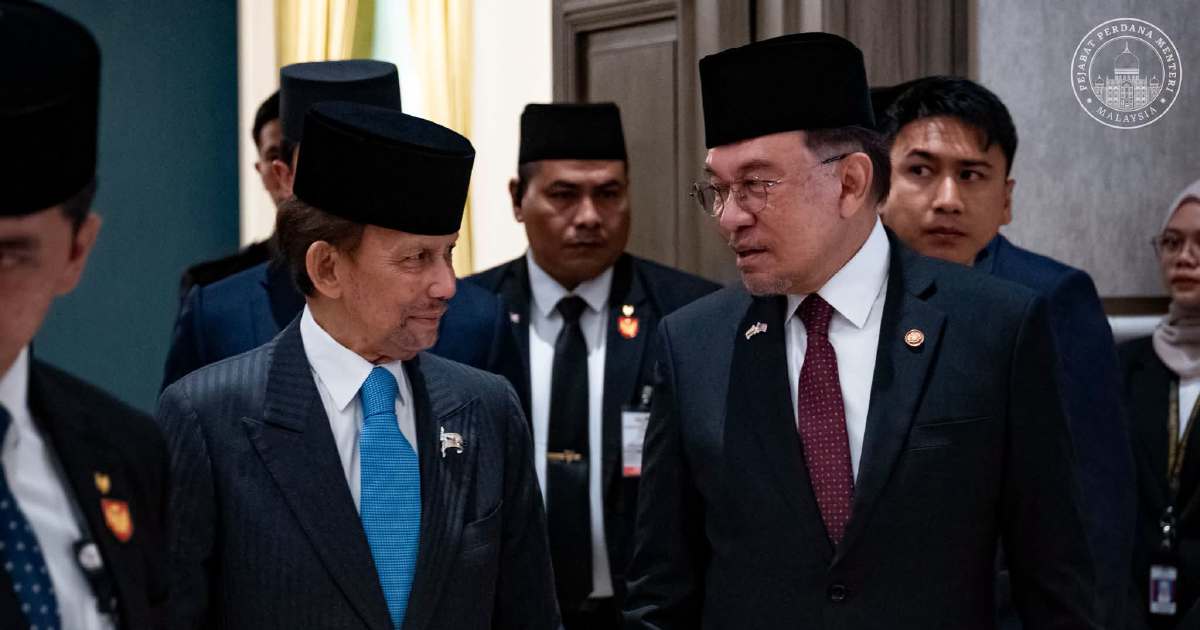
Prime Minister Datuk Seri Anwar Ibrahim is preparing to travel to Bandar Seri Begawan next week for the 27th Annual Leaders' Consultation with Brunei Sultan Hassanal Bolkiah, marking another important diplomatic engagement in Malaysia's ongoing commitment to deepening ties with its regional neighbours.
The scheduled bilateral summit represents a continuation of the high-level dialogue framework that has defined Malaysia-Brunei relations for nearly three decades. The Annual Leaders' Consultation mechanism, established to foster direct engagement between the heads of government and monarchy, has evolved into a cornerstone of bilateral diplomacy, allowing both nations to address strategic issues, economic cooperation, and regional concerns at the highest level.
Malaysia and Brunei share a complex relationship rooted in shared maritime boundaries, overlapping economic interests, and complementary roles within the Association of Southeast Asian Nations. The two countries maintain regular high-level contacts, though historical territorial disputes and resource competition have occasionally created tension. These consultation meetings provide structured forums for resolving outstanding issues while identifying new opportunities for collaboration.
The timing of Anwar's visit comes as Malaysia navigates significant economic and diplomatic challenges in the region. Brunei, as a small but resource-rich nation with significant sovereign wealth, offers Malaysia opportunities for investment partnerships and economic diversification. The sultanate's strategic location along key shipping routes and its energy resources make it an important interlocutor for Malaysian policymakers concerned with regional stability and economic prosperity.
Bilateral trade between Malaysia and Brunei, while modest compared to Malaysia's overall trade volumes, has shown resilience and growth potential. Both countries recognise the importance of strengthening commercial ties, particularly in areas such as financial services, infrastructure development, and technology transfer. The leaders' consultation provides an opportunity to explore fresh avenues for economic engagement beyond traditional sectors.
Energy cooperation remains a critical dimension of Malaysia-Brunei relations. Brunei's liquefied natural gas exports represent a significant portion of its economic output, and Malaysia has maintained steady demand for energy imports. Any discussions regarding long-term supply agreements or pricing mechanisms would have implications for Malaysia's energy security and economic planning. Regional tensions affecting global energy markets make stable bilateral energy partnerships increasingly valuable.
The summit will likely touch on broader ASEAN matters and coordinated approaches to regional challenges. Malaysia and Brunei both hold stakes in promoting ASEAN unity and effectiveness at a time when the bloc faces pressures from great power competition and transnational issues including maritime security, climate change, and pandemic preparedness. The leaders may discuss strategies for advancing shared ASEAN interests on the international stage.
Anwar's diplomatic calendar reflects Malaysia's multi-faceted foreign policy approach, balancing relations with major powers while prioritising engagement within Southeast Asia. Regular consultations with neighbouring leaders demonstrate Malaysia's commitment to regional stability and its understanding that sustainable development depends on peaceful and prosperous surroundings. Such high-level visits also signal to international partners that Malaysia remains actively engaged in shaping regional outcomes.
The visit also provides an opportunity for the two governments to address any bilateral grievances or misunderstandings that may have accumulated since the previous consultation. Diplomatic mechanisms like these serve as safety valves for managing tensions and maintaining channels of communication even when disagreements arise. This is particularly important for nations sharing porous borders and overlapping economic zones.
From Brunei's perspective, hosting Malaysia's Prime Minister at the consultation reinforces the sultanate's standing as a significant regional player despite its small population and territory. The event demonstrates that even smaller nations can exercise considerable diplomatic influence when they maintain constructive relationships with larger neighbours. It also reflects Brunei's strategic positioning as a bridge between Malaysia and other regional powers.
The 27th Annual Leaders' Consultation will be closely watched by regional observers and businesses seeking signals about the trajectory of Malaysia-Brunei relations. The outcomes and tone of the meeting could influence perceptions of bilateral stability, affecting investment decisions and cross-border commerce. In the context of broader Southeast Asian dynamics, a successful and substantive consultation contributes to regional confidence and predictability.
Looking forward, Malaysia and Brunei face opportunities to deepen cooperation in emerging areas such as digital economy, renewable energy transitions, and cybersecurity. The leaders' meeting provides a natural occasion to assess progress on ongoing initiatives and launch new collaborative frameworks that reflect evolving regional challenges and opportunities. Such forward-looking discussions are essential for ensuring that bilateral relations remain relevant and mutually beneficial as both nations pursue their respective development agendas.

