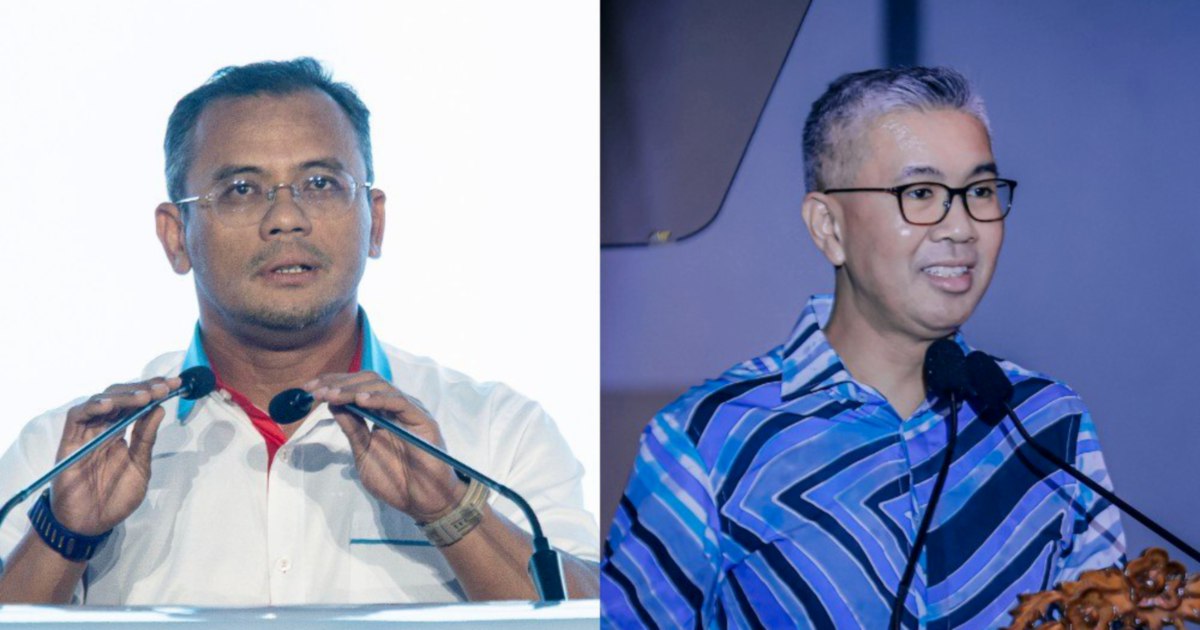
In a significant organisational reshuffle announced during a gathering in Melaka, PKR president Datuk Seri Anwar Ibrahim has appointed Selangor Menteri Besar Amirudin Shari to the pivotal role of party election director, while simultaneously designating Tengku Zafrul Aziz as coordinator within the Prime Minister's Office. The dual announcements underscore leadership transitions within Malaysia's ruling coalition ahead of the anticipated general election cycle.
Amirudin Shari's appointment to oversee PKR's electoral operations represents a consolidation of responsibilities that reflects his growing influence within the party structure. As the Menteri Besar of Selangor, Malaysia's most economically developed state and a crucial battleground in national elections, Amirudin brings ground-level campaign experience and substantial control over party machinery at the state level. His elevation to this national election coordinating position signals PKR's confidence in his ability to orchestrate voting strategies across multiple constituencies, particularly in peninsular strongholds where the party contests fiercely for parliamentary seats.
The appointment of Tengku Zafrul Aziz to the Prime Minister's Office coordination portfolio adds another layer to this restructuring. Tengku Zafrul, formerly heading Malaysia's financial sector through his tenure at Bank Negara Malaysia and Bank Pembangunan dan Infrastruktur Malaysia, brings technical expertise and administrative acumen to the premier's office. This placement positions him to coordinate policies and initiatives originating from the highest executive level, potentially involving portfolio management across multiple ministerial departments and government agencies.
Anwar's decision to grant full mandate to vice-president Datuk Seri Saifuddin Nasution Ismail to assume duties of deputy president consolidates internal hierarchy within the party. Saifuddin Nasution, who previously held the Human Resources Minister portfolio, brings institutional experience across governmental and party structures. His formal elevation clarifies the succession chain and removes ambiguity regarding who manages party operations during the president's absences or when the president focuses on prime ministerial responsibilities.
These moves carry implications for PKR's organisational coherence as it navigates dual roles—functioning simultaneously as the largest component of the ruling coalition's political machinery and as the nation's dominant parliamentary party. Amirudin's election directorship allows PKR to leverage his Selangor base while coordinating efforts in other regions where the party contests. This geographical diversity in campaign strategy becomes crucial given Malaysia's complex electoral mathematics, where even modest seat losses in federal elections can significantly alter coalition mathematics.
The restructuring also addresses succession planning concerns within PKR. By explicitly designating roles and responsibilities, Anwar establishes clear institutional frameworks that reduce factional tensions over authority and resource allocation. This bureaucratic clarity proves particularly valuable in large political parties where ambiguity frequently generates internal rivalry and undermines campaign effectiveness. By defining who manages elections and who coordinates with government institutions, Anwar minimises opportunities for competing power centres to emerge during electoral campaigns.
For Malaysian observers and regional analysts, these appointments demonstrate how dominant coalition parties maintain organisational flexibility while pursuing governance objectives. Tengku Zafrul's placement in the PMO suggests administration focus on coordinating policy implementation across government, while Amirudin's election role maintains PKR's capacity to mobilise supporters and contest parliamentary seats aggressively. The two positions, while distinct, support complementary objectives—one emphasising governmental performance, the other emphasising electoral competitiveness.
The timing of these announcements warrants consideration. Malaysia's political calendar remains fluid, with analysts debating the optimal timing for calling national elections. By clarifying internal leadership positions now, Anwar positions PKR to respond rapidly when electoral opportunities emerge. Having election machinery clearly under Amirudin's oversight enables faster mobilisation compared to scenarios involving prolonged internal negotiation over responsibility allocation.
For Southeast Asian political observers, these moves illustrate how Malaysia's dominant coalition governs amid competing demands. Unlike systems with rigid fixed electoral cycles, Malaysian prime ministers retain flexibility regarding election timing. This flexibility generates ongoing internal calculations about readiness—organisational, financial, and political. These appointments demonstrate Anwar's assessment that PKR's internal structures should now crystallise into forms capable of supporting electoral action within the near-to-medium term.
Saifuddin Nasution's deputy president role carries additional significance given PKR's parliamentary dominance. As deputy, he becomes responsible for managing party discipline, coordinating among the party's parliamentary caucus, and handling internal grievances. This position requires careful navigation of relationships between senior party figures and emerging talents competing for advancement. Saifuddin's background in human resources management equips him with skills for such personnel-intensive work.
The announcements also reflect Anwar's leadership style—delegating specific operational domains to trusted lieutenants while maintaining presidential authority over strategic direction. By assigning election oversight to Amirudin and PMO coordination to Tengku Zafrul, Anwar creates an administrative structure enabling him to concentrate on coalition management and national policy formation. This division of labour, common in successful coalition governments, distributes workload across capable subordinates while preserving unified strategic vision.
Looking forward, these restructuring decisions will shape how PKR campaigns during upcoming electoral contests and how the party manages governmental responsibilities. Amirudin's election directorship will likely influence candidate selection, campaign resource allocation, and coalition negotiations regarding seat division with Amanah and DAP. Simultaneously, Tengku Zafrul's PMO role positions him to ensure coherence between electoral promises made during campaigns and actual governmental implementation post-election—a frequently neglected connection that critics highlight when coalition governments disappoint voter expectations.

