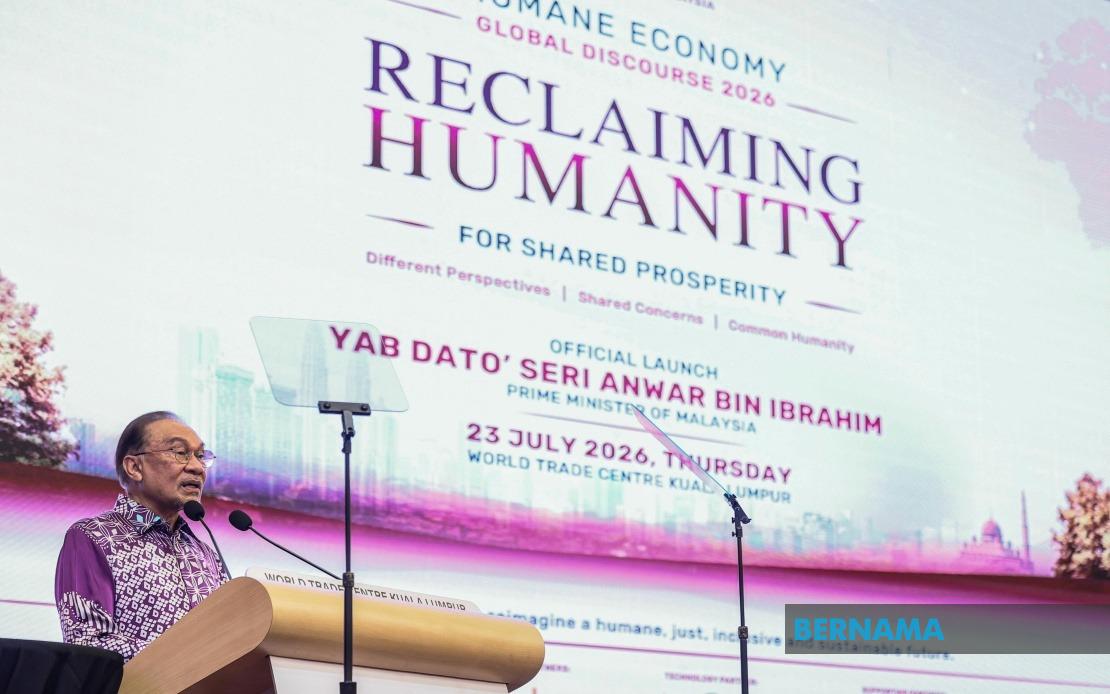
Prime Minister Datuk Seri Anwar Ibrahim has signalled that the long-awaited final report from the Royal Commission of Inquiry into Tabung Haji is poised for public release in the coming days, marking a significant moment in the government's accountability on the nation's Islamic pilgrimage fund. Speaking at the launch of the Humane Economy Global Discourse 2026 in Kuala Lumpur on July 23, Anwar underscored the administration's commitment to transparency while acknowledging procedural requirements that may govern the disclosure process.
The timing of the disclosure hinges on a technical consideration regarding Cabinet approval protocols. Anwar stated he would seek guidance from Chief Secretary to the Government Tan Sri Shamsul Azri Abu Bakar to determine whether Cabinet referral is mandatory before releasing the RCI's conclusions. This procedural consultation reflects the government's caution in handling findings that touch on sensitive governance matters and institutional accountability. The Prime Minister's conditional framing—suggesting he could release the report today if no Cabinet submission is required, or by Wednesday if formal approval is necessary—demonstrates his eagerness to move swiftly while respecting established governmental conventions.
The decision to proceed with publication carries symbolic weight beyond mere administrative procedure. By explicitly tying the release decision to public interest and citizens' right to information, Anwar has positioned transparency as a governing principle of his administration. This rhetorical emphasis responds to long-standing calls from civil society, affected contributors, and parliamentary critics who have pressed for clarity on what transpired at Tabung Haji and how thoroughly institutional failures were investigated. The RCI's establishment itself represented acknowledgment that the fund's difficulties warranted independent, high-level scrutiny—a benchmark that now demands corresponding candour in presenting findings.
Tabung Haji's financial troubles have been a matter of public concern for several years, with the fund facing substantial losses that threatened the savings of hundreds of thousands of Malaysian Muslim pilgrims and their families. The Royal Commission was tasked with investigating the root causes of the fund's deterioration, examining governance lapses, investment decisions, and management accountability. The scope of such an inquiry inevitably encompasses politically sensitive dimensions, from Board-level decisions to potential lapses in oversight by relevant authorities. The fund's recovery trajectory since the crisis emerged has become a proxy indicator of whether systemic reforms have taken root, making the RCI report's recommendations potentially consequential for institutional design across Malaysia's Islamic financial ecosystem.
For Malaysian pilgrims and their families, the RCI report represents an opportunity to understand not only what went wrong but also whether proposed remedies address root causes or merely surface symptoms. Tabung Haji contributors span the economic spectrum, from middle-class professionals to lower-income Malaysians for whom the fund represents a crucial savings instrument. The loss of confidence in such a foundational institution carries ripple effects through communities nationwide. Public access to the RCI's detailed analysis and recommendations therefore serves multiple constituencies: it validates the integrity of the inquiry process, demonstrates that accountability mechanisms function in Malaysia, and provides a factual foundation for informed debate about necessary reforms.
The government's framing of the release decision also reflects broader governance trends in Anwar's administration. Since assuming office, the Prime Minister has made selective appeals to transparency and public accountability, positioning his government as a departure from predecessors marked by opacity and institutional self-protection. However, such positioning requires consistent follow-through; delayed or redacted disclosures risk undermining credibility. The apparent urgency—the reference to possible same-day release if bureaucratic pathways permit—suggests the administration recognises that further deferral would damage its reformist narrative and invite renewed scepticism about its commitment to institutional accountability.
The Humane Economy Global Discourse forum where Anwar made these remarks itself contextualises the RCI announcement. The HEGD platform emphasises ethical governance and inclusive economic development, themes that align rhetorical support for transparency regarding Tabung Haji's failings. The juxtaposition is deliberate: a government invoking humane, accountable economic principles cannot indefinitely withhold findings from a major institutional inquiry affecting millions of citizens. This framing creates implicit pressure on the administration to deliver substantive findings and credible recommendations, rather than a whitewashed account that protects institutional or individual reputations at citizens' expense.
For regional observers, Malaysia's handling of the Tabung Haji RCI represents a test case in how a Muslim-majority democracy manages institutional failure within Islamic financial structures. Several Southeast Asian nations have established Islamic pension and pilgrimage funds modelled partially on Tabung Haji's original architecture, making the Malaysian experience instructive. If the RCI report identifies governance weaknesses that transcend Malaysia's specific context, findings could inform regulatory frameworks across the region. Conversely, if the report glosses over systemic vulnerabilities or assigns blame narrowly to individual actors, it may signal to other nations that institutional self-interest supersedes accountability within Islamic financial governance.
The Chief Secretary to the Government's forthcoming consultation with the Prime Minister carries procedural weight but also represents a decision point with symbolic implications. Should Cabinet approval be deemed necessary, the deliberation process itself becomes public property—if not formally then through inevitable parliamentary questioning and media analysis. Cabinet members may face pressure to justify any reluctance to release findings, or conversely, to explain their enthusiasm for disclosure. This transparency-by-necessity creates its own accountability mechanism, even before the RCI report enters public discourse. The mechanics of governmental process thus become inseparable from the substance of the disclosure decision.
Anwar's explicit invocation of the public's right to know strikes a populist tone while grounding the release decision in democratic principle rather than mere administrative convenience. This rhetorical move matters because it establishes a frame within which subsequent critique will operate. If the released report emerges as thin, evasive, or protective of high-ranking officials, critics can invoke the Prime Minister's own language about public entitlement to information. Conversely, if the report demonstrates thoroughness, specificity, and candid institutional analysis, Anwar can claim vindication of his transparency commitment. The stakes are thus as much about the administration's credibility and governance narrative as about the actual RCI findings themselves.
The imminent release of the Tabung Haji RCI report marks a potential watershed in Malaysia's accountability ecosystem. Public institutions across the country monitor how the government handles institutional inquiries with reputational implications. A credible, transparent release sets precedent for how future investigations into sensitive governance failures will be managed. Conversely, a guarded, partial disclosure risks signalling that institutional self-protection remains embedded in Malaysia's governance logic, regardless of reform rhetoric. For Anwar's administration, now in its second year, the report's release will be read as an indicator of whether its accountability promises have substance or serve primarily as political performance.

