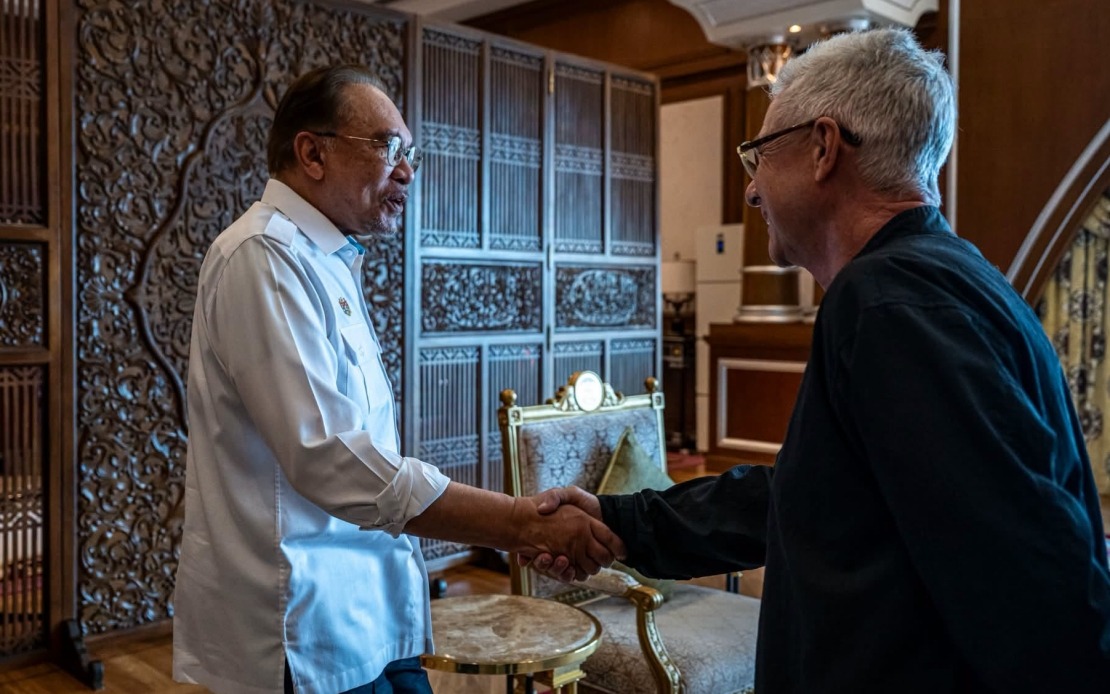
Prime Minister Datuk Seri Anwar Ibrahim has consulted with Singapore Grand Prix Executive Director Michael Roche on strategies for successfully hosting the Formula 1 Gulf Air Bahrain Grand Prix at Sepang International Circuit, scheduled for October 2 to 4, 2026. The high-level engagement signals Malaysia's determination to leverage international expertise in delivering a major sporting spectacle that could reshape the country's economic prospects and regional standing in motorsports.
The meeting, disclosed through Anwar's social media statement, represents a pragmatic approach to event management. Rather than operating in isolation, Malaysia is drawing on Singapore's proven track record in hosting the Singapore Grand Prix—one of Formula 1's marquee nocturnal races and a consistent generator of substantial tourism and investment returns. By examining the city-state's operational frameworks and organisational methodologies, Malaysia aims to avoid costly missteps and replicate elements that have made Singapore's event a global success story.
According to Anwar, the initiative is framed as part of Malaysia's broader economic ambitions. The Bahrain Grand Prix is projected to trigger meaningful spillover effects across multiple sectors: tourism arrivals are expected to spike, particularly among high-spending international visitors; employment opportunities in hospitality, logistics, security, and event management should proliferate; and related business activities centring on motorsports, entertainment, and premium services could accelerate investor interest in Malaysia as a regional hub for major events. These economic indicators form a crucial component of Malaysia's Visit Malaysia 2026 campaign, which targets record arrivals and international spending.
The venue itself carries symbolic weight in Malaysian motorsports history. Sepang International Circuit hosted the Malaysian Grand Prix consecutively from 1999 to 2017, a tenure that established the circuit as a recognised fixture on the Formula 1 calendar and generated considerable pride in automotive engineering and sports tourism. The race's departure in 2017 reflected a sobering reality: rising hosting costs and escalating licensing fees had rendered the event financially unsustainable under Malaysia's previous cost-benefit calculations. For nearly a decade, the circuit operated without F1 racing, a period that saw other Southeast Asian venues contemplate their own grand prix ambitions.
The Bahrain Grand Prix's relocation to Sepang is itself a consequence of geopolitical instability in West Asia. The race was originally scheduled for the Bahrain International Circuit in April 2026 but has been postponed to October following escalating tensions affecting the region's stability and international confidence in travel arrangements. This pivot presents Malaysia with a fortuitous opportunity: the rescheduling allows Sepang to reclaim its position on motorsports' most prestigious calendar and positions the circuit as a reliable, secure alternative venue capable of attracting the global F1 ecosystem at short notice.
The collaboration between Malaysia and Bahrain underlying this arrangement represents a novel partnership model within Formula 1 governance. Rather than a straightforward transfer, the race maintains its identity as the Bahrain Grand Prix whilst being held at a Malaysian venue. This framework may reflect broader negotiations between the FIA, Formula 1 management, and both governments concerning event flexibility, cost-sharing, and regional motorsports development. For Malaysia, it signals a willingness on the part of F1 authorities to recognize Sepang's capabilities and Malaysia's strategic importance within the Asian motorsports landscape.
Anwar's public commitment—"we are committed to ensuring that this event not only meets international standards but also strengthens Malaysia's position as a regional motorsports hub"—articulates a two-fold objective. First, the prime minister is staking the government's credibility on delivering a world-class event that satisfies Formula 1's notoriously stringent logistical and safety requirements. Second, he is positioning the 2026 race as a catalyst for repositioning Malaysia within Southeast Asia's sporting infrastructure hierarchy, competing implicitly with Singapore and Thailand for recognition as a premier events destination.
The consultation with Michael Roche and Singapore's operational apparatus carries practical implications. Singapore's Grand Prix, held annually in September, has evolved a sophisticated model for managing traffic disruptions, accommodating hundreds of thousands of international spectators, ensuring security across an urban circuit, and generating ancillary economic activity in hospitality and entertainment. The race also demonstrates how F1 can be marketed as an aspirational brand experience, attracting corporate sponsors and affluent visitors willing to pay premium prices for access. Malaysia's event planners will likely examine these mechanisms closely.
For the broader Malaysian context, this initiative reflects an administration increasingly confident in leveraging major international events as economic and diplomatic instruments. The Bahrain Grand Prix represents more than a sporting fixture; it embodies Malaysia's capacity to manage complex international logistics, uphold security standards acceptable to global stakeholders, and generate economic multiplier effects across tourism, hospitality, and related sectors. Success would validate Malaysia's positioning as a credible host nation capable of competing for other high-profile sporting and cultural events.
The timeline is notably compressed. With the race scheduled for October 2026, Malaysia has approximately 14 months to complete preparations—a demanding schedule that makes benchmarking against Singapore's experience even more critical. The consultation suggests that relevant Malaysian authorities—likely involving the Ministry of Transport, the Sepang International Circuit management, and event coordination bodies—are mobilising resources and expertise with appropriate urgency.
Looking forward, the 2026 Bahrain Grand Prix at Sepang will represent a test of Malaysia's capacity to deliver premium international events in an era of heightened security consciousness and elevated spectator expectations. The economic forecasts emphasizing tourism, employment, and investor confidence hinge on flawless execution. Anwar's engagement with Singapore's leadership reflects an understanding that successful major events demand institutional learning, inter-jurisdictional knowledge-sharing, and meticulous planning. If Malaysia executes this endeavour effectively, it may catalyse interest from Formula 1 in maintaining a permanent Malaysian presence on future calendars—a prospect that would solidify the nation's motorsports credentials for decades ahead.

