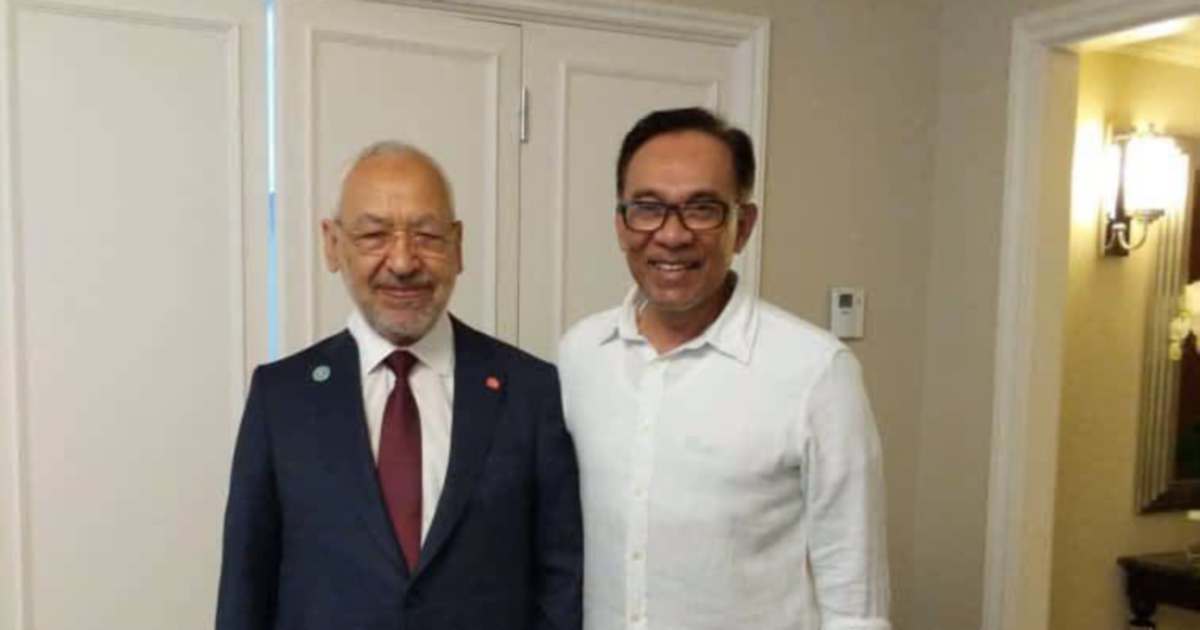
Prime Minister Datuk Seri Anwar Ibrahim has stepped into a delicate international dispute by formally appealing to Tunisian President Kais Saied for the release of prominent political figure Sheikh Rached Ghannouchi. The appeal, delivered through official diplomatic channels via letter, marks Malaysia's engagement with a contentious political situation unfolding in North Africa that carries broader implications for Muslim-majority nations navigating questions of governance, religious leadership, and due process.
Ghannouchi's detention has become a focal point of international attention and concern, particularly among regional observers who view the case through the lens of religious freedom and political pluralism. The Ennahda Movement founder and former parliamentary speaker has faced legal proceedings that have drawn scrutiny from various quarters of the global community, with questions raised about the transparency and fairness of the judicial process. Malaysia's direct diplomatic intervention suggests a growing regional consensus that the matter warrants high-level political consideration beyond strictly bilateral Tunisian affairs.
Anwar's humanitarian framing of the appeal reflects a strategic diplomatic approach that emphasises universal human rights principles rather than questioning Tunisia's sovereign legal authority. This language choice allows Malaysia to voice concern without appearing to challenge national sovereignty or interfere in domestic judicial processes. By grounding the appeal in compassion and dignity rather than legal technicalities, Anwar positions the plea as compatible with international norms while respecting Tunisia's independence in governance matters.
The letter represents a deliberate signal from Kuala Lumpur regarding Malaysia's broader foreign policy orientation. Under Anwar's leadership, the country has sought to strengthen ties with nations across the Muslim world while maintaining Malaysia's commitment to democratic principles and rule of law. This balance reflects the complexities facing any Muslim-majority democracy attempting to serve as a bridge between different governance philosophies and regional interests without compromising core values.
Tunisia's political situation has evolved considerably since its 2011 revolution, which initially positioned the country as a beacon of democratic progress in the Arab world. However, subsequent years witnessed intensifying friction between different political actors and constitutional bodies. President Saied's consolidation of executive power through significant constitutional amendments and the suspension of parliament have sparked regional and international debate about the trajectory of Tunisian democracy. Ghannouchi's case sits at the intersection of these broader political currents.
For Malaysian audiences, Anwar's intervention carries particular resonance given the domestic context. Malaysia itself has historically grappled with questions about balancing Islamic governance with pluralistic democracy, and the country's experience with political detention and judicial proceedings informs how Malaysian leaders view comparable situations abroad. The appeal reflects Anwar's personal commitment to principles of justice and procedural fairness that have defined his own political narrative, particularly following his earlier experiences with the Malaysian judiciary.
Regionally, the move signals that Southeast Asian Muslim nations remain attentive to developments affecting Islamic leadership figures across the broader Muslim world. While Malaysia does not typically intervene in North African affairs with the frequency it engages with Southeast Asian or South Asian issues, strategic concerns about precedent and principle sometimes motivate diplomatic initiatives that span continents. The appeal suggests that Anwar's administration views the Ghannouchi case as potentially consequential for broader patterns of political justice in Muslim-majority democracies.
The humanitarian angle of Anwar's appeal carries practical implications beyond symbolic messaging. By emphasising compassion and human dignity, the letter opens diplomatic space for Tunisian leadership to modify its position without appearing to capitulate to foreign pressure or abandon legal processes. Such language proves valuable in international diplomacy when addressing sensitive domestic matters in other nations, allowing governments to adjust course while maintaining face and demonstrating responsiveness to international concerns.
Tunisia's response, or lack thereof, will itself communicate important messages about President Saied's receptiveness to international appeals and his administration's views on engaging with global human rights advocacy. The diplomatic initiative from Malaysia may prove inconsequential to the ultimate outcome of Ghannouchi's case, but it contributes to an accumulated international record of concern that can influence decision-making in ways both visible and subtle.
For Malaysia specifically, the appeal underscores Anwar's positioning as a leader with credibility among diverse stakeholder communities within the Muslim world. His intervention carries weight partly because he represents a Muslim-majority nation that has maintained democratic institutions and independent judiciaries, lending his humanitarian appeals a certain gravitas rooted in lived experience with democratic governance. This soft power dimension extends Malaysia's regional influence beyond economic and security domains into the realm of political principle and moral authority.

