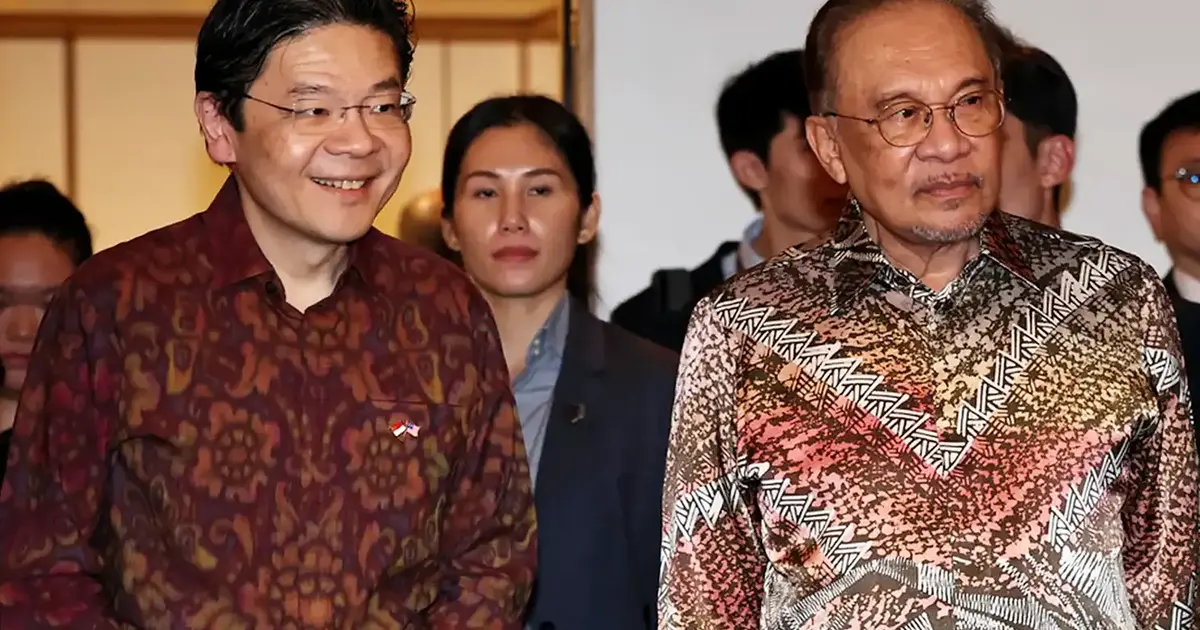
Prime Minister Anwar Ibrahim has firmly closed the door on any diplomatic initiative to facilitate Malaysian voters living and working in Singapore to return home for Johor state elections, declaring that no such request has been extended to Singapore's leadership. The clarification came as the premier fielded questions from journalists about whether he might formally approach his Singapore counterpart to enable expatriate participation in what is shaping up to be a significant electoral contest in the country's southern region.
The question itself reflects a broader concern among observers about voter participation rates in state-level polls, particularly when significant portions of the working-age population maintain employment across the border in Singapore. Johor, which shares a land border with the city-state and has deep economic ties with its northern neighbour, has become a focal point for such considerations in recent electoral cycles. The movement of workers between Malaysia and Singapore is routine and substantial, with tens of thousands crossing the Causeway daily for employment opportunities.
Anwar's position suggests the government intends to proceed with Johor elections on a standard basis without seeking extraordinary accommodations for overseas voters. This stance aligns with established electoral practices in Malaysia, where voting remains a responsibility tied to physical presence within the constituency on polling day. The prime minister's comments indicate a recognition that such special arrangements would set complex precedents and potentially require extensive bilateral negotiations that the government appears reluctant to undertake.
From Singapore's perspective, such a request would have posed diplomatic sensitivities. The city-state jealously guards its labour force policies and employment regulations, and any agreement permitting mass absences from the workplace for cross-border voting could have sparked administrative and commercial complications. Employers in Singapore's financial services and industrial sectors would have faced workforce management challenges, particularly if the arrangement extended to other neighbouring countries' elections.
The Johor electoral dynamics carry implications beyond simple voter turnout mathematics. The state remains politically significant as a PAS stronghold and a key battleground between competing coalition blocs. Strong performance in Johor carries symbolic weight at the national level, influencing perceptions of government support and legitimacy. However, the electoral outcome will ultimately be determined by votes cast within Malaysia's borders, subject to the nation's established constitutional and legislative frameworks.
Anwar's refusal to pursue such requests also reflects pragmatic political calculation. Seeking special arrangements could be portrayed by political opponents as an admission that the government expects insufficient enthusiasm among domestic voters, potentially undermining the administration's legitimacy. By proceeding without extraordinary measures, the ruling coalition presents itself as confident in its grassroots support and respectful of electoral conventions.
The issue touches on broader questions about Malaysian labour migration and diaspora engagement. While Singapore absorbs the largest share of Malaysian migrant workers, tens of thousands also work in other regional economies and beyond. Establishing precedent through special voting arrangements for Singapore could create expectations from Malaysian workers elsewhere or spark demands from other nations' diaspora communities. Malaysia's electoral commission would face administrative headaches managing such variations.
Historically, Malaysian elections have proceeded without systematic accommodation for overseas voters, though limited provisions exist for registered citizens abroad in certain circumstances. The established system prioritises the principle that electoral participation occurs within defined geographic and administrative boundaries, a framework that has governed Malaysian politics since independence. Changes to this system would require legislative action and sustained political will that current circumstances do not appear to generate.
Anwar's comments also merit attention as a window into government priorities ahead of potentially significant electoral contests. By publicly ruling out such requests, the prime minister signals to both Singapore and domestic audiences that Malaysia respects bilateral relations and established norms, while maintaining confidence that domestic electoral support remains sufficient without extraordinary measures. This diplomatic positioning serves multiple audiences simultaneously—reassuring Singapore of Malaysia's commitment to conventional bilateral relations while signalling domestic confidence to the Malaysian electorate.
The Johor situation will proceed according to Malaysia's established electoral calendar and procedures. Voters who wish to participate must arrange their presence within their registered constituencies on polling day, consistent with practices governing all state and federal elections throughout the nation. Whether turnout among registered voters meets historical averages or declines due to cross-border employment will ultimately become a footnote to whatever results emerge, but the framework for conducting the election itself remains unchanged.

