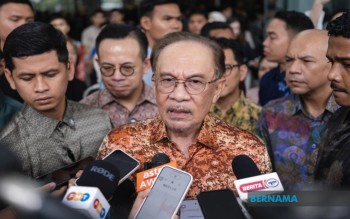
Prime Minister Datuk Seri Anwar Ibrahim has drawn a firm line in the sand on Malaysia's tax debate, ruling out any serious consideration of reverting to the Goods and Services Tax while holding the door open for targeted adjustments to the existing Sales and Service Tax regime. Speaking at the TikTok Shop Summit 2026 in Kuala Lumpur, Anwar—who doubles as Finance Minister—sought to quell speculation that has swirled for months about potential tax restructuring, making clear that protecting the financial wellbeing of ordinary Malaysians remains the government's immovable principle.
The GST question has become increasingly fraught as federal policymakers grapple with mounting fiscal pressures and the need to broaden Malaysia's tax base. Recent discussions within government circles have explored multiple revenue-raising options, ranging from levies on digital payment systems to a wholesale return to broad-based consumption taxation. Yet Anwar's comments suggest the administration will resist the most politically explosive option, recognizing that the GST triggered public anger when implemented by the previous administration and contributed to the groundswell that brought the MADANI coalition to power.
What distinguishes Anwar's position from an outright refusal to revisit tax architecture is his explicit acknowledgement that Malaysia's current SST framework may benefit from recalibration. The government, he indicated, is not locked into dogmatic defence of the status quo but rather seeks intelligent reform that could improve both tax collection efficiency and economic outcomes. This nuanced stance suggests the administration recognizes that tax policy cannot remain frozen in time, especially as Malaysia confronts demographic change, digital economy expansion, and evolving consumer behaviour.
The prime minister's reasoning reflects a political reality that shapes every major policy decision: any tax measure that disproportionately burdens low-income citizens carries existential risk for a government that rose to power partly on promises to improve living standards for ordinary Malaysians. The GST's broad-based architecture means it inevitably touches every transaction, including essential purchases by the poorest households. Anwar stressed that this fundamental characteristic makes GST incompatible with the MADANI government's redistributive mandate, effectively rendering the debate over reintroduction academic rather than genuine policy consideration.
Malaysia's experience with consumption tax structure remains fresh enough to influence current thinking. The country abandoned the GST regime in 2018 following sustained public outcry about rising living costs, a decision that resonated deeply with voters struggling with stagnant wages and mounting household expenses. That political wound shaped the electoral landscape and continues to inform how the government approaches fiscal questions. Policymakers understand that attempting to resurrect GST in any form could trigger similar backlash, potentially undermining the coalition's support base among middle and working-class voters.
Yet the fiscal challenges driving tax reform discussions remain genuine and pressing. Malaysia requires sustained revenue growth to fund infrastructure development, healthcare expansion, education improvements, and social welfare programmes that voters increasingly expect from government. The current SST framework, while politically palatable, may not generate sufficient revenue to meet these competing demands without other measures or spending adjustments. This tension between fiscal necessity and political constraints explains why Anwar emphasized willingness to explore hybrid approaches that might incorporate specific GST elements without adopting the full broad-based model.
One particularly intriguing option previously flagged involves taxation of electronic payment transactions, a mechanism that could broaden the revenue base while targeting wealth more progressively than traditional consumption taxes. Digital payment systems concentrate among middle and upper-income users, meaning such a levy would have minimal impact on the poorest segments Anwar prioritizes. The government's openness to such targeted measures suggests serious consideration of tax modernization alongside preservation of core redistributive principles, though no formal proposal has yet emerged.
For Malaysian businesses and investors, the government's current tax trajectory creates both certainty and ongoing ambiguity. The firm rejection of GST reintroduction removes a significant source of uncertainty that has haunted corporate planning, while the acknowledged openness to SST refinement keeps companies engaged with tax policy discussions. Industries sensitive to consumption taxation—retail, hospitality, and e-commerce sectors that feature prominently in Malaysia's economic diversification strategy—can proceed with greater confidence that radical restructuring will not suddenly alter their operating environment.
Regionally, Malaysia's tax policy decisions carry implications for Southeast Asian competitiveness and integration. Neighbouring economies with different tax structures create competitive dynamics that shape investment flows and business location decisions. If Malaysia maintains a comparatively lower consumption tax burden through rejection of GST while keeping SST rates stable, the country could enhance its appeal as a regional business hub, a consideration that likely factors into Anwar's calculus even if not explicitly stated.
The statement also reflects broader MADANI government messaging about economic direction and social priorities. By publicly reaffirming commitment to protecting lower-income households from increased taxation, Anwar reinforces positioning as a leader attuned to ordinary citizens' economic struggles. This framing helps differentiate the current administration from its predecessor while building political capital for decisions that may require unpopular choices elsewhere in fiscal policy—whether through expenditure reductions, efficiency improvements, or alternative revenue mechanisms.
Moving forward, Anwar's framework suggests tax reform discussions will proceed through incremental adjustment rather than systemic overhaul. The government will likely pursue modest SST reforms, explore targeted measures like digital transaction levies, and investigate administrative improvements to enhance tax collection without major structural change. This gradualist approach trades some fiscal efficiency gains for political sustainability, a calculation that appears central to how the MADANI administration balances competing economic and social imperatives. The debate over Malaysia's future tax regime, it seems, will continue evolving rather than reaching definitive resolution.

