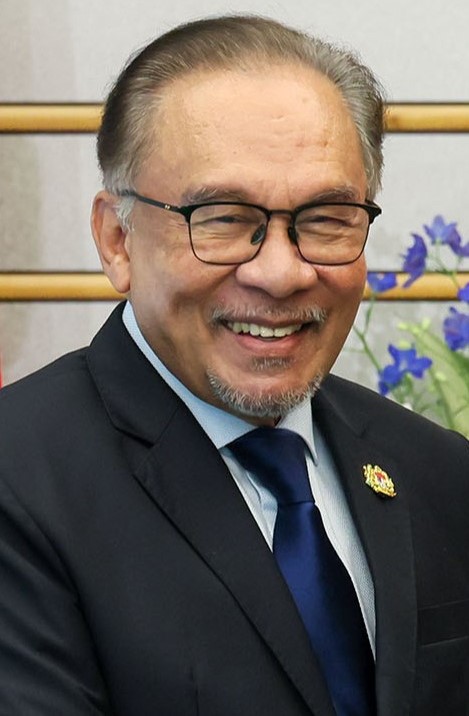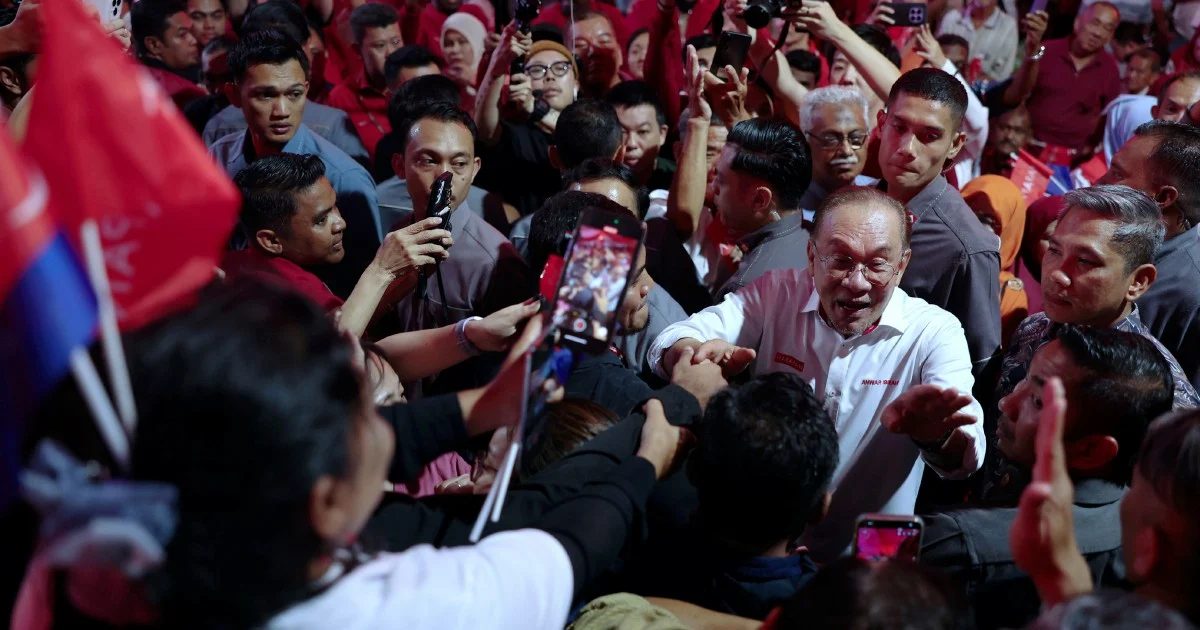
Datuk Seri Anwar Ibrahim, chairman of the Pakatan Harapan coalition, formally presented the full roster of 56 candidates contesting in the Johor state election set for July 11, marking a significant milestone in the opposition alliance's campaign preparations. The announcement took place in Tangkak, a constituency in the heart of Johor, underscoring PH's strategic focus on the state that has long been governed by Barisan Nasional and represents a critical battleground in Malaysia's evolving political landscape.
Johor's electoral importance cannot be overstated. As one of the most populous and economically significant states in Malaysia, control of its state assembly carries substantial implications for Malaysia's political direction and the balance of power at the federal level. The state has historically been a BN stronghold, with Umno maintaining strong roots in the rural and urban constituencies alike. PH's decision to field a complete slate of candidates demonstrates the coalition's serious intentions to challenge this entrenched dominance and signals confidence in its ability to mobilize voters across diverse demographic groups.
The composition of PH's candidate list carries particular significance given the coalition's evolving partnership dynamics. The coalition comprises multiple political parties including PKR, DAP, and Amanah, each bringing distinct ideological perspectives and voter bases. The balance achieved in candidate selection reflects ongoing negotiations within the coalition structure, where each component party seeks to maximize its representation while maintaining overall coalition cohesion.
Anwar's personal leadership in unveiling the candidates serves multiple political purposes. As Prime Minister and PH chairman, his direct involvement signals the federal government's commitment to the Johor campaign and demonstrates that the party views the state election as consequential rather than peripheral. Such high-level engagement helps energize grassroots supporters and signals to party machinery that resources and attention will flow toward this campaign.
The timing of the election announcement also warrants consideration. July represents the monsoon season in much of Malaysia, which can affect voter turnout and campaigning logistics. However, the scheduled date was set by the Johor state government, and PH has had to align its campaign timeline accordingly. The compressed campaign period requires efficient organization and rapid deployment of campaign machinery.
For Malaysian voters, particularly those in Johor, the election presents a choice between continuity and change. A PH victory would represent a significant realignment in state politics and could have ripple effects across the peninsula. Conversely, a BN victory would reinforce the pattern of federal government opposition facing resistance at state level, a dynamic that has characterized Malaysian politics in recent years.
The 56-candidate slate also reflects PH's assessment of where it can compete effectively. Not all state assembly seats carry equal winnability potential, and the coalition's strategic placement of candidates suggests calculations about which constituencies present genuine opportunities for breakthrough. Incumbent BN lawmakers in safe seats may face different caliber opposition compared to marginal constituencies.
From a Southeast Asian perspective, the Johor election contributes to the broader narrative of democratic competition in the region. Malaysia's transition toward more competitive multiparty politics differs markedly from the dominant-party systems in neighboring Singapore and parts of Thailand. The PH coalition's ability to sustain itself as a coherent opposition force while maintaining internal party discipline demonstrates that Malaysia's democratic institutions continue to function as platforms for genuine political contestation.
The campaign period ahead will test PH's ability to convert candidate selection into actual electoral victories. Ground organization, message discipline, and addressing specific state-level concerns regarding education, healthcare, and economic opportunity will ultimately determine the coalition's performance. The state's diverse constituencies—spanning Johor Bahru's urban sophistication, port-city Tanjung Pelepas, and rural interior areas—require tailored approaches rather than monolithic campaign messaging.
Resource allocation will prove crucial. Campaign funds, volunteer mobilization, and media coverage all depend on perceived importance and winnability. PH's decision to field a complete slate suggests sufficient confidence in its resource base, though actual resource availability may not be evenly distributed across all 56 candidates. Strong performers in opinion research likely receive disproportionate attention compared to candidates in seemingly hopeless seats.
The announcement also occurs within a broader context of Malaysia's political evolution following the 2022 federal election. The current government's performance in delivering on campaign promises and managing the economy directly influences voter perceptions in state elections. A stronger economic trajectory and visible government accomplishments strengthen PH's narrative, while economic difficulties provide ammunition for opposition messaging.
As the campaign intensifies, the identity and background of individual candidates will receive increasing scrutiny. Voters assess not merely party affiliation but also candidates' local credibility, community service records, and perceived ability to deliver constituency-level benefits. Several candidates may emerge as local heroes or face unexpected challenges based on such factors.
Ultimately, the Johor election serves as a significant bellwether for Malaysian politics heading into subsequent electoral cycles. The results will inform strategic calculations for all political parties regarding resource deployment, coalition arrangements, and messaging priorities in future elections at state and federal levels.