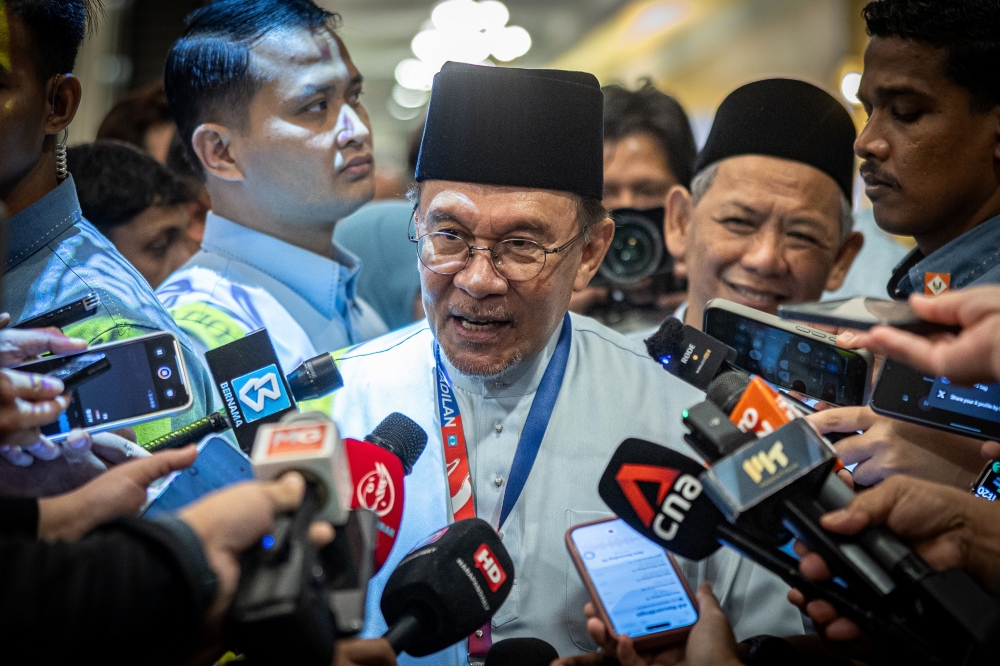
Prime Minister Datuk Seri Anwar Ibrahim has firmly rejected allegations that tensions exist between him and Deputy Prime Minister Datuk Seri Ahmad Zahid Hamidi, characterizing such claims as unfounded interference in cabinet affairs. Speaking in Melaka on August 15, Anwar emphasised his commitment to maintaining stability within the government and working constructively with his deputy, signalling that reports of internal discord do not reflect the reality of their professional relationship.
The Prime Minister's comments came in direct response to statements made by Khairy Jamaluddin, a prominent political figure, who had suggested underlying disagreements between the two senior leaders. Anwar chose to address the matter head-on rather than allow speculation to gain traction, underscoring his belief that such claims undermine the narrative of governmental unity that his administration has sought to project since taking office. His measured response reflects a deliberate strategy of defusing potential political friction before it gains momentum in public discourse.
Anwar's emphasis on pursuing "the peaceful path" carries particular significance within Malaysia's political landscape, where coalition governments have historically been fragile and prone to dramatic ruptures. By framing his approach in terms of peaceful governance and measured decision-making, the Prime Minister positioned himself as a stabilising force committed to institutional harmony rather than factional warfare. This messaging serves multiple audiences: the cabinet itself, the ruling coalition partners, and the broader electorate watching for signs of governmental instability.
The relationship between the Prime Minister and Deputy Prime Minister is critical to the functioning of Malaysia's political system, particularly given the coalition nature of current governance. Ahmad Zahid Hamidi, as head of the United Malays National Organisation (UMNO), commands significant influence within the government, and any genuine rupture between these two figures could destabilise the administration. Anwar's swift and public denial of such friction demonstrates awareness of the stakes involved and his determination to prevent perception from becoming political reality.
Contextually, Malaysia's recent political history has been marked by shifting alliances and dramatic coalition realignments. The current government represents a delicate balance between multiple parties with distinct interests and leadership ambitions. Any credible suggestion of weakness at the top could embolden opposition forces or encourage dissent among coalition members seeking to position themselves for potential government changes. Anwar's proactive approach to dismissing these claims serves as a preventive measure against such destabilisation.
The Prime Minister's invocation of peaceful governance also reflects broader themes in his administration's communications strategy. Since assuming office, Anwar has repeatedly emphasised inclusivity, dialogue, and non-confrontational approaches to political challenges. This rhetorical positioning distinguishes his leadership style from more combative approaches in Malaysian politics and appeals to voters fatigued by years of political turbulence and institutional conflict. His response to Khairy's allegations fits seamlessly within this established narrative.
Khairy Jamaluddin's original claims merit examination within the broader political context. As a figure with his own political ambitions and constituency within Malaysian politics, Khairy's statements may reflect genuine observations of tensions or may represent positioning within factional divides that characterise Malaysian coalitional governance. The fact that Anwar felt compelled to address these claims directly, rather than dismissing them through subordinates or allowing them to fade from public attention, suggests they carried sufficient political weight to warrant prime ministerial intervention.
The implications of this exchange extend beyond mere internal cabinet management. For Southeast Asian observers, Malaysian political stability carries regional significance given the country's economic importance and role in regional institutions. Any sustained uncertainty about governmental cohesion could affect investor confidence, economic policy continuity, and Malaysia's ability to maintain consistent positions on regional matters. Anwar's emphasis on unity therefore has implications beyond domestic political theatre.
Moving forward, the sustainability of harmony between Anwar and Ahmad Zahid depends on multiple factors including policy alignment, resource distribution within government, and the broader trajectories of their respective political parties. While public statements of unity are standard political theatre, the actual functioning of their partnership will be tested through concrete governance decisions and coalition management challenges. The Prime Minister's investment in publicly rejecting division claims suggests he understands that perceived unity, once damaged, becomes difficult to restore.
For Malaysian political stakeholders and the international community observing the nation's governance, Anwar's response provides reassurance of near-term stability while leaving open fundamental questions about the coalition's long-term viability. The Prime Minister has successfully, for now, redirected conversation away from internal divisions and toward his preferred narrative of peaceful, unified governance. Whether this framing can be sustained through the inevitable pressures that test all coalition governments remains to be seen.

