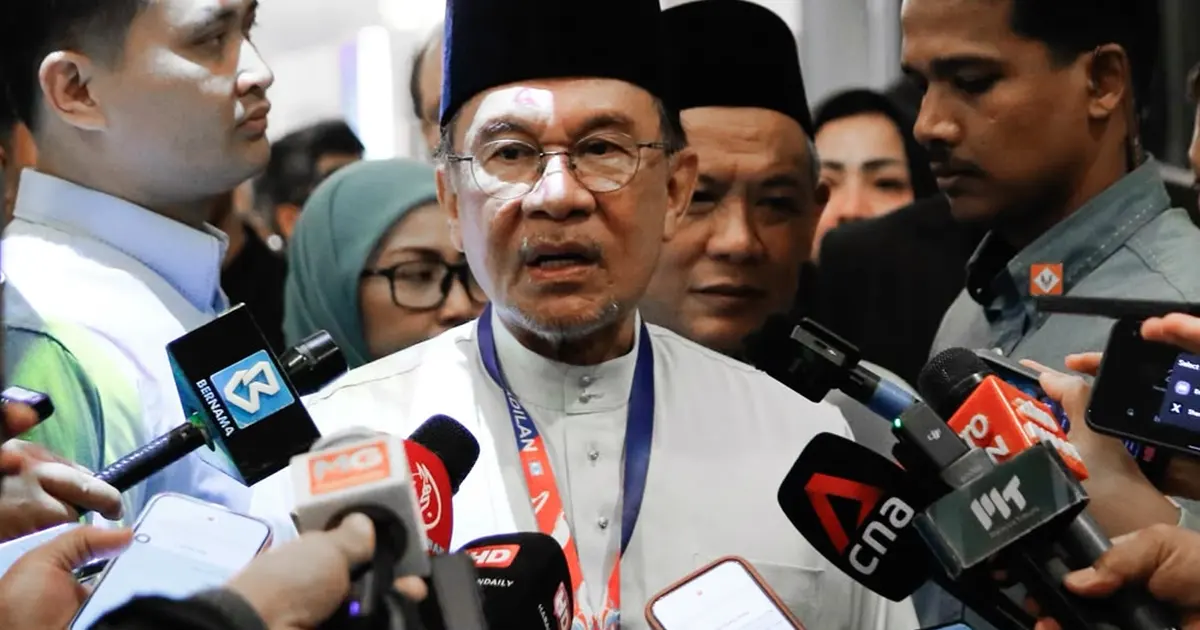
Prime Minister Anwar Ibrahim moved swiftly to dispel suggestions that his working relationship with Deputy Prime Minister Zahid Hamidi has fractured, responding to contentious remarks made by Khairy Jamaluddin in a recent podcast appearance. The prime minister's statement represents an effort to steady perceptions of unity within the federal government at a time when coalition cohesion remains scrutinised by political observers and the public alike.
Khairy Jamaluddin, who previously held the position of Umno Youth chief, had made comments in a podcast that appeared to suggest discord between the two senior officials. His remarks drew considerable attention given his standing within the ruling coalition and his history as a prominent voice on party matters. The comments appear to have touched on governance issues and perspectives that diverged from the administration's stated direction on various policy questions.
Anwar's response centred on a key distinction: he characterised Khairy's observations as reflecting that former youth leader's individual viewpoint rather than representing a broader institutional concern or widening rift within government ranks. By framing the matter this way, the prime minister sought to compartmentalise the criticism and prevent it from being interpreted as symptomatic of deeper fractures within the coalition government that has governed Malaysia since 2022.
The prime minister explained that the two leaders simply arrived at different conclusions when examining the same set of circumstances. This framing suggests that policy disagreements or divergent analyses of particular issues need not indicate loss of confidence or trust between senior officials. In Malaysian political culture, where coalition stability has historically proven fragile, such clarifications carry particular weight as signals to party members, allies, and international observers about the government's internal stability.
The exchange highlights the delicate balance that Anwar must maintain as prime minister overseeing a coalition that brings together parties with distinct bases, interests, and ideological positions. Zahid Hamidi, as head of United Malays National Organisation (Umno), commands substantial parliamentary numbers and represents the largest component of the ruling alliance. Any suggestion of tension between the prime minister and his deputy carries implications beyond personal relations, potentially affecting the government's legislative agenda and resource allocation decisions.
Khairy Jamaluddin's intervention in the discussion, despite his current lack of formal ministerial position, underscores the reality that factional voices within Umno continue to influence coalition dynamics. His podcast remarks appear designed to raise questions about government direction or specific decisions, thereby opening space for internal debate within the ruling party about the administration's course. Such positioning is not uncommon in Malaysian politics, where senior figures maintain influence through public commentary even without active executive responsibility.
The podcast format itself merits consideration in understanding how contemporary Malaysian politics operates. Unlike formal parliamentary statements or official press conferences, podcast discussions allow politicians to speak in more candid registers, often addressing audiences already sympathetic to their general outlook. Khairy's use of this platform to air apparent criticisms represents a calculated choice to reach specific constituencies within Umno and the broader coalition while maintaining some distance from direct institutional confrontation.
Anwar's measured response—emphasising different perspectives rather than dismissing Khairy outright—reflects diplomatic necessity. Visibly attacking a former youth chief or appearing defensive about coalition relations could amplify rather than diminish perceptions of instability. Instead, by normalising disagreement as a natural feature of coalition governance, the prime minister attempted to reframe the narrative as routine political discourse rather than crisis.
For Malaysian business circles and international investors assessing political risk, such episodes carry material implications. Government stability directly affects policy predictability, investment climate, and the likelihood that announced economic initiatives will progress to implementation. The construction and maintenance of coalition consensus therefore constitutes not merely a political concern but an economic imperative that touches everything from infrastructure projects to regulatory frameworks affecting foreign direct investment.
The timing of these discussions also warrants attention. Coalition governments in Southeast Asia face particular pressures during economic uncertainty, and Malaysia's persistent challenges around inflation, employment, and fiscal management create environments where political criticism gains traction more easily. Against this backdrop, Anwar's insistence on stable working relations with Zahid Hamidi carries importance beyond the immediate personalities involved.
Looking forward, the prime minister's approach suggests he intends to absorb such criticism without allowing it to derail coalition functioning or create public perception of governmental paralysis. Whether Khairy continues to voice concerns or moves toward either closer alignment or more direct opposition will likely depend on how the government addresses the substantive issues underlying his podcast commentary. The incident serves as a reminder that Malaysian coalition governments require constant attention to internal relationships even as they pursue their stated policy objectives.
The broader significance extends to how Malaysian politics manages disagreement within ruling coalitions—a question that has periodically destabilised governments throughout the nation's democratic history. Anwar's handling of this instance will set expectations for how future intra-coalition differences get managed and communicated to the public.

