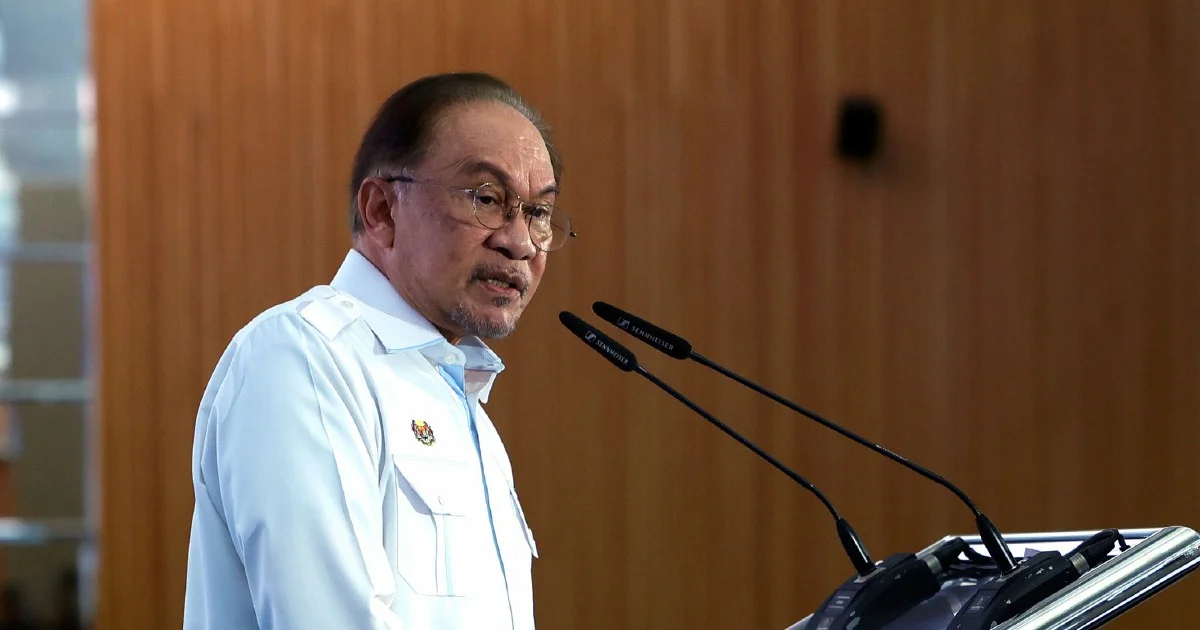
Prime Minister Datuk Seri Anwar Ibrahim has firmly rejected suggestions that his government dispenses development funding in a manner that disadvantages certain states, addressing a persistent grievance that has animated political debate across Malaysia's federal structure.
The assertion comes amid ongoing scrutiny of how Putrajaya allocates billions of ringgit in development resources across the 13 states and three federal territories. These funding mechanisms form the backbone of infrastructure projects, from roads and schools to hospitals and water systems, making their distribution a flashpoint in discussions about equity and regional development parity.
Development allocation disputes have become increasingly prominent in Malaysian politics, particularly following the 2022 general election and the formation of the current coalition government. Opposition-controlled states have periodically claimed they receive diminished funding compared to coalition-aligned states, while federal authorities argue that allocation formulas follow transparent, needs-based criteria.
The Prime Minister's dismissal of unfairness allegations reflects the government's position that its distribution methodology accounts for population size, development indicators, infrastructure requirements, and other objective metrics. Officials have previously outlined that funding decisions do not hinge on political alignment but rather on verifiable demographic and economic data.
However, perceptions of unequal treatment persist in certain quarters. Poorer states and those governed by opposition parties have occasionally raised concerns through their elected representatives and media commentary. These complaints touch on fundamental questions about federalism and whether development resources flow according to neutral technical standards or political considerations.
The federal development system in Malaysia involves multiple channels: direct grants to state governments, funding allocated through government agencies operating in states, and resources directed to statutory bodies responsible for infrastructure. This complexity makes transparent assessment of total funding flows challenging for outside observers, potentially fuelling suspicion despite government assertions of fairness.
For Malaysian readers across different states, the transparency and perceived equity of federal funding directly affects living standards and economic prospects. States receiving robust development investment typically experience better infrastructure, more business opportunities, and improved public services. Consequently, communities in states questioning their allocation levels worry about lagging competitiveness and reduced amenities.
The Prime Minister's remarks also have implications for national cohesion. Should significant segments of the population believe federal resources favour particular regions based on political affiliation rather than objective need, it could undermine confidence in institutional fairness and deepen regional resentment. This concern applies especially in a multi-ethnic, multi-religious federation where perceptions of unequal treatment carry heightened sensitivity.
Anwar's position aligns with broader government messaging emphasizing developmental inclusion and shared prosperity under the current administration. Officials routinely stress that federal investment aims to narrow regional disparities and raise living standards nationwide, suggesting that impartial allocation principles guide resource distribution.
Yet the recurring nature of these allegations suggests that improved communication and transparency mechanisms might address lingering doubts. Some analysts have recommended detailed, state-by-state reporting of development spending to demonstrate consistency with announced criteria and provide stakeholders with verifiable benchmarks for assessing equity.
Moving forward, the government's credibility on this issue may depend partly on practical outcomes. If development indicators in states raising fairness concerns continue improving, contentions of unfair treatment may gradually lose political traction. Conversely, widening disparities could reinvigorate allegations regardless of federal explanations.
The debate also reflects tension between merit-based and equity-based allocation principles. While objective criteria like infrastructure needs may justify differential funding, some argue that special consideration for disadvantaged regions serves deeper federation values. Balancing these competing frameworks remains a challenge for any federal government.
As Malaysia continues navigating competitive politics across its diverse states, how the federal government handles development allocations and demonstrates their fairness will likely remain a significant measure of its commitment to inclusive governance and national unity.

