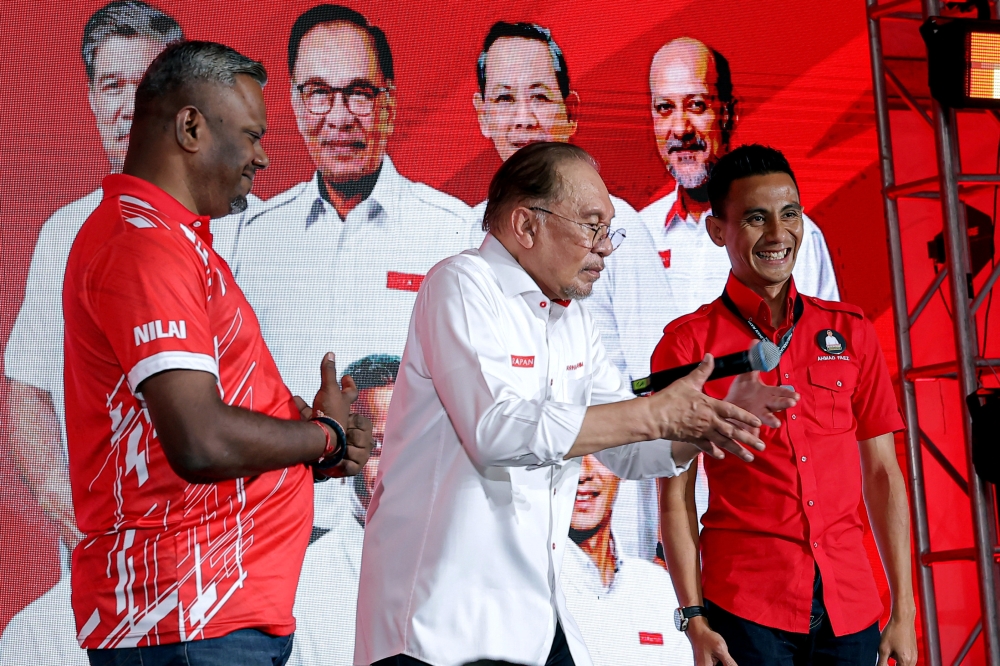
Prime Minister Datuk Seri Anwar Ibrahim has reinforced his commitment to inclusive governance by once again extending an apology to Malaysia's Indian community following remarks that sparked discontent among Indian Malaysians. Speaking in Seremban on July 30, the premier sought to underscore his administration's foundational principle that the nation's institutions and resources benefit citizens regardless of their ethnic background or religious affiliation.
The controversy emerged from statements that members of the Indian community felt misrepresented their standing within Malaysian society. Rather than dismissing the concerns raised, Anwar chose to directly address the grievance, a move reflecting the delicate balance required when managing communal sensitivities in Malaysia's multi-ethnic landscape. His willingness to issue a public apology demonstrates recognition that even inadvertent remarks from national leaders can reverberate across community networks and erode the social cohesion that underpins stability.
For the Indian Malaysian community, which constitutes approximately 7 per cent of the national population, representation and dignified treatment within national discourse carry particular weight. Historically, Indian Malaysians have navigated their place within a nation where Bumiputera frameworks and constitutional protections emphasise the special position of indigenous peoples and Islam. This complex constitutional architecture can sometimes create perceptions of hierarchical belonging, making public affirmations from the highest office meaningful in reassuring minority communities of their equal stake in the nation.
Anwar's reiteration that Malaysia belongs to all segments of society encapsulates the constitutional promise enshrined in Article 153 and the social contract negotiated at independence. While these provisions establish certain protections for Malays and indigenous peoples, they coexist with fundamental guarantees of citizenship rights, religious freedom, and equal treatment before the law for all Malaysians. By explicitly reaffirming this principle, the Prime Minister reinforces that constitutional provisions need not create a zero-sum competition between communities, but can instead define a framework where different groups' interests are protected within a shared polity.
The incident highlights the challenging terrain of political communication in a diverse nation where statements intended for one audience inevitably circulate across ethnic and religious lines. Social media amplification has intensified this dynamic, transforming localised remarks into nationwide controversies within hours. For government leaders, this environment demands heightened awareness that language choices and framing decisions carry broader implications for intercommunal relations. The speed with which Anwar acknowledged the concern and issued a public clarification suggests his administration recognises this reality.
From a governance perspective, Indian Malaysian engagement has become increasingly significant as Anwar's administration pursues broader coalition-building. The Indian community, despite its smaller demographic footprint, holds political relevance through concentrated voting power in specific constituencies and as part of multi-ethnic coalitions. Supporting Indian Malaysian interests—whether through improved access to higher education, economic opportunities in specific sectors, or cultural recognition—forms part of maintaining the broader political consensus necessary for government stability.
The timing and location of Anwar's remarks carry additional significance. Speaking in Seremban, located within Negeri Sembilan where Indian Malaysians form a notable minority particularly concentrated in estates and urban areas, underscores the regional dimension of communal politics. Different states within Malaysia maintain distinct demographic compositions and historical patterns of intercommunal relations. A Prime Minister's visit to a particular state inevitably invokes locally relevant sensitivities, making calibrated messaging essential.
During periods of economic pressure or political transition, minority communities often experience heightened anxiety regarding their position within national structures. With Malaysia navigating post-pandemic economic recovery and the government managing fiscal constraints, some communities worry that their specific needs may be deprioritised. Public affirmations of equal belonging and commitment to inclusive development help counteract such anxieties, even when concrete resource allocation decisions may feel unequal.
Looking forward, Anwar's approach suggests his administration intends to maintain the multi-communal coalition that emerged following the 2022 elections. This coalition requires active tending, as the underlying political mathematics remain fragile. Indian Malaysian representation within cabinet and party structures, alongside other minorities, serves as both practical necessity and symbolic commitment to this inclusivity. Any perception that the government retreats from this principle risks destabilising the coalition upon which current governance depends.
The broader context includes Malaysia's standing as a multi-religious, multi-ethnic nation that international observers frequently cite as a model for managing diversity despite acknowledged tensions. Anwar's generation of leaders came of age in post-independence Malaysia and witnessed both successful intercommunal cooperation and periods of serious conflict. This historical consciousness arguably informs a commitment to preventing rifts from widening unnecessarily. The willingness to address community concerns through apology and reaffirmation reflects an understanding that preventing future discord requires immediate engagement rather than dismissal.
For Indian Malaysians specifically, the incident and its resolution contain lessons about political voice and representation. The fact that community concerns reached the Prime Minister's attention and received direct response suggests that organised advocacy and public articulation of grievances can generate leadership accountability. However, it also underscores that minority communities must remain vigilant in articulating their interests and holding elected officials to stated commitments regarding equal treatment and respect.
Moving forward, the challenge for both the government and Indian Malaysian communities lies in translating these rhetorical commitments into tangible policy outcomes. Apologies and affirmations of national unity form necessary foundations, but must be accompanied by concrete measures addressing specific community needs—whether educational access, economic representation, or cultural recognition. How the government follows through on these implicit commitments will ultimately determine whether such moments of intercommunal tension strengthen or weaken Malaysia's broader project of managed diversity.

