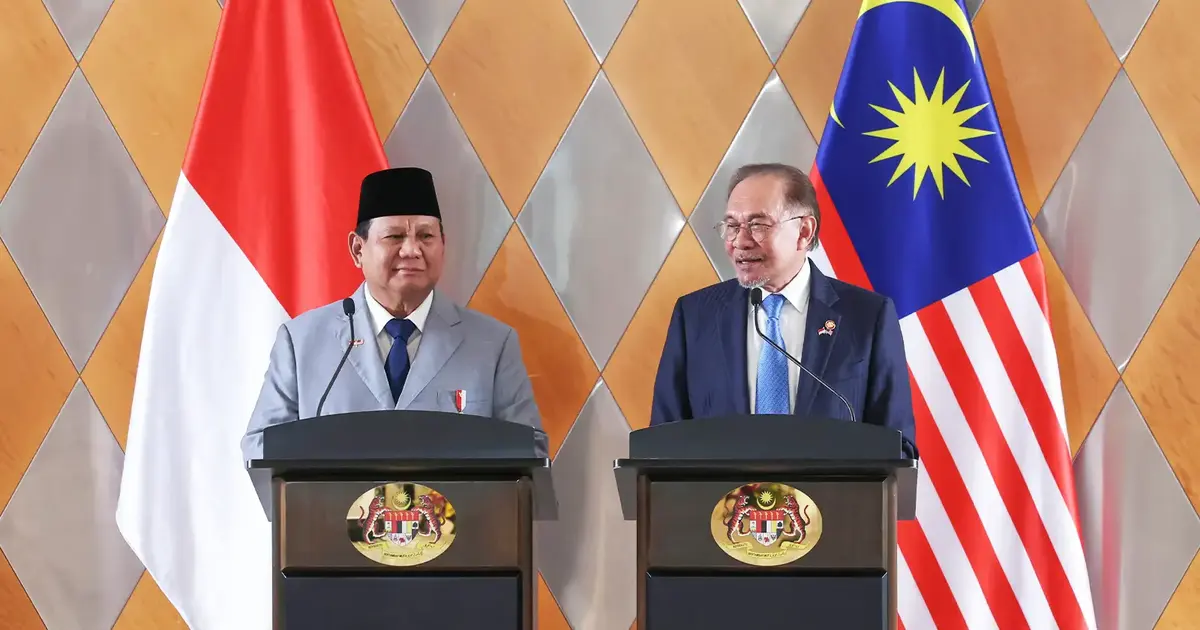
Prime Minister Anwar Ibrahim has taken diplomatic steps by writing directly to Indonesian President Prabowo Subianto regarding the precarious financial situation surrounding Felda's Eagle High venture, a cross-border investment that has become a source of significant concern for Malaysia's agricultural development corporation. The correspondence underscores the high stakes involved in the arrangement, with Anwar warning that inadequate handling of the matter could result in Felda forfeiting more than RM2 billion in invested capital whilst recovering only RM200 million—a loss ratio that would represent a devastating outcome for the state-owned enterprise and, by extension, the smallholder farmers it represents.
Felda Global Ventures, the commercial arm of the Federal Land Development Authority, ventured into the Eagle High project as part of efforts to diversify and expand operations beyond Malaysia's borders. The investment reflects a broader strategy by Malaysian state enterprises to tap into regional opportunities and establish themselves in the increasingly competitive Southeast Asian marketplace. However, the project's financial trajectory has diverged significantly from projections, creating mounting pressure on leadership to either salvage the investment or minimise further losses through negotiated settlements.
The quantum of potential loss—potentially exceeding RM1.8 billion if only RM200 million is recovered—has transformed this from a routine corporate matter into one requiring prime ministerial intervention at the presidential level. Such a deterioration of value represents not merely a corporate accounting problem but raises questions about investment due diligence, ongoing oversight mechanisms, and the governance frameworks that should prevent such scenarios. For Malaysian policymakers and agricultural stakeholders, the implications extend beyond Felda's balance sheet to considerations about how state-linked enterprises navigate transnational investments and manage operational risks across borders.
Anwar's letter to Prabowo signals a strategic diplomatic approach, positioning the matter as one requiring high-level political attention rather than leaving resolution entirely to corporate management channels. This escalation reflects recognition that Indonesian regulatory or political factors may be constraining Felda's options, or conversely, that Malaysia's paramount concern warrants direct presidential engagement to unlock solutions. The choice of channel also acknowledges the bilateral relationship and the need to maintain constructive ties whilst protecting national interests.
For Felda and its stakeholder community—particularly the smallholder scheme participants whose livelihoods depend on the organisation's financial health—this situation presents a critical juncture. The Eagle High venture was intended to generate returns that would benefit dividend distributions and fund ongoing development initiatives. Instead, it has become a source of uncertainty and potential cash-flow strain. Transparent communication about the risks, recovery timeline, and management's contingency plans will be essential to maintaining stakeholder confidence and ensuring that Felda can continue meeting its developmental obligations.
The investment illustrates broader challenges facing Malaysian state enterprises as they expand into regional markets characterised by different regulatory environments, currency fluctuations, and geopolitical complexities. Risk management in cross-border ventures requires not only sound financial analysis but also robust frameworks for monitoring and course correction. The Eagle High situation suggests lessons worth examining across Malaysia's wider portfolio of international investments, particularly those undertaken by development-focused entities with public accountability obligations.
Indonesia, as Southeast Asia's largest economy, remains a natural investment destination for Malaysian enterprises seeking growth and market access. However, large-scale ventures in the archipelago require sustained engagement with local partners, regulatory bodies, and—where necessary—governmental structures. Prabowo's administration, relatively recent in composition, may present either opportunities for renewed partnerships or continuation of existing complications, depending on how Indonesian authorities prioritise the matter and their assessment of Malaysia's equity stakes and future collaboration potential.
The RM2 billion figure also merits contextualisation within Felda's operational scale and capital allocation patterns. For a state enterprise managing vast land holdings and serving hundreds of thousands of smallholders, this investment magnitude represents either a strategic commitment to diversification or, retrospectively, a concentration of risk that outpaced the organisation's capacity to monitor or manage effectively. Whether this episode prompts recalibration of Felda's investment mandates and risk thresholds will have consequences for agricultural policy and rural development strategies across Malaysia.
Resolution of the Eagle High situation will likely involve negotiations addressing liability allocations, timeline for recovery or orderly wind-down, and potentially new governance arrangements. Anwar's presidential correspondence signals that Malaysia views this as sufficiently important to warrant executive-level engagement, suggesting both urgency and optimism that diplomatic channels might unlock possibilities unavailable through standard commercial negotiation. The months ahead will demonstrate whether such high-level intervention succeeds in protecting Malaysian interests whilst preserving the bilateral relationship with Indonesia.

