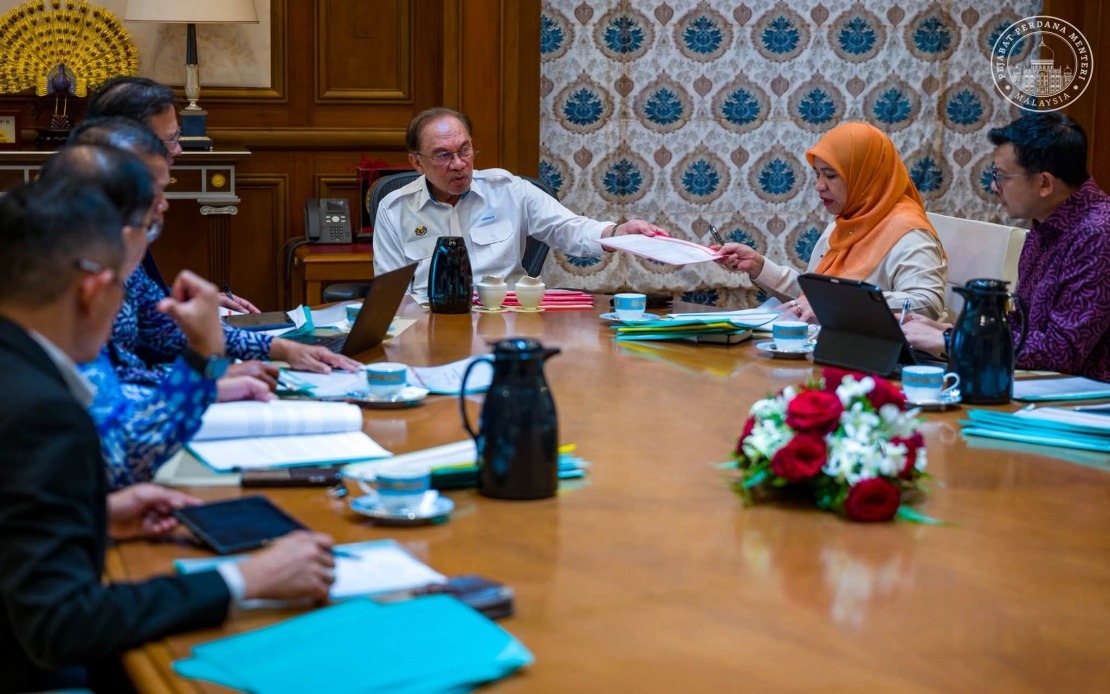
Prime Minister Datuk Seri Anwar Ibrahim has intensified pressure on the Federal Land Development Authority (FELDA) to tackle entrenched problems affecting settler communities, signalling that the MADANI Government views the resolution of these issues as urgent and non-negotiable. Speaking through a Facebook announcement, Anwar emphasised that challenges facing FELDA residents—particularly those involving housing for the second generation and property ownership rights—have festered too long and demand immediate intervention with clear solutions.
The second-generation housing question represents one of FELDA's most vexing structural problems. Children of original FELDA settlers have historically struggled to secure formal land allocations or housing within the schemes, creating a generational bottleneck that has left many without secure property rights or inheritance clarity. This issue has become increasingly politically sensitive as these younger Malaysians, now adults with families of their own, face uncertainty about their future on schemes their parents helped pioneer. The lack of transparent mechanisms for transferring or allocating land to heirs has compounded the problem, leaving many families in legal limbo regarding asset ownership and succession planning.
Anwar's intervention reflects growing awareness within government circles that FELDA's institutional challenges extend far beyond administrative inefficiency. The authority, established in 1956 to resettle rural poor through agricultural development, has accumulated layers of unresolved disputes over decades. Land ownership complications affect not only second-generation settlers but also questions surrounding the original allocation frameworks, communal land rights, and the relationship between individual plot ownership and collective scheme management. These issues have festered partly because FELDA governance structures have historically lacked agility in responding to changing circumstances and settler demographics.
The Prime Minister's directive carries particular significance given Malaysia's broader development agenda. FELDA schemes represent crucial rural constituencies with political influence extending well beyond their geographic boundaries. Resolving settler grievances strengthens government legitimacy among these communities while demonstrating responsiveness to longstanding complaints that previous administrations had deprioritised. For the MADANI Government, action on FELDA also signals commitment to inclusive economic development and the welfare of agricultural communities that remain economically vulnerable despite Malaysia's modernisation.
Anwar's insistence that every problem be examined carefully and followed by concrete action plans suggests the government will push FELDA towards establishing dedicated task forces or administrative mechanisms to fast-track resolution. This approach acknowledges that cosmetic reforms or piecemeal interventions will no longer suffice. The complexity of land ownership disputes—often involving historical records, competing claims, and regulatory ambiguities—requires systematic investigation and transparent dispute resolution frameworks that FELDA has previously lacked.
The reference to strengthening FELDA while ensuring settlers and families benefit indicates a rebalancing of the authority's priorities. Historically, FELDA has grappled with conflicting objectives: maintaining financial sustainability, managing agricultural productivity, and serving settler welfare. Anwar's emphasis places settler interest explicitly at the centre, suggesting the government will not allow institutional or financial considerations to perpetually override the fundamental purpose FELDA was created to serve.
Second-generation housing challenges intersect with Malaysia's broader property rights and inheritance law framework. Many FELDA settlers, particularly older cohorts, remain uncertain about how land allocation translates into transferable ownership that can pass legally to their children. This uncertainty inhibits family financial planning and creates social resentment when younger generations perceive themselves as disadvantaged despite parental pioneering of the schemes. Without clear pathways to property security, FELDA communities remain economically precarious despite surface-level land occupation.
For Malaysian policymakers, the FELDA situation illustrates broader challenges in managing state-created rural development schemes. Similar issues affect other land settlement authorities and traditional Malay reserve systems, where ownership frameworks remain contested or unclear. By pushing FELDA to modernise its approach to second-generation rights and ownership clarity, the government potentially establishes templates applicable elsewhere in Malaysia's rural governance landscape.
The timeline for resolution remains unspecified, though Anwar's language suggests impatience with delay. FELDA management faces pressure to demonstrate progress relatively quickly, likely through visible task force establishment, public communication about problem categories, and preliminary resolution frameworks. How effectively FELDA responds will test the government's capacity to translate political commitment into institutional reform, particularly where entrenched practices and competing interests complicate straightforward solutions.
Regionally, Malaysia's approach to settler land rights could influence how other Southeast Asian nations manage comparable rural development schemes. Indonesia, Thailand, and the Philippines face analogous challenges regarding land allocation transparency, generational succession, and settler tenure security. Malaysia's experience demonstrates both the political necessity and institutional complexity of modernising agricultural settlement governance in developing economies transitioning toward more sophisticated property rights frameworks.
For FELDA settlers themselves, Anwar's intervention signals that their grievances have finally reached high-level political attention after years of frustration. Whether this translates into tangible resolution depends on FELDA's administrative capacity, inter-agency coordination, and the government's willingness to commit resources and political capital to implementation. The next months will reveal whether recent emphasis on settler welfare produces meaningful institutional change or remains rhetoric unmatched by substantive action.

