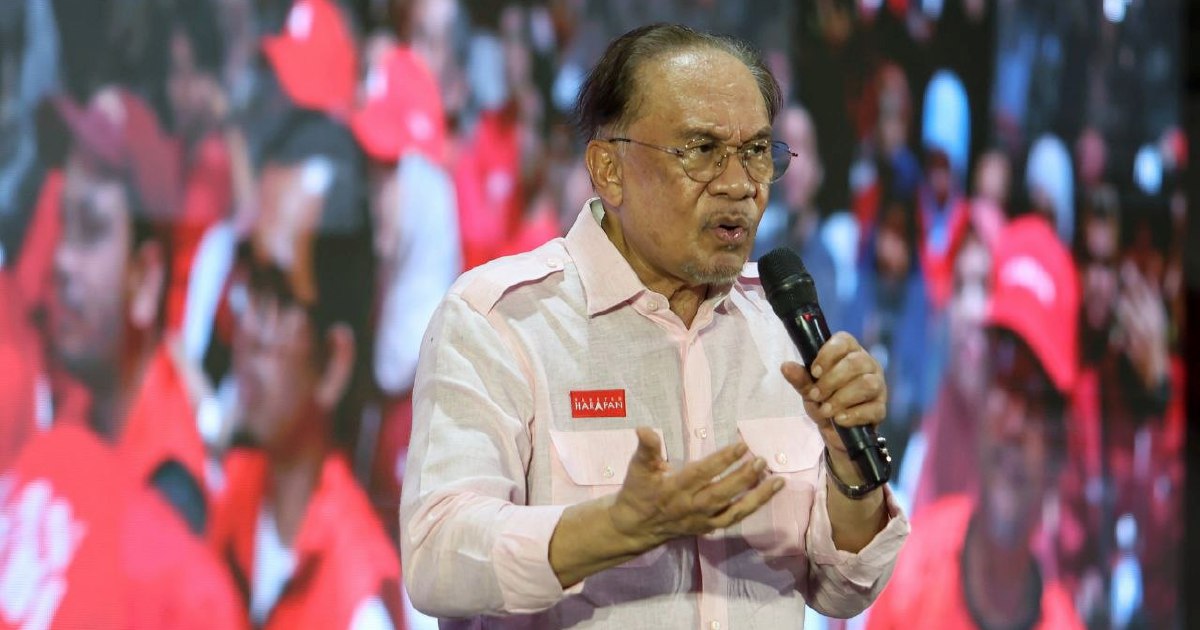
Prime Minister Datuk Seri Anwar Ibrahim has reassured the nation that the stability of Malaysia's federal unity government will remain a priority, even as his administration prepares to contest the Negri Sembilan state election against the Barisan Nasional—a traditional rival that forms part of his own governing coalition at the federal level. Speaking in Seremban, Anwar underscored the government's commitment to maintaining political stability while pursuing competitive electoral dynamics at the state level, a position that reflects the delicate balance his administration must strike between consolidating power and preserving partnerships essential to federal governance.
The Prime Minister's statement comes amid the complex political landscape Malaysia has navigated since the 2022 general election, when no single bloc secured a parliamentary majority, forcing the formation of a unity government comprising multiple political parties with historically divergent ideologies and interests. This arrangement, while providing stability compared to previous years of political turbulence, has required constant negotiation and compromise among coalition partners who maintain separate partisan identities and electoral ambitions. Anwar's remarks signal that despite the competitive environment at state level, the overarching framework of federal cooperation will not be jeopardized by localized political battles.
Negri Sembilan represents a significant political battleground where different components of the federal coalition compete for influence and electoral dominance. The state election thus exemplifies the broader challenge facing Malaysia's unity government: how to accommodate healthy democratic competition while maintaining the institutional cohesion necessary for stable national governance. The Barisan Nasional, despite being part of the federal coalition, maintains its own state-level machinery and electoral machinery, creating scenarios where former and traditional rivals find themselves simultaneously collaborating and competing depending on the electoral theater in question.
For Malaysian voters and observers, Anwar's reassurance carries particular significance given the nation's recent history of political instability. The period between 2018 and 2022 witnessed dramatic shifts in government, defections, and constitutional crises that destabilized public confidence in institutions and economic management. The unity government, despite its inherent contradictions and logistical complexities, has provided a period of relative predictability that has allowed administrators to focus on policy implementation rather than survival politics. Any suggestion that state-level electoral competition might undermine federal arrangements would have triggered market anxiety and investor concerns about governance reliability.
Anwar's position also reflects the practical reality that Malaysia's political mathematics make single-party governance unlikely in the near term. With the electorate fragmented across multiple parties and regional power bases, coalitions have become structural features of Malaysian politics rather than temporary expedients. The Prime Minister's commitment to preserving the unity framework therefore represents recognition that even competitors within the federal structure share common interest in preventing the return to the confrontational environment that preceded the 2022 election.
The Negri Sembilan state election will test whether parties can maintain this separation between state-level competition and federal-level cooperation. State elections often serve as mid-term verdict on federal governments, with voters using localized contests to register satisfaction or dissatisfaction with national administration. How the coalition components campaign and perform in Negri Sembilan will provide indicators about the sustainability of current arrangements and whether the unity government can genuinely accommodate partisan competition without fragmenting.
For the Barisan Nasional specifically, contesting in Negri Sembilan while remaining part of the federal coalition demonstrates the flexibility required of Malaysia's political players. Traditional opposition or coalition membership now proves less determinative of electoral positioning than it once was. This fluidity creates both opportunities and risks: opportunities for parties to maximize influence across different levels of government, but risks that state-level defeats or victories might destabilize federal calculations or relationships among coalition partners.
Anwar's commitment carries implications beyond domestic politics. International investors and institutions monitoring Malaysia's governance watch closely for signs of political instability or institutional stress. The unity government's ability to function despite internal tensions has supported relatively stable macroeconomic conditions and market confidence. Any appearance that state elections might trigger federal-level realignments would reverse these positive perceptions and potentially affect Malaysia's competitive position within Southeast Asia's economic landscape.
Looking forward, the Negri Sembilan contest will reveal whether Anwar's assurance reflects genuine institutional resilience or optimistic rhetoric. The true test of Malaysia's political maturation would be demonstrated if electoral defeats or victories in state elections are absorbed without triggering demands for federal coalition renegotiation or threats of withdrawal. The Prime Minister's positioning suggests confidence that the coalition's common interests in institutional stability outweigh the partisan incentives driving state-level competition, though subsequent events will determine whether this confidence proves justified.

