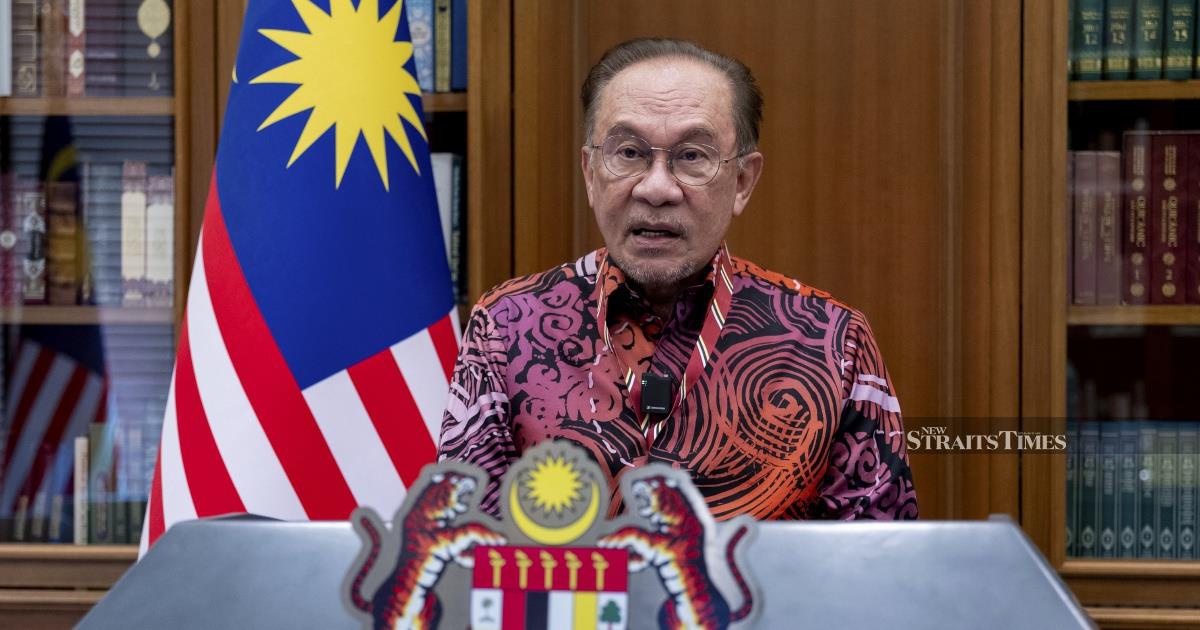
Prime Minister Datuk Seri Anwar Ibrahim has extended formal felicitations to the Chinese government and leadership on reaching the 105th anniversary milestone of the Communist Party of China, reflecting Malaysia's consistent diplomatic protocols and bilateral relationship frameworks with its significant northern neighbour. The gesture, delivered from Malaysia's capital Kuala Lumpur, represents customary state recognition of major political anniversaries among allied and friendly nations.
China's Communist Party, established in 1921, stands as one of the world's largest and most influential political organizations. The commemoration of its founding typically draws international acknowledgment from numerous countries, with Malaysia historically participating in such diplomatic courtesies. The party's establishment predates Malaysia's own independence by roughly three decades, marking a foundational moment in twentieth-century Asian geopolitical development that continues to shape the region's contemporary international relations landscape.
Anwar's message underscores the continuity of Malaysia's foreign policy approach toward China, a nation with which Kuala Lumpur maintains extensive economic, cultural, and strategic ties. The diplomatic acknowledgment comes amid broader patterns of bilateral engagement that encompass trade partnerships, infrastructure collaborations, educational exchanges, and people-to-people connections. Such ceremonial exchanges serve to reinforce official channels of communication and demonstrate goodwill between governments.
The timing of the anniversary falls within a period when Malaysia-China relations remain multifaceted and substantive. Trade volumes between the two nations consistently rank among Malaysia's highest global partnerships, with Chinese investments penetrating diverse sectors including manufacturing, technology, energy, and real estate development. The relationship extends beyond commerce into cultural and educational domains, with thousands of Malaysian students annually studying in Chinese institutions and corresponding numbers of Chinese nationals engaged in various professional and academic pursuits within Malaysia.
Regional geopolitical dynamics add layers of complexity to Malaysia's engagement with China. As an ASEAN member state navigating the strategic competition between major powers, Malaysia has developed a balanced diplomatic posture that acknowledges China's regional significance while maintaining relationships with other global actors including the United States, Japan, and the European Union. Anwar's government has consistently articulated principles of equitable partnership and mutual respect in framing these relationships.
The anniversary message also reflects Malaysia's positioning within broader Southeast Asian diplomatic patterns. Several ASEAN members routinely exchange formal recognitions on significant national and political anniversaries with China, contributing to an established diplomatic cadence that facilitates routine communication at governmental levels. Such exchanges, though ceremonial in nature, provide valuable mechanisms for maintaining open dialogue channels and demonstrating commitment to stable bilateral relationships.
China's Communist Party has undergone substantial transformations across its 105-year history, evolving from a revolutionary movement into a governing institution managing the world's second-largest economy. Its policy directions significantly influence regional dynamics affecting ASEAN economies, supply chains, investment flows, and strategic stability. Malaysia's awareness of Beijing's centrality to regional development necessitates cultivating mature, functional diplomatic relationships characterized by mutual understanding and professional engagement.
The congratulatory gesture arrives within a context where Malaysia increasingly seeks to position itself as a bridge between different international alignments and power centers. Anwar's administration has emphasized Malaysia's agency in managing complex geopolitical relationships without compromising national interests or sovereignty. Acknowledging China's significant political milestones represents one facet of this calibrated diplomatic approach.
From an economic perspective, strengthened Malaysia-China relations carry tangible implications for Malaysian citizens through job creation, investment opportunities, and access to markets. Chinese capital has funded major infrastructure projects within Malaysia, from transportation networks to manufacturing hubs, generating employment and technological transfer. Educational and professional mobility between the nations creates individual advancement pathways while facilitating deeper interpersonal understanding.
The message exemplifies how contemporary Malaysian foreign policy balances respect for China's importance with maintenance of multiple international partnerships. In an era where many nations face pressures to choose exclusive alignment with particular power centers, Malaysia's approach of maintaining substantive engagement across different relationships reflects practical statecraft prioritizing national development and regional stability.
Looking forward, Malaysia's management of the China relationship will likely remain central to broader strategic calculations affecting Southeast Asia's position in global affairs. The government's diplomatic communications, including ceremonial expressions like anniversary congratulations, signal continuity in official channels while allowing space for Malaysian policymakers to pursue interests through multiple partnership arrangements. Such balanced engagement becomes increasingly important as regional geopolitical competition intensifies and economic interdependencies deepen.

