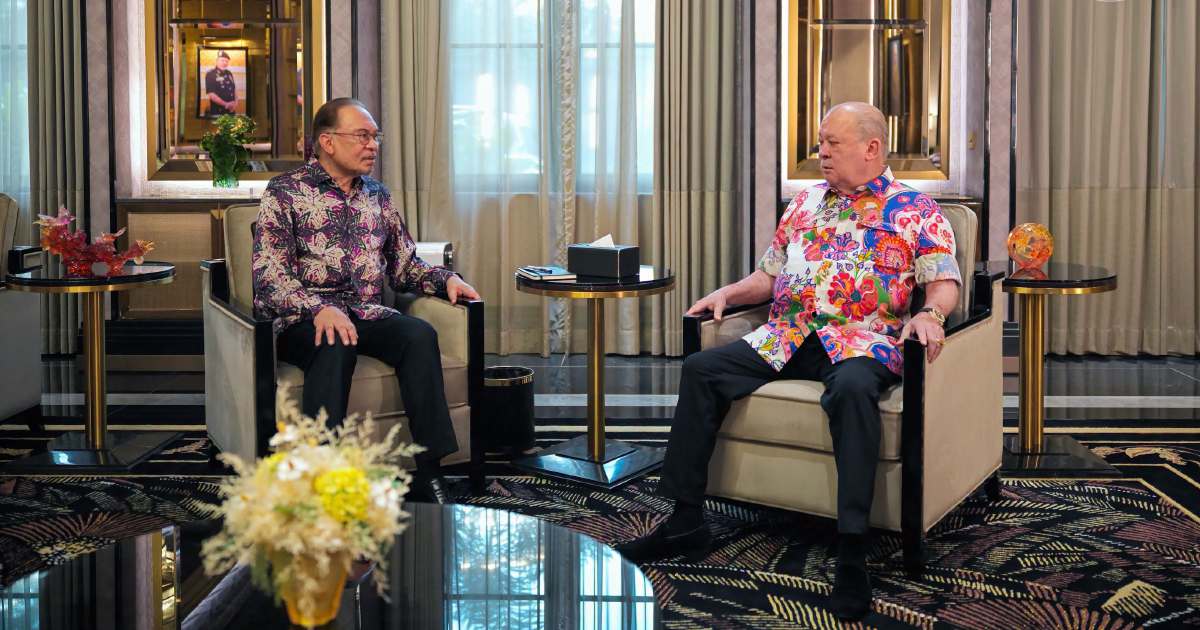
The Malaysian Monarchy reaffirmed its ceremonial engagement with the federal government when His Majesty Sultan Ibrahim, King of Malaysia, received Prime Minister Datuk Seri Anwar Ibrahim in formal audience at Istana Bukit Tunku in Kuala Lumpur. The meeting took place on the day before the nation's 69th National Day celebrations, representing a customary protocol moment between the constitutional head of state and the head of government during significant national occasions.
Such audiences, whilst formal in nature, carry constitutional weight in Malaysia's system of governance. The King, as the symbol of national unity and constitutional guardian, typically meets with the Prime Minister ahead of major national commemorations to discuss matters of state and receive briefings on preparations. For Malaysia, National Day—commemorating the country's independence and formation—ranks among the most significant dates in the national calendar, making pre-celebration consultations between these two offices a matter of established procedure.
The timing of this engagement reflects the orderly functioning of Malaysia's constitutional monarchy. While the King reigns as head of state with largely ceremonial powers under the Federal Constitution, the institution remains central to the nation's identity and formal governance structure. Prime Ministers traditionally brief the Sovereign on state matters and major national events, ensuring the Crown is informed and maintains its constitutional role as witness and guardian of national affairs.
For Malaysian observers, such audiences demonstrate the continuity of institutional protocols that have characterised the nation's political system since independence in 1957. The regularity and formality of these meetings—held not only during National Day but throughout the year on matters of governance—underscore the distinction between the ceremonial state apparatus and executive government. This separation, whilst sometimes subtle to international observers, remains fundamental to how Malaysia's constitutional framework operates.
The 69th National Day carries particular resonance in the contemporary Malaysian context. The nation's independence journey, marked by the transition from British colonial rule to self-governance, established institutions and constitutional principles that continue shaping the country's democratic traditions. Annual commemorations serve not merely as historical recollection but as reaffirmation of national sovereignty and the values enshrined in the Federal Constitution.
The audience at Istana Bukit Tunku, the official residence of the Malaysian Monarch, represents the formal setting where such high-level consultations occur. The palace, steeped in the history of Malaysian statehood, serves as the venue for numerous state functions, ceremonies, and formal governmental engagements. Its selection for this pre-National Day meeting underscores the official nature of the consultation between the sovereign and prime ministerial offices.
Prime Minister Anwar Ibrahim's administration, which came to office following the 2022 general elections and subsequent political negotiations, has been required to navigate Malaysia's complex constitutional and political landscape. Maintaining fluid relations with the Crown remains essential for any Malaysian government, as the monarchy commands deep respect across the nation's diverse population. Regular engagement between the government and the Palace ensures that constitutional protocols are observed and that the formal apparatus of state functions harmoniously.
The National Day preparations that prompted this audience involve considerable organisational and ceremonial elements. From military parades and official flag-raising ceremonies to cultural performances and community gatherings across the nation's thirteen states, National Day programming demands extensive coordination. The Prime Minister, as head of government, bears responsibility for orchestrating these national-level celebrations, making it appropriate that the King receive advance briefing on arrangements and state of readiness.
For Malaysia's international standing, the functioning of strong constitutional institutions and the harmonious relationship between the Crown and government convey stability and adherence to democratic norms. In a region where institutional continuity sometimes faces pressures, Malaysia's observance of constitutional protocols and the respect shown by different branches of government toward each other demonstrates institutional maturity. The audience between Sultan Ibrahim and Anwar Ibrahim reflects this broader commitment to constitutional governance.
Looking forward, Malaysia's 69th National Day celebrations will unfold against the backdrop of the nation's ongoing political and economic challenges. Issues ranging from cost-of-living pressures affecting ordinary Malaysians to regional geopolitical considerations in Southeast Asia form the broader context in which this year's commemoration occurs. The King-Prime Minister audience, whilst formal and ceremonial on the surface, occurs within a living constitutional framework that continues guiding the nation through contemporary complexities.
For regional observers in Southeast Asia, Malaysia's institutional arrangements and the respectful engagement between its various constitutional offices provide insight into how mature democratic systems manage the relationship between ceremonial and executive authority. The audience between Sultan Ibrahim and Anwar Ibrahim, though a routine constitutional moment, exemplifies the underlying institutional norms that have helped Malaysia maintain democratic governance through several decades of political change and socioeconomic development.

