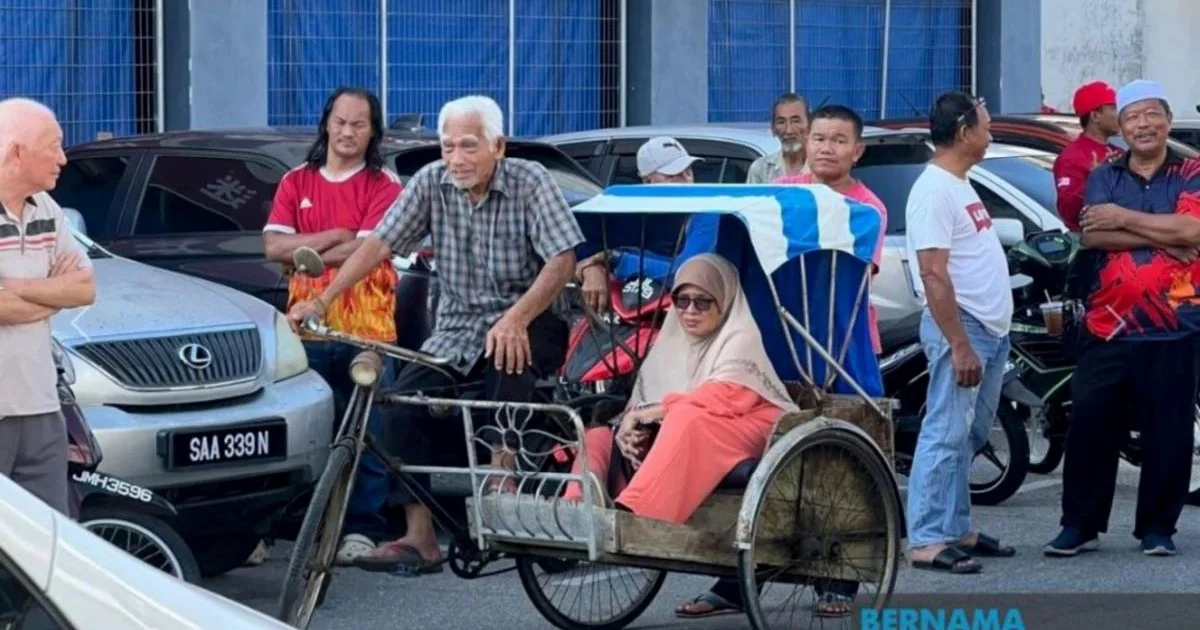
Prime Minister Datuk Seri Anwar Ibrahim has acknowledged the determination and affection displayed by an 86-year-old trishaw rider from Kuala Lumpur, who undertook the physically demanding task of pedalling his traditional three-wheeler for nearly a kilometre to realise his wife's cherished ambition of encountering the country's leader in person. The incident underscores the deep emotional connection many Malaysians maintain with their political leaders, particularly among the elderly demographic who have witnessed the nation's evolution across multiple decades.
The elderly man's journey, though modest in distance, required considerable physical exertion for someone of his advanced age. Operating a trishaw manually demands sustained pedalling power and stamina, making the effort a genuine testament to his commitment to his spouse's wishes. The decision to undertake this journey reflects values deeply rooted in Malaysian culture, where spousal devotion and family aspirations often motivate individuals to push beyond their ordinary limitations. Such acts of personal sacrifice resonate powerfully within communities that emphasise familial bonds and interpersonal relationships.
Prime Minister Anwar's public acknowledgment of this gesture carries significance beyond mere courtesy. In an era characterised by frequent criticism of political leaders and growing cynicism about public figures, the Prime Minister's willingness to recognise and celebrate the devotion of an ordinary citizen demonstrates a conscious effort to bridge the gap between the highest echelons of government and Malaysia's everyday population. This kind of genuine human interaction reinforces the notion that leadership encompasses compassion and authentic engagement with citizens from all walks of life.
The trishaw remains an iconic symbol of Malaysia's urban heritage and modest entrepreneurship, particularly in older neighbourhoods across Kuala Lumpur and other cities. These vehicles, operated primarily by elderly men who have spent decades in the profession, represent a vanishing way of life as modernisation transforms Malaysian towns and cities. The presence of this elderly operator pedalling through urban streets draws attention to the economic realities facing senior citizens in Malaysia, many of whom continue working into their eighties because pension provisions remain inadequate.
Encounters of this nature highlight the emotional dimensions of political engagement that extend beyond policy discussions and parliamentary procedures. For many Malaysians, particularly those in advanced age groups, personal meetings with national leaders create lasting memories and afford a sense of validation and recognition. The wife's desire to see Prime Minister Anwar presumably stemmed from genuine interest in observing the leader who shapes the nation's direction, a sentiment shared by millions of Malaysians across socioeconomic strata.
The story also illuminates aspects of Malaysian society that distinguish it from more developed nations, where direct encounters with prime ministers remain rare and highly controlled affairs. In Malaysia's more informal political culture, such spontaneous meetings, while still exceptional, remain possible and often welcomed by leaders seeking to maintain grassroots connections. This accessibility, however limited, represents a valued aspect of Malaysian democracy where ordinary citizens retain the possibility of approaching their elected representatives.
The physical demands of the elderly trishaw rider's journey warrant consideration within broader discussions about elderly welfare and social support systems in Malaysia. An 86-year-old still operating a trishaw professionally suggests financial necessity rather than choice. This reality points to ongoing challenges in ensuring dignified retirement for Malaysia's senior citizens and the need for comprehensive social safety nets that allow elderly individuals to cease strenuous work while maintaining adequate living standards.
Prime Minister Anwar's response demonstrates emotional intelligence and recognition of the human stories underlying national life. Rather than treating the encounter as merely another public appearance, his explicit gratitude toward the elderly man acknowledges the sacrifice and sentiment involved. Such gestures, though sometimes dismissed as performative, contribute to maintaining trust and goodwill between government institutions and citizens, particularly important during periods of significant policy implementation or institutional change.
The incident resonates particularly within communities that value traditional forms of transportation and the craftspeople who maintain them. As Malaysia modernises and urbanises, the presence of trishaws represents continuity with the nation's past, and those who operate them embody stories of perseverance, entrepreneurship, and resilience. Recognising such individuals in national discourse helps ensure that development narratives do not entirely eclipse or marginalise those whose livelihoods represent earlier economic eras.
This heartwarming moment, capturing the determination of an octogenarian and the apparently genuine appreciation from Malaysia's highest political office, reminds the public that beneath official titles and governmental protocols lie human beings capable of authentic connection and mutual respect. In Malaysian society, where respect for elders constitutes a core cultural principle, honouring such contributions—whether through policy support or public recognition—remains essential to maintaining social cohesion across generations and socioeconomic groups.

