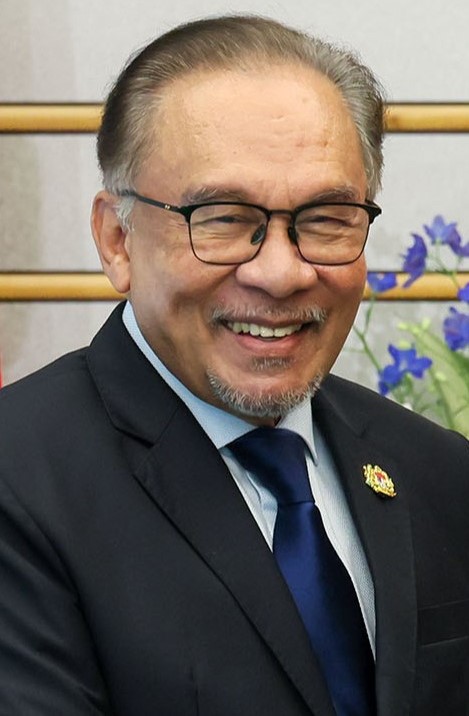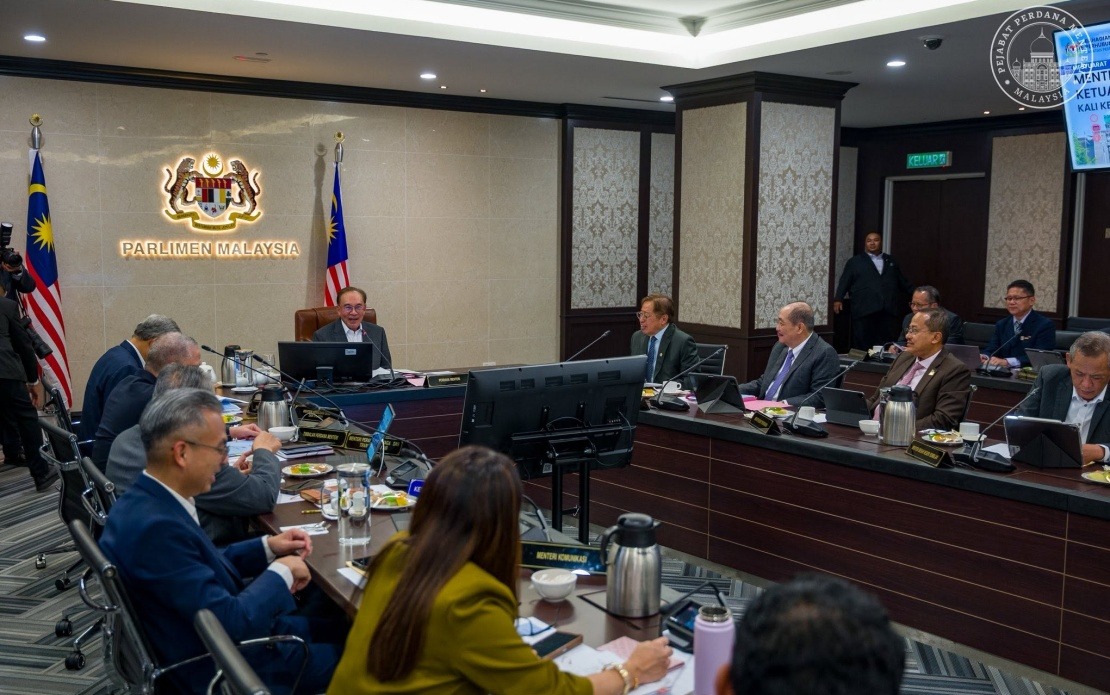
Prime Minister Datuk Seri Anwar Ibrahim presided over the 149th Meeting of Menteris Besar and Chief Ministers at Parliament House, steering discussions toward comprehensive economic revitalisation as Malaysia navigates intensifying geopolitical pressures and environmental challenges. The gathering brought together leaders from all states and federal territories to align policy approaches and ensure coordinated implementation of government priorities that directly impact citizens' livelihoods and national prosperity.
The conference agenda centred on fortifying Malaysia's economic position against a backdrop of persistent global instability fuelled by regional conflicts in West Asia. These geopolitical tensions have created substantial ripple effects throughout international markets, disrupting supply chains, elevating commodity price volatility, and dampening investor confidence across Asia-Pacific economies. Malaysia's exposure to global trade networks means such external shocks readily translate into domestic challenges—from manufacturing competitiveness to employment stability. By convening state leaders, Anwar sought to establish a unified national response that leverages federal resources while tapping into state-level implementation capabilities.
Equally pressing was discussion of Malaysia's preparedness for the El Niño phenomenon, a climate pattern that regional meteorologists forecast will intensify through coming months. Unlike temporary weather disturbances, El Niño episodes spawn cascading consequences across multiple sectors vital to Malaysia's economic and food security architecture. Water supply systems face unprecedented stress as precipitation patterns shift; agricultural regions—particularly those dependent on monsoon rains—confront drought conditions that threaten yields of palm oil, rubber, and rice; elevated temperatures compound heat stress on both industrial workers and livestock. The prospect of intensified haze events, frequently exacerbated during El Niño years, raises concerns about public health, tourism revenue, and regional air quality cooperation.
Anwar's emphasis on policy coherence and integration reflects a governance philosophy prioritising efficiency gains through interagency coordination. Rather than permitting federal and state governments to pursue isolated initiatives, the framework encourages shared objectives and complementary action. This integrated approach particularly matters given Malaysia's federal structure, where states retain significant autonomy over land, agriculture, water, and local development while the federal government manages macroeconomic policy, trade, and defence. When economic recovery strategies lack synchronisation between these tiers, implementation becomes fragmented and resources inefficiently allocated.
The prime minister underscored that every initiative must remain people-centric—a conscious repositioning toward outcomes that directly enhance citizen welfare rather than abstract macroeconomic targets. This framing acknowledges growing public concern about inflation's erosion of purchasing power, employment quality, and access to essential services. By anchoring economic revival in tangible improvements to living standards, the government signals commitment to inclusive growth that distributes development benefits broadly rather than concentrating them among corporate elites or specific regions.
Attracting quality investments figured prominently in conference discussions. Malaysia competes intensely with Thailand, Vietnam, and Indonesia for foreign direct investment, particularly in advanced manufacturing, semiconductors, and renewable energy sectors. Global firms increasingly demand predictable regulatory environments, skilled workforces, and reliable infrastructure—qualities requiring sustained federal-state coordination. A state pursuing contradictory tax policies or inconsistent labour standards undermines national competitiveness. The meeting therefore functioned partly as a forum to harmonise state-level conditions, ensuring Malaysia projects a coherent investment proposition to multinational corporations and sovereign wealth funds evaluating capital allocation across the region.
Economic competitiveness enhancement demands attention to productivity, innovation ecosystems, and human capital development. Malaysia faces a productivity growth plateau relative to peers, suggesting that additional capital investment alone cannot sustain prosperity. Instead, improvements in worker skills, entrepreneurial dynamism, and technological adoption become essential. States possess crucial leverage over education quality, vocational training institutions, and business incubation facilities. Federal-state alignment on these fronts amplifies impact; fragmented approaches yield marginal returns.
Anwar's reference to safeguarding the well-being of all Malaysians carries particular significance in a country where regional disparities persist. Economically vibrant states like Selangor and Penang possess robust tax bases and investor appeal, whilst less developed regions struggle to attract comparable resources and opportunities. A coherent national economic strategy must address these imbalances, preventing concentration of growth in geographical pockets. State leaders recognise that federal support, infrastructure investment, and targeted development programmes become necessary for less competitive regions to participate meaningfully in national prosperity.
The consensus-oriented spirit highlighted by the prime minister reflects recognition that federal-state relationships transcend purely executive efficiency. Malaysian federalism functions optimally when both tiers perceive themselves as partners pursuing shared national objectives rather than competitors for scarce resources or political advantage. By publicly emphasising this collaborative tone, Anwar signalled that economic recovery depends on cooperative federalism rather than centralised mandates. States retain policy autonomy whilst aligning broadly with federal frameworks—a balance requiring ongoing negotiation and mutual respect.
Looking forward, implementation fidelity will determine whether conference outcomes translate into tangible economic improvement. Meetings generate consensus documents and policy frameworks, yet execution at state and district levels determines actual impact on citizens' employment prospects, business viability, and household finances. Success requires adequate funding mechanisms, clear accountability structures, and regular progress monitoring. The conference thus represents merely one checkpoint in Malaysia's longer journey toward sustained, inclusive economic revival.