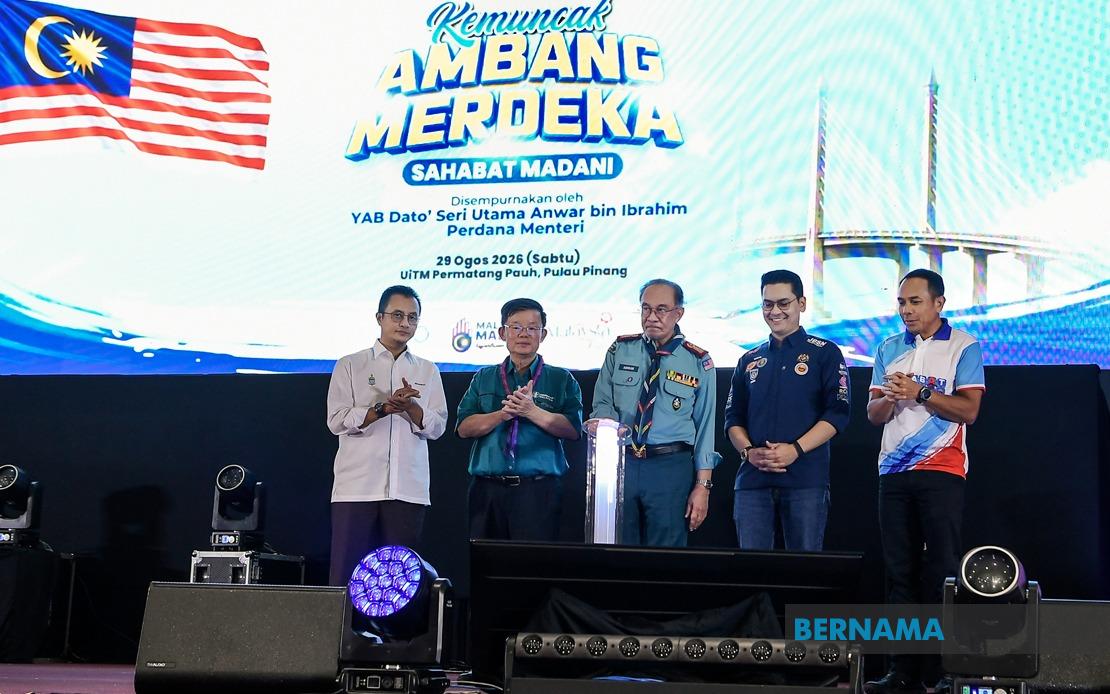
Prime Minister Datuk Seri Anwar Ibrahim has unveiled Sahabat MADANI, an ambitious nationwide volunteer movement that has already attracted 11,060 registered participants determined to serve their communities across Malaysia. The initiative was officially launched during the Ambang Merdeka Sahabat MADANI 2026 highlight programme at Universiti Teknologi MARA Permatang Pauh in Bukit Mertajam, with the Implementation Coordination Unit of the Prime Minister's Department coordinating the effort.
The programme represents an institutional response to building social cohesion in Malaysia by mobilising volunteers who can work together irrespective of their ethnic, religious or socioeconomic backgrounds. Rather than functioning as merely symbolic or ceremonial, Sahabat MADANI deliberately targets tangible community outcomes. The volunteer network concentrates on practical interventions designed to produce immediate, measurable benefits for vulnerable populations, reflecting a shift towards service-oriented governance that operates closer to communities' actual circumstances.
Specific operational areas identified by the programme include supporting marginalised groups who lack access to basic resources or services, providing educational intervention for children who have abandoned formal schooling, and creating viable pathways for young people to establish sustainable livelihoods through employment and enterprise development. The framework also incorporates rapid-response mechanisms to mobilise volunteers during emergencies and natural disasters when communities require urgent assistance. This diversified portfolio of services suggests the organisers recognise that social vulnerability manifests across multiple dimensions requiring coordinated, flexible responses.
The philosophical foundation underpinning Sahabat MADANI connects Malaysia's independence aspirations to contemporary civic responsibility. Officials framed the initiative as embodying the spirit of Merdeka beyond symbolic gestures like flying the Jalur Gemilang, instead positioning voluntary service as an expression of national identity rooted in mutual obligation and practical support for fellow citizens. This framing attempts to redefine patriotism in terms accessible to ordinary Malaysians engaged in community-level action rather than top-down nationalism.
The programme operates within the broader Malaysia MADANI framework, specifically under the "Kesejahteraan Dinikmati" pillar emphasising shared and inclusive prosperity. This conceptual anchoring suggests Sahabat MADANI functions as an implementation mechanism translating high-level policy aspirations into community-based activities managed by organised volunteers. By positioning volunteers as bridges between government objectives and community needs, the framework theoretically enables more responsive and contextually appropriate service delivery than purely bureaucratic channels.
Integration across social divides constitutes a central strategic element of the programme. Officials explicitly emphasised that volunteers working across ethnic, religious and class boundaries could simultaneously advance multiple complementary objectives: promoting interethnic harmony, strengthening community bonds, and concentrating collective resources on specific social challenges including poverty alleviation, corruption exposure and institutional injustice. This integrated approach suggests recognition that social fragmentation undermines collective problem-solving capacity, and that meaningful cooperation across difference requires structured opportunities rather than occurring organically.
Young people feature prominently in the programme's recruitment and messaging strategies. Officials specifically urged younger Malaysians to reject divisive messaging and instead channel their skills and education towards contributing to national progress through volunteer service. This targeting reflects broader concerns across Southeast Asia regarding youth political engagement and social cohesion among generations coming of age in polarised environments. By offering institutional channels for meaningful contribution, Sahabat MADANI potentially provides alternative narratives to divisive rhetoric competing for young people's attention and allegiance.
The rapid accumulation of 11,060 volunteer registrations suggests meaningful response to the initiative, though the sustainability and ongoing engagement of these recruits remains an open question. Building and maintaining volunteer movements requires continuous investment in training, coordination, recognition and purpose clarity. The sophisticated infrastructure implied by terms like "well-organised, inclusive and responsive coordination" must translate to actual institutional capacity to manage, deploy and support such a large volunteer workforce effectively. Previous volunteer initiatives globally often struggle transitioning from recruitment enthusiasm to consistent long-term participation.
The programme's emphasis on transparency and results-oriented action indicates awareness that public trust in government institutions has eroded, and that demonstrable impact matters more to contemporary Malaysians than institutional pronouncements. By committing publicly to delivering observable community benefits and subjecting operations to scrutiny, Sahabat MADANI stakes its legitimacy on tangible outcomes rather than symbolic commitments. This approach carries significant implementation pressures but also potential to rebuild citizen confidence in collective endeavours if executed successfully.
The launch timing around Malaysia's National Day heightens the symbolic significance but also raises expectations about the programme's reach and efficacy. Successfully mobilising even a fraction of these 11,060 volunteers towards sustained, high-impact community service could demonstrably reshape social dynamics across Malaysian neighbourhoods. Conversely, failure to translate volunteer enthusiasm into meaningful change could deepen public cynicism regarding government-backed initiatives. The months and years immediately following this launch will determine whether Sahabat MADANI becomes an institutionalised force reshaping Malaysian civic participation, or remains primarily a well-intentioned administrative programme.

