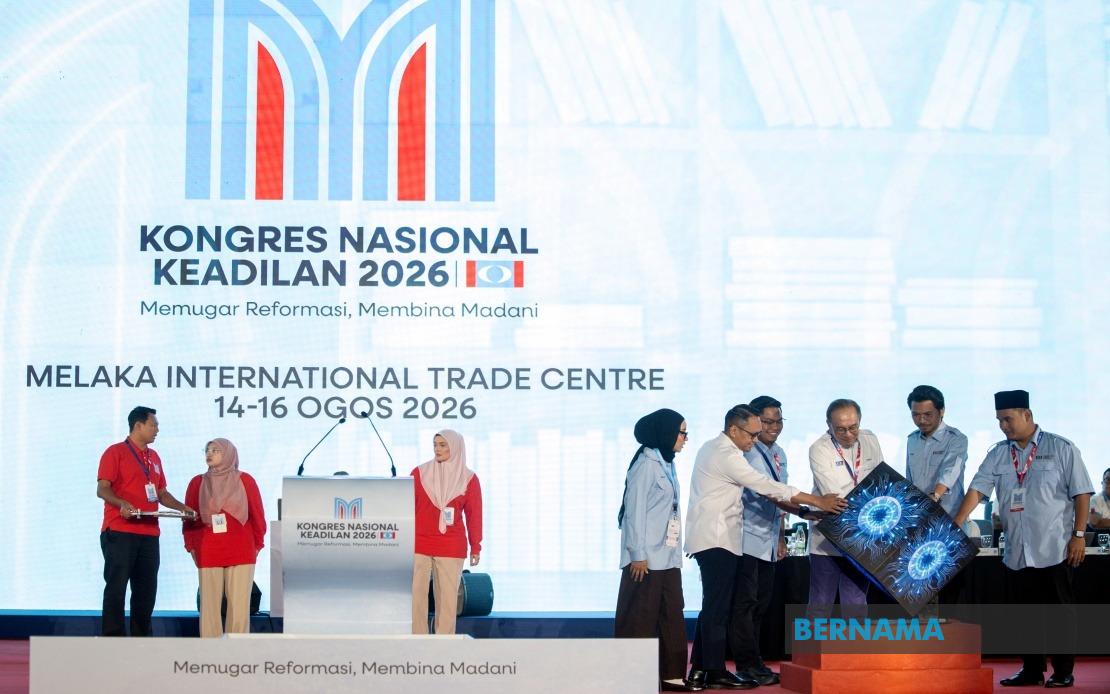
Prime Minister Datuk Seri Anwar Ibrahim unveiled a comprehensive ideological framework document in Melaka this week, marking a deliberate pivot by his Parti Keadilan Rakyat (PKR) towards structured institutional thinking on governance and national renewal. The 113-page publication, jointly authored by AMK chief Muhammad Kamil Ahmad Munim and executive committee member Ashraf Ahmad Hadi, represents an attempt by the ruling coalition to translate campaign promises into coherent policy philosophy for party cadres and, by extension, government direction.
The timing of the launch carries significance beyond routine party business. Anwar framed the document as a response to contemporary challenges facing Malaysia, positioning it alongside broader governmental adoption of development frameworks. By describing the initiative as a form of "civilisational renewal aimed at re-humanising national development", he sought to elevate the publication beyond typical partisan messaging, casting it instead as a serious intellectual exercise in reimagining how the nation approaches economic, social and institutional questions.
Central to Anwar's presentation was a deliberate distancing from what he characterised as hollow political rhetoric and seasonal sloganeering. This distinction matters because it reflects growing concerns within PKR about maintaining ideological coherence as the party navigates the complexities of governing in coalition with partners holding different priorities. By insisting that the document represents substantive thinking rather than expedient positioning, Anwar attempted to restore credibility to a reform agenda that has faced criticism for dilution during coalition management.
The framing of youth responsibility emerged as a dominant theme in Anwar's remarks. He addressed AMK members directly, reframing their roles from beneficiaries of political advancement to custodians of a revitalisation mission. This rhetorical move carries implications for party succession planning and the cultivation of a new generation of leaders who view PKR positions not as career endpoints but as platforms for advancing systemic change. The emphasis on "piety and moral integrity" suggests awareness that public trust in political institutions remains fragile, particularly among younger voters sceptical of traditional party structures.
Anwar's acknowledgment that the nation bears scars from "past injustices and leakages" functions as both historical reference and implicit critique of governance failures under previous administrations. By invoking this language, he established a narrative framework where reform becomes not merely administrative improvement but essential corrective action addressing accumulated institutional damage. This positioning strengthens the political argument for continuity of PKR-led governance while subtly challenging coalition partners to align with the reformist agenda or risk being portrayed as obstacles to necessary change.
The publication's dual function—as cadre-building resource and party history primer—reveals strategic thinking about sustaining institutional memory and ideological commitment. By grounding members in the party's struggle narrative and foundational principles, PKR attempts to create resistance to the dilution that often accompanies long-term governance responsibility. The emphasis on internalising "Reformasi" suggests concern that younger members, who joined during or after the party's entry into government, may lack connection to the ideological wellspring that originally animated the movement.
The document's positioning as a guide for developing "knowledgeable and principled members" capable of "steadfast" commitment to party mandates indicates PKR's recognition that intellectual coherence and moral consistency serve as competitive advantages in Malaysian politics. Opposition parties have frequently challenged the ruling coalition's credibility by pointing to perceived compromises or contradictions in policy implementation. By producing foundational texts that emphasise principled governance, PKR creates internal benchmarks against which members' conduct can be measured and, theoretically, held accountable.
For Malaysian readers and regional observers, this initiative reflects how contemporary Southeast Asian political movements attempt to reconcile ideological foundations with pragmatic governance requirements. PKR's effort to systematise and communicate its reform philosophy through structured documentation echoes similar efforts by reform-minded parties across the region seeking to sustain momentum beyond electoral cycles and governmental transitions. The question of whether such frameworks prove durable or become secondary to coalition pressures remains crucial to assessing whether this generation of Malaysian political reform delivers substantive institutional change.
The launch also signals attention to the intellectual dimension of politics at a moment when populism and personality-driven leadership dominate regional discourse. By emphasising the need for "extraordinary creativity, intellectual courage and spiritual resilience", Anwar positioned his government and party as engaged in serious intellectual work rather than mere power management. This distinction, whether it ultimately proves meaningful through policy outcomes, establishes criteria by which the administration can be evaluated and articulates aspirations that extend beyond conventional political competition.
Regional implications exist as well. Malaysia's political trajectory—whether reform efforts embedded within institutional structures can survive governance pressures and coalition dynamics—carries lessons for neighbouring democracies. The success or failure of initiatives like this publication in maintaining coherence between stated ideals and practical governance decisions will influence how other reform movements calibrate their own approaches to balancing principle with political viability in Southeast Asia's complex governance landscape.

