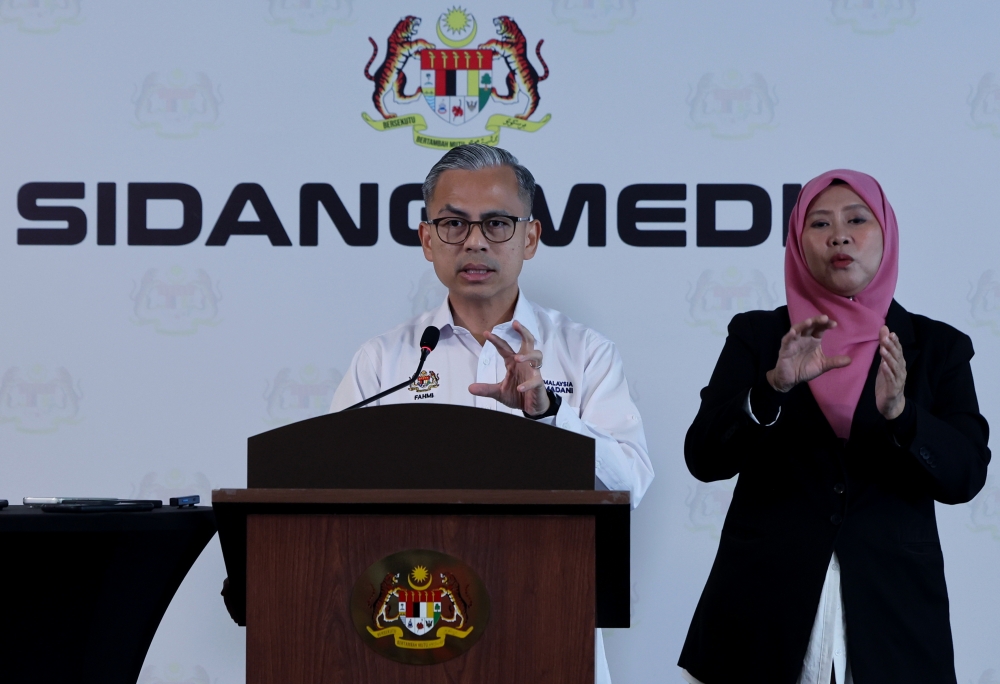
Prime Minister Datuk Seri Anwar Ibrahim has ordered the Ministry of Human Resources to prioritise and expedite the processing of approximately 15,000 pending foreign worker applications currently in the pipeline. The directive comes as Malaysia grapples with persistent labour shortages across critical sectors of the economy, from manufacturing to hospitality and construction. Communications Minister P. Ustaz Fahmi Fadzil conveyed the instruction during a media briefing in Putrajaya, underscoring the government's commitment to addressing workforce gaps that threaten economic momentum.
The accumulation of such a substantial queue of unprocessed applications reflects underlying inefficiencies in Malaysia's foreign worker approval machinery. Employers across various industries have repeatedly flagged the bottleneck, arguing that delays in securing foreign talent are hampering productivity and competitiveness. By directing Kesuma to accelerate these applications, the Prime Minister is signalling government recognition that the current processing capacity falls short of economic demand. The move represents a pragmatic response to pressure from the business community, which contends that local labour availability remains insufficient in several areas despite relatively robust employment figures.
Foreign worker policy constitutes a delicate balancing act for any government. While employers argue for easier access to international labour to fill skill and capacity gaps, labour unions and worker advocacy groups express concern about potential wage suppression and job displacement for Malaysian citizens. Anwar's directive appears calibrated to satisfy business interests without appearing indifferent to protectionist concerns. By explicitly mentioning acceleration rather than blanket approval, the instruction suggests selectivity in which applications receive priority treatment, likely reserving fast-track status for sectors deemed critical to national economic interests.
The timing of this directive carries significance within Malaysia's broader economic recovery narrative. Post-pandemic, several industries have struggled to return to full operational capacity. Tourism and hospitality establishments complain of chronic staffing shortages affecting service quality and revenue. Manufacturing plants report difficulty completing orders due to labour constraints. Construction projects face delays as they cannot source adequate workers. These sectoral pressures have accumulated into a macroeconomic issue, prompting intervention at the highest political level. The Prime Minister's action acknowledges that solving these labour market frictions cannot be deferred without risking sustained economic underperformance.
The Human Resources Ministry will face considerable responsibility in implementing this expedited processing mandate. Kesuma must devise mechanisms to handle the acceleration without compromising due diligence in vetting applications. Background checks, skills verification, and immigration security protocols cannot be shortcuts without introducing risks. The ministry will likely need to allocate additional resources, whether personnel, technology, or procedural streamlining, to achieve meaningful acceleration. This practical implementation challenge will test the government's capacity to translate high-level directives into effective administrative outcomes.
Malaysia's approach to foreign labour sits within a regional context where neighbouring countries employ varying strategies. Singapore maintains selective, skills-focused policies. Thailand has experimented with seasonal programmes. Indonesia grapples with substantial overseas labour mobility. Malaysia's system occupies middle ground, neither fully restrictive nor entirely permissive. The current bottleneck suggests that even this middle path requires recalibration to match economic reality. How Kesuma resolves the 15,000-application backlog will signal whether Malaysia intends to maintain competitive positioning in attracting and deploying international talent.
The foreign worker programme generates substantial government revenue through various levies and licensing fees. Accelerating approvals could therefore yield additional fiscal benefit at a time when government revenues require bolstering. This financial dimension, though unstated in official rhetoric, likely factors into the Prime Minister's calculation. Processing 15,000 applications more quickly could inject meaningful amounts into government coffers while simultaneously improving business confidence and economic activity.
Sector-specific analysis of these 15,000 applications would clarify which industries are most affected by processing delays. Manufacturing sectors, which employ significant numbers of foreign workers, may constitute a substantial portion. Similarly, the domestic work sector, where foreign maids remain prevalent, might represent another major segment. Construction and agriculture round out the typical major employers of foreign workers in Malaysia. Understanding this composition would help assess whether the acceleration serves concentrated interests or reflects distributed demand across the economy.
The sustainability of Malaysia's economic growth increasingly depends on resolving structural labour market issues. Merely accelerating processing of existing applications offers a medium-term solution. Longer-term policy questions remain about optimal foreign worker quotas, sectoral allocation mechanisms, and integration with skill development strategies for Malaysian workers. This directive, while addressing immediate bottleneck problems, does not necessarily represent comprehensive policy rethinking. Nevertheless, it demonstrates executive willingness to intervene in administrative processes when economic performance is at stake.
Communications Minister Fahmi's role in announcing this decision reflects coordination within the cabinet on labour market priorities. His visibility in conveying the Prime Minister's instruction ensures the directive reaches relevant stakeholders—employers awaiting decisions, Kesuma officials charged with implementation, and international recruitment agencies facilitating these movements. Clear communication from government about changed processing expectations helps align private sector planning accordingly.

