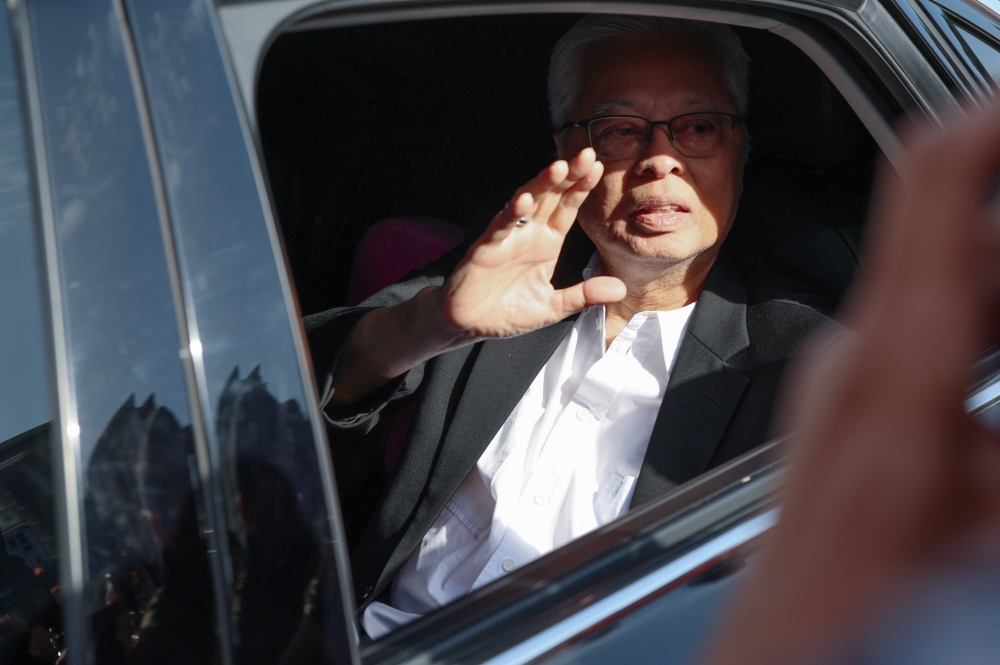
Prime Minister Datuk Seri Anwar Ibrahim made a courtesy visit to the National Heart Institute (IJN) on Friday, where he called on Deputy Prime Minister Datuk Amar Fadillah Yusof and former Prime Minister Datuk Ismail Sabri Yaakob. The visit underscored a moment of political solidarity as the country's top leadership extended personal support to two senior figures undergoing medical treatment at the prestigious cardiac facility in Kuala Lumpur.
The gesture reflects a broader pattern of inter-party civility in Malaysian politics, particularly when matters of personal health transcend partisan divides. Such visits by sitting prime ministers to opposition or former government figures have become a hallmark of Malaysia's political culture, signalling that despite disagreements on policy and governance, there remains an underlying respect for the shared sacrifices and service rendered by senior statesmen. The timing of Anwar's hospital call reinforces the message that personal well-being supersedes political rivalry.
Deputy Prime Minister Fadillah, who holds significant influence within the ruling coalition and represents Sarawak's Parti Pesaka Bumiputera Bersatu (PBB), plays a crucial role in maintaining the delicate balance of Malaysia's coalition government. His hospitalisation at IJN, a centre of excellence for cardiovascular care, highlights the physical demands of high office and the pressures borne by those in senior leadership positions. The fact that Anwar personally visited underscores the importance of the Deputy Prime Minister's role in the current administration and the government's commitment to maintaining stability at the highest levels.
Ismail Sabri's presence at the same institution adds another layer to the narrative. As a former Prime Minister who led the government from 2021 to 2022, Ismail Sabri remains a significant figure in Malaysian politics despite no longer holding executive office. His treatment at IJN represents a continuation of the high-quality medical care available to Malaysia's political elite, whilst also serving as a reminder of the toll leadership takes on individuals. Anwar's decision to visit both patients simultaneously demonstrates an effort to maintain gracious relations with his predecessor and demonstrates the cyclical nature of Malaysian politics, where former opponents may require the goodwill of current office-holders.
The IJN visit also carries symbolic weight in the context of Malaysia's current political landscape. The facility itself is emblematic of Malaysia's healthcare achievements and stands as a representation of the country's medical infrastructure capabilities. By visiting two prominent political figures there, Anwar's presence at the institution becomes a subtle endorsement of the healthcare system's quality and demonstrates that the nation's leadership trusts the facility with their health and that of their family members and colleagues.
From a regional perspective, such gestures of political grace between current and former leaders are increasingly rare across Southeast Asia. The Malaysian example offers a contrasting narrative to more polarised political environments in the region, where transitions of power often result in prolonged antagonism or legal challenges. The civility displayed through hospital visits and expressions of concern for opponents' recovery reflects democratic maturity and institutional stability that Malaysian observers and international commentators frequently cite as a strength of the country's political system.
The visits also serve a practical political function, allowing Anwar to maintain relationships with key figures across the political spectrum. Fadillah's importance as Deputy Prime Minister and coalition partner makes the visit strategically necessary, whilst the call on Ismail Sabri demonstrates a commitment to bipartisan goodwill that can prove valuable in navigating parliamentary challenges and demonstrating to voters that the government operates with grace and magnanimity. Such moments, whether calculated or spontaneous, shape public perception of leadership character.
For Fadillah and Ismail Sabri, receiving a visit from the sitting Prime Minister whilst recovering sends a message to their respective constituencies and supporters that they remain respected figures worthy of the nation's highest office's personal attention. For Fadillah, this validation may strengthen his position within the coalition, whilst for Ismail Sabri, it offers reassurance to his supporters that despite no longer holding office, he retains standing in the country's political establishment.
The IJN, as the nation's premier heart centre, regularly treats Malaysia's political, business, and social elite. Such visits by senior officials to hospitalised colleagues have become an expected part of the institution's social rhythm, reflecting both the medical importance of cardiology in treating age-related conditions amongst Malaysia's aging political leadership and the cultural importance of personal visits in the Malaysian context, where such gestures carry significant social meaning.
Anwar's expressed wishes for their speedy recovery represent more than mere pleasantries; they form part of the fabric of Malaysia's political culture that, despite the intense competition for power and resources, maintains underlying currents of mutual respect and shared national interest. As both Fadillah and Ismail Sabri recuperate, the visit serves as a reminder that Malaysian politics, whilst complex and often fractious, remains grounded in institutional values and personal relationships that transcend immediate political calculations.

