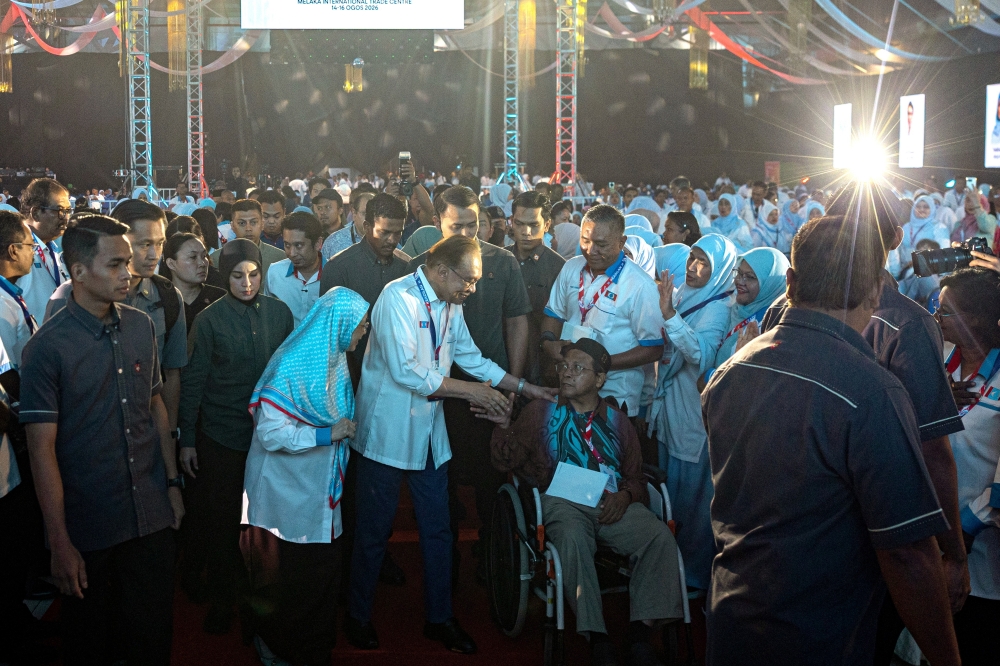
Prime Minister Anwar Ibrahim has drawn a clear distinction between principle-driven politics and sentiment-driven decision-making, telling PKR party delegates in Melaka that any strategic choices involving Umno must ultimately serve the interests of ordinary Malaysians rather than satisfy party resentment. The PKR president's remarks underscore the delicate balancing act the coalition government has been navigating since the 2022 elections, when Barisan Nasional's unexpected loss of its long-held supermajority forced new political alignments and unexpected collaborations across historical divides.
Anwar's intervention during the party gathering signals growing awareness within PKR's upper echelons that the coalition's stability depends on mature deliberation rather than reflexive opposition to the Umno-led Barisan machinery. The premier has long positioned himself as an architect of pragmatic governance capable of bridging Malaysia's fractious political landscape, a persona he reinforced by emphasising that personal animosity or collective memory of past conflicts cannot dictate contemporary policy directions. This framing also acknowledges internal PKR pressures, where veteran members and grassroots supporters harbour deep suspicion toward Umno stemming from decades of electoral competition and ideological disagreement.
The timing of Anwar's message reflects the government's broader struggle to maintain coalition cohesion amid competing pressures. Since assuming office, his administration has had to work with Umno despite the two parties' vastly different political bases and historical antagonism. For PKR, which built much of its early support by positioning itself as a reformist alternative to Barisan dominance, accepting Umno as a coalition partner requires constant recalibration of party narrative and careful management of member expectations. Anwar's emphasis on welfare considerations rather than emotional reactions provides ideological cover for pragmatic compromises that might otherwise provoke accusations of betraying reform commitments.
Malaysian political observers have long noted that the country's complex ethnic composition and competing communal interests frequently necessitate compromise between ideologically distant partners. The post-2022 political environment has intensified this dynamic, as no single bloc commands sufficient parliamentary strength to govern unilaterally. Anwar's insistence on welfare-centred decision-making reflects this structural reality, essentially arguing that emotional satisfaction derived from opposing Umno pales in comparison to material benefits citizens receive from stable, functioning government. This utilitarian calculus, while pragmatically sound, remains contentious within PKR's membership, where historical grievances run deep.
The practical implications of Anwar's stance extend beyond internal party management. His message to delegates effectively signals to Umno leadership and other coalition partners that PKR will not allow historical antagonisms to derail collaborative governance efforts. This provides Umno with reassurance that partnership discussions need not be perpetually shadowed by suspicion of bad faith or sudden strategic reversals. Simultaneously, Anwar's framing allows PKR to maintain its reformist credentials by arguing that pragmatic cooperation serves democratic and developmental goals rather than abandoning core values.
For Southeast Asian observers, Malaysia's coalition dynamics illustrate broader regional challenges in building stable governance frameworks when political fragmentation remains pronounced. Unlike countries with entrenched two-party systems or dominant single-party rule, Malaysian politics requires constant negotiation and compromise among diverse factions with substantial organisational capacity. Anwar's emphasis on welfare-based decision-making rather than ideological purity or historical grievance represents one approach to managing this complexity, though critics argue it risks legitimising previously corrupt structures without adequate reform safeguards.
The welfare framing also resonates with contemporary Malaysian economic anxieties. Cost-of-living pressures, employment challenges, and infrastructural deficits have emerged as dominant public concerns, particularly among urban middle-class and younger voters who formed PKR's core support base. By anchoring coalition decisions to tangible welfare outcomes rather than intangible emotional satisfaction, Anwar attempts to redirect party discourse toward material improvements that benefit citizens directly. This rhetorical shift acknowledges that electoral legitimacy increasingly depends on delivering concrete results rather than maintaining symbolic opposition to historical rivals.
Within the broader Southeast Asian context, Anwar's message highlights tensions between democratic legitimacy and governance effectiveness that many regional democracies face. Whether emotional expression and historical justice should shape contemporary political alignments, or whether pragmatic pursuit of public welfare should supersede such considerations, remains contested even among reform-oriented parties. Anwar's position essentially privileges stability and material outcomes over emotional catharsis and historical accounting, a choice that reflects his government's precarious parliamentary position and dependency on diverse coalition partners.
The PKR president's emphasis on people-centred decision-making also carries implications for party identity and internal cohesion going forward. For a reformist party that gained prominence through opposition to authoritarian governance and entrenched power structures, accepting collaboration with Umno requires continuous justification to sceptical members and supporters. Anwar's welfare-based argument provides this justification, but only if government policies demonstrably improve living standards and address public grievances. Should economic conditions stagnate or deteriorate, the emotional reservations about Umno cooperation would almost certainly resurface with considerable intensity.
Looking ahead, Anwar's intervention suggests that PKR leadership recognises coalition stability as prerequisite for implementing any substantive policy agenda. Without parliamentary majorities and sustained Umno cooperation, the government cannot pass legislation, approve budgets, or undertake major initiatives. Conversely, maintaining coalition unity may require PKR to moderate reform ambitions or compromise on accountability measures that members view as essential. The tension between these imperatives will likely define Malaysian politics throughout this government's term, with welfare outcomes serving as the ultimate measure of whether pragmatic collaboration justified ideological compromises.

