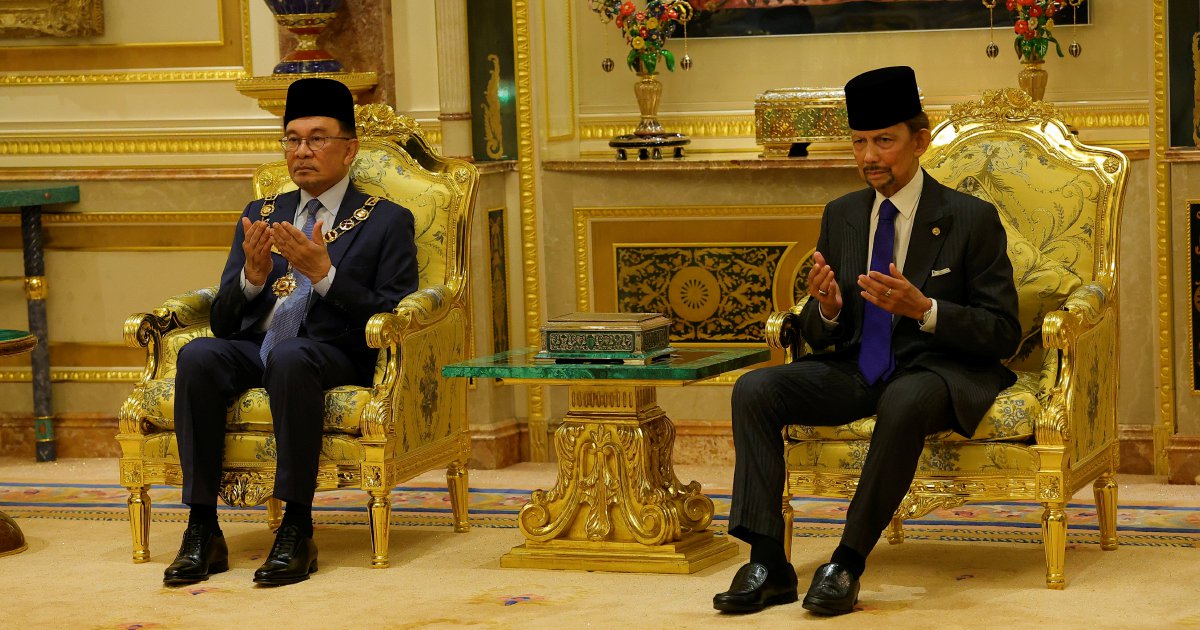
Prime Minister Datuk Seri Anwar Ibrahim has been conferred the Darjah Kerabat Laila Utama Yang Amat Dihormati (D.K.) by the Sultan of Brunei, Sultan Hassanal Bolkiah, in a ceremony held in Bandar Seri Begawan. The distinction represents one of Brunei's highest honours and underscores the deepening bilateral relationship between the two neighbouring nations.
The awarding of such prestigious titles to visiting dignitaries reflects the protocols of formal state recognition within the region's monarchical systems. Sultan Hassanal Bolkiah, who has led Brunei Darussalam since 1967, bestows these honours selectively to foreign leaders and officials whose contributions or standing warrant formal recognition. The conferment of this particular title to the Malaysian Prime Minister signals Brunei's regard for Malaysia's leadership and the importance it places on the relationship with its larger neighbour.
Malaysia and Brunei share extensive historical, cultural, and economic ties rooted in their proximity and common Islamic heritage. Both nations are members of the Association of Southeast Asian Nations (ASEAN) and have collaborated on regional security matters, trade initiatives, and maritime governance. The bilateral relationship encompasses defence cooperation, with the two countries maintaining regular military-to-military exchanges and joint exercises in regional waters.
Under Anwar Ibrahim's premiership, Malaysia has sought to strengthen relationships with all ASEAN neighbours while navigating regional complexities involving disputes and competing interests. The recognition from Brunei's Sultan reflects Malaysia's standing within the region and validates the diplomatic approach taken by the current administration. Such ceremonial honours, while symbolic in nature, carry substantial weight in diplomatic circles and demonstrate mutual respect between sovereigns and their representatives.
The Darjah Kerabat Laila Utama Yang Amat Dihormati ranks among Brunei's highest national honours, typically awarded to members of the Royal Family and distinguished foreign dignitaries. The inclusion of the Malaysian Prime Minister in recipients of this calibre indicates the special status Malaysia holds in Brunei's foreign relations. The honour comes as both nations continue to address practical matters including cross-border trade, immigration cooperation, and joint development initiatives in shared maritime zones.
Economic relations between Malaysia and Brunei have remained steady, with trade between the nations reflecting their intertwined supply chains and shared regional market. Malaysian businesses operate extensively in Brunei, particularly in the petroleum, manufacturing, and service sectors, while Brunei's oil and liquefied natural gas exports find significant markets in Malaysia. The ceremonial recognition of the Malaysian Prime Minister may signal openness to deepening commercial collaboration in coming years.
Within the broader ASEAN framework, both nations have participated in critical forums addressing regional security challenges, including maritime security concerns in the South China Sea. Malaysia's role as a key player in ASEAN affairs and its chairmanship in various regional initiatives have enhanced its diplomatic profile. The honour from Sultan Hassanal Bolkiah acknowledges Malaysia's contributions to regional stability and its commitment to multilateral cooperation.
The timing of such ceremonial events often carries diplomatic significance, potentially coinciding with bilateral discussions on substantive matters or serving as a gesture of goodwill during a particular phase of relations. State visits and formal recognition ceremonies typically involve broader engagements between governments, including meetings between senior officials and exploration of mutual interests. The visit to Bandar Seri Begawan likely encompassed discussions on matters of mutual concern and potential areas for expanded cooperation.
For Malaysian observers, the recognition of their Prime Minister by a fellow ASEAN sovereign reinforces perceptions of Malaysia's regional standing and diplomatic credibility. Anwar Ibrahim's tenure has focused on restoring Malaysia's international reputation following previous political challenges, and international recognition through formal honours contributes to this rehabilitative effort. The award provides positive messaging domestically and internationally regarding Malaysia's place within the regional order.
Looking forward, such honours often serve as foundations for enhanced bilateral engagement. The recognition from Brunei may presage deeper cooperation on shared challenges including maritime security, religious dialogue, and economic development. Both nations, as Islamic-majority ASEAN members, share interests in regional Islamic cooperation forums and can leverage their relationship to address broader Southeast Asian concerns. The conferment of the Darjah Kerabat Laila Utama Yang Amat Dihormati to Anwar Ibrahim thus represents both recognition of present standing and potential catalyst for future collaborative endeavours between Malaysia and Brunei Darussalam.

