%22%2F%3E%3C%2Fpattern%3E%3C%2Fdefs%3E%3Crect%20width%3D%22100%25%22%20height%3D%22100%25%22%20fill%3D%22url(%23ph1gfpvg)%22%2F%3E%3Crect%20width%3D%22100%25%22%20height%3D%22100%25%22%20fill%3D%22url(%23ph1gfpvp)%22%2F%3E%3Ctext%20x%3D%2250%25%22%20y%3D%2250%25%22%20text-anchor%3D%22middle%22%20dominant-baseline%3D%22central%22%20fill%3D%22rgba(255%2C255%2C255%2C0.95)%22%20font-family%3D%22Georgia%2C%20'Times%20New%20Roman'%2C%20serif%22%20font-weight%3D%22700%22%20font-size%3D%22272%22%20letter-spacing%3D%22-0.02em%22%3EAnwar%3C%2Ftext%3E%3C%2Fsvg%3E)
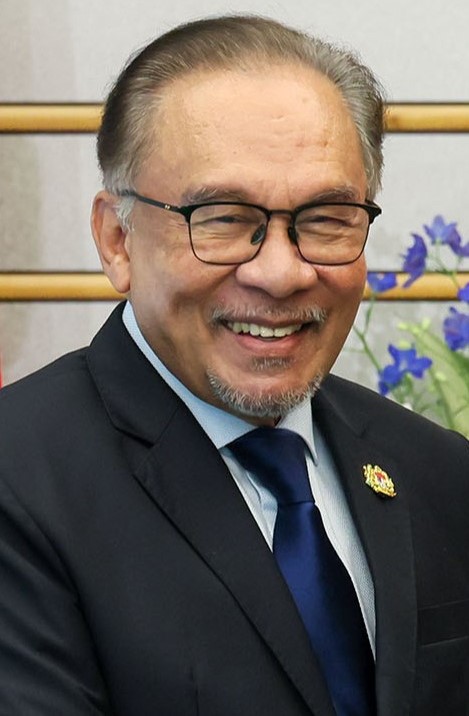
Prime Minister Anwar Ibrahim used a high-profile candidate announcement event to consolidate Pakatan Harapan's campaign momentum ahead of the 16th Johor State Election, presenting the coalition's complete roster of candidates and reframing the ballot as a referendum on integrity-led governance. The gathering on 22 June 2026 at Padang Bukit Gambir Extreme Park served as both a rallying point for party faithful and a public statement of intent, with Anwar positioning the election as an opportunity for Johor voters to choose between competing visions of political leadership and economic stewardship.
Anwar's remarks at the event crystalized the thematic heart of Pakatan Harapan's election strategy, moving beyond party machinery to articulate a vision of governance rooted in tangible outcomes for households and enterprises. According to the Prime Minister, the proper function of politics is fundamentally service-oriented—politicians should dedicate themselves to strengthening communities, unlocking pathways for young Malaysians seeking career advancement, providing substantive support to the small and medium business sector, and systematically improving living standards for all Johor families. This framing reflects a deliberate pivot away from defensive posturing and toward an offensive narrative grounded in measurable improvements to citizens' daily lives.
The candidate announcement itself represented a crucial organizational milestone for the coalition. By unveiling the complete slate of candidates for all Johor state seats at a single, nationally visible event, Pakatan Harapan signaled organizational readiness and internal cohesion—critical messaging in Malaysian electoral politics, where perceptions of party discipline and unity directly influence voter confidence. The simultaneous unveiling also granted the coalition control of the media narrative during a pivotal campaign window, allowing it to set the terms of discussion rather than react to announcements from rival coalitions.
The theming of the event around unity, integrity, compassion, and progress directly invokes the Malaysia Madani framework that has become central to the Anwar Ibrahim government's broader policy messaging. This alignment between campaign rhetoric and governing philosophy is strategically important, as it allows Pakatan Harapan to argue continuity between national-level governance achievements and proposed state-level stewardship. By anchoring the Johor campaign within Malaysia Madani principles, the coalition attempts to transfer whatever legitimacy and brand equity the national initiative has accumulated to local electoral contests.
For Malaysian observers, the event underscores the elevated stakes surrounding Johor electoral politics. The state represents one of Malaysia's largest voter populations and has historically been a swing region, making it a critical battleground in the broader competition for parliamentary dominance. A strong Johor result would substantially strengthen Pakatan Harapan's hand in future national politics, while conversely, a poor showing would embolden rival coalitions and potentially destabilize the current federal government's legislative arithmetic.
Anwar's personal attendance and prominent role at the event also carries tactical significance. As Prime Minister, his involvement in state-level campaign activities demonstrates the national government's investment in Johor outcomes and personalizes the campaign in ways that can mobilize supporters. However, this approach also carries inherent risks, as any electoral setback becomes partly attributable to national leadership performance, complicating the traditional separation between state and federal campaign messaging.
The commitment to inclusive governance articulated at the event resonates with a specific demographic cohort that Pakatan Harapan has strategically prioritized in recent years—educated urban voters, younger professionals, and business-minded Malaysians who prioritize competence and corruption avoidance over purely communal appeals. This positioning implicitly contrasts with alternative political approaches that may emphasize particularistic benefits or communal preferences, representing a conscious choice to compete on a different axis of political competition.
From a Southeast Asian perspective, the Johor election carries broader implications for the trajectory of Malaysian democracy and governance reform. Malaysia has experienced considerable political volatility over the past decade, and elections at both state and federal levels increasingly serve as referenda on competing governance models. A strong Pakatan Harapan performance would suggest voter appetite for the particular governance approach and policy priorities that the coalition advocates, while conversely, weakness would indicate openness to alternative leadership configurations.
The emphasis on economic opportunity and youth advancement in Anwar's campaign messaging also reflects genuine policy priorities within the Pakatan Harapan coalition. Malaysia's younger demographic cohorts face documented challenges in employment, housing affordability, and skills development, and political parties perceiving electoral vulnerability among this group have compelling incentives to address these concerns substantively rather than symbolically. The extent to which campaign promises translate into actual policy implementation will significantly influence whether Pakatan Harapan's current coalition positioning proves sustainable across subsequent electoral cycles.
Looking forward, the complete candidate announcement establishes the operational parameters for what promises to be an intensive campaign period in Johor. The presence of all candidates on stage and the formal unveiling mechanism create mutual accountability—candidates become visibly associated with coalition messaging and leadership, while party leadership becomes collectively invested in candidate success. This structural feature of the announcement event creates incentive alignment that can either amplify message coherence or, conversely, expose internal inconsistencies if candidates deviate from announced positions during the campaign proper.
The Malaysia Madani framing ultimately represents an attempt to elevate campaign discourse beyond transactional politics toward a broader narrative about the kind of country and society Malaysia should become. Whether this elevated rhetoric successfully resonates with Johor voters, or whether it proves secondary to more immediate concerns regarding local service delivery, economic opportunity, and community welfare, will become apparent as the campaign unfolds and voter preferences crystallize.