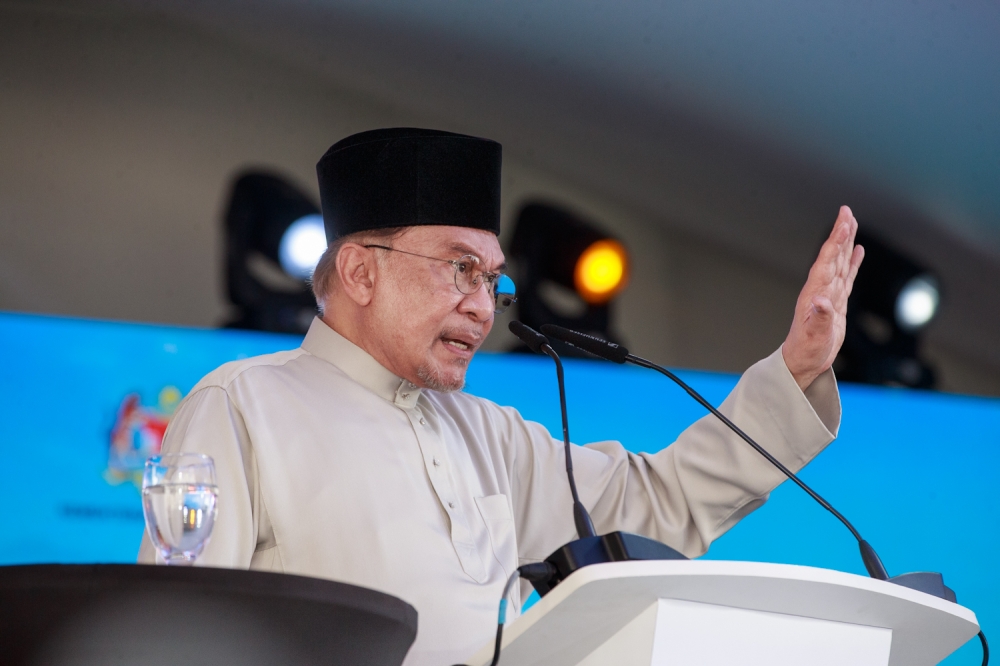
Prime Minister Datuk Seri Anwar Ibrahim has intervened directly in a long-standing crisis within Malaysia's civil service, instructing the Chief Secretary to the Government to conduct an urgent review of the promotion system that has left thousands of officers languishing in the same grades for nearly a decade. The intervention, announced during a high-level meeting in Kajang, signals growing recognition within the federal government that the current bureaucratic advancement structure has become unsustainable and is increasingly damaging the effectiveness of the public sector.
The problem has reached crisis proportions, with numerous civil servants remaining stuck at the same career levels while newer recruits advance more rapidly through the ranks. Officers waiting eight years or more for promotion represent a systemic failure in human resources management that threatens to undermine the efficiency and morale of government agencies across all levels. This prolonged stagnation creates a demoralizing work environment where merit and experience offer diminishing returns, potentially driving skilled professionals toward the private sector or early retirement.
Anwar's directive specifically tasked Chief Secretary T. Murugiah with examining the entire promotion framework and proposing tangible reforms that could accelerate career progression while maintaining standards of competence and fairness. The scope of this review extends beyond simple procedural adjustments—it requires a fundamental reassessment of how the civil service identifies, develops, and advances talent through its ranks. The bureaucracy must balance the legitimate concerns of officers whose careers have stalled with the need to ensure that promotions are based on genuine capability and merit rather than merely serving as a pressure release valve.
The civil service represents one of Southeast Asia's largest organized workforces, with hundreds of thousands of employees providing essential services across health, education, security, and administration. When this institution becomes bogged down in inefficiency and perceived unfairness, the ripple effects extend far beyond the individual officers affected. Public service quality deteriorates, departmental productivity suffers, and the government's capacity to implement policies and deliver services to citizens directly declines. Malaysia's aspirations to compete regionally depend substantially on having a motivated, professionally advanced civil service capable of executing complex initiatives.
For Malaysian readers, this situation carries particular significance because the civil service remains a major employment sector and a pathway to middle-class stability for millions of families. When advancement becomes glacially slow, it affects not only individual career prospects but also family finances and planning horizons. Officers facing eight-year delays inevitably reduce their spending and investment in education, housing, and other areas of the economy. The broader economic implications of demotivated public servants ripple through public institutions that citizens rely on daily.
The underlying causes of this promotion bottleneck are multifaceted. The civil service has suffered from organizational restructuring, budget constraints, and the absence of clear advancement pathways aligned with actual departmental needs and vacancies. Additionally, rigid grading systems often fail to account for changing skill requirements in an increasingly complex governance landscape. The system appears to have been designed for an era of stable, predictable career structures that no longer reflects the dynamic nature of modern public administration.
Regional context matters here as well. Other Southeast Asian nations have grappled with similar challenges in their civil services, and some have implemented innovative solutions worth examining. Singapore's civil service has long maintained more flexible promotion pathways, while countries like Indonesia and Thailand have experimented with performance-based advancement systems. Malaysia's civil service review could benefit from comparative analysis of these models, adapted to local conditions and cultural contexts.
The Chief Secretary's review will likely examine multiple reform options: expanding lateral movement across departments to create new advancement opportunities, establishing skills-based progression tracks rather than purely hierarchical grades, implementing clearer performance metrics that objectively determine readiness for promotion, and potentially creating additional middle-management positions in growing departments. Each option carries different budgetary implications and organizational complexities that must be carefully evaluated.
Anwar's personal intervention underscores that this issue has become politically consequential. Public sector employee satisfaction directly influences electoral politics, and civil servants represent a significant voting bloc with the capacity to influence broader public perception of government competence. A prime minister who successfully addresses bureaucratic stagnation can claim meaningful reform credentials, while failure to deliver tangible improvements risks growing discontent within the ranks.
Implementing comprehensive promotion reform will test the government's capacity for institutional change. The obstacles extend beyond technical administrative matters to include entrenched interests, competing departmental priorities, and budget constraints limiting the number of available promotions. However, the alternative—continuing with a system that penalizes longevity and leaves talented officers stranded in their careers—simply postpones a larger crisis of public sector dysfunction.
The timeline for the Chief Secretary's review remains unspecified, but the urgency of Anwar's directive suggests this is not a study intended to sit gathering dust on shelves. The government appears committed to producing actionable recommendations that can be implemented within a reasonable timeframe. Success will require sustained political will and coordination across multiple government agencies, as promotion reforms cannot be confined to a single department but must reflect a coherent civil service-wide strategy.
This initiative represents a recognition that Malaysia's development goals cannot be achieved with a demoralized, stagnating bureaucracy. As the nation pursues economic transformation and addresses complex social challenges, the quality and motivation of its public sector workforce becomes increasingly decisive. Anwar's intervention signals that the government understands this fundamental reality and is prepared to address systemic weaknesses that have accumulated over years of neglect. The actual implementation of reforms will ultimately determine whether this directive becomes a genuine turning point or merely another unfulfilled promise of bureaucratic improvement.

