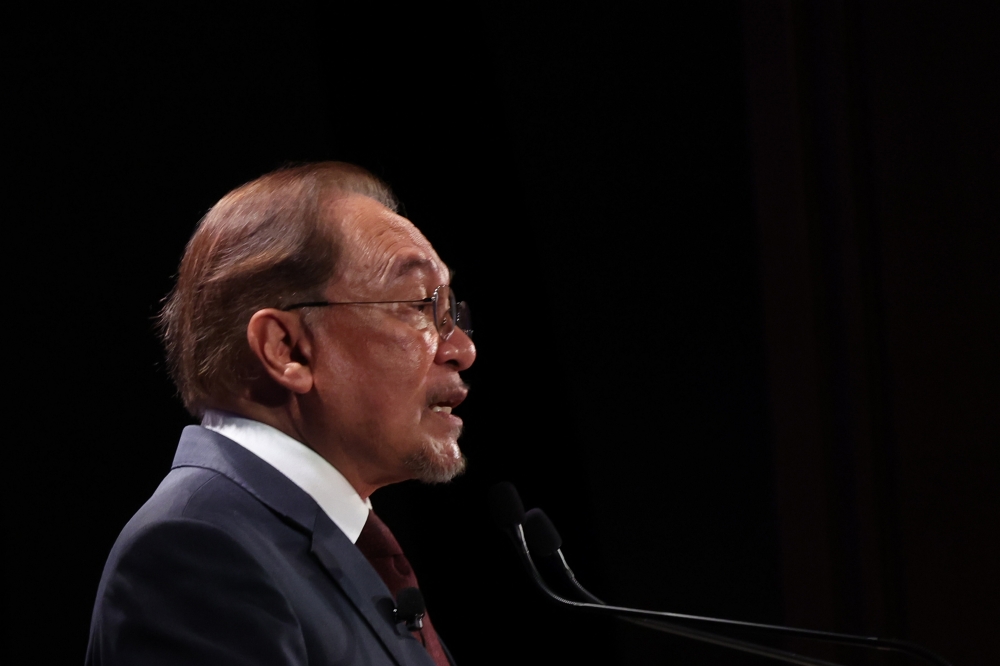
Prime Minister Datuk Seri Anwar Ibrahim has initiated legal action against Tuan Ibrahim Tuan Man, the deputy president of the Malaysian Islamic Party (PAS), over statements the premier contends were defamatory in nature. The suit, filed in Kuala Lumpur, represents a significant escalation in the ongoing political friction between Anwar's government and the opposition-aligned Islamic party, underscoring the deepening divisions within Malaysia's fractious political landscape.
The decision to pursue a defamation claim through the courts marks a notable shift in how the Prime Minister's office is responding to criticism from opposition figures. Rather than engaging through parliamentary debate or media responses, Anwar has opted for judicial intervention, signalling the severity with which the government views the alleged remarks. This approach reflects broader patterns of legal action increasingly employed by Malaysian political actors seeking to shield themselves from criticism, a trend that has prompted ongoing debates among legal scholars and civil society observers about the nature of public discourse in the country.
Defamation law in Malaysia operates within a complex framework that distinguishes between criminal defamation and civil suits. The specific allegations against Tuan Ibrahim would need to demonstrate that statements were false, caused damage to reputation, and were published without justification or fair comment. The burden of proof in civil proceedings rests on demonstrating these elements to the court's satisfaction, a threshold that has produced mixed outcomes in previous high-profile political defamation cases.
Tuan Ibrahim's position as PAS deputy president gives particular weight to his public statements, as opposition leadership figures carry significant influence within their respective constituencies and among party supporters. PAS, as a major opposition bloc representing substantial portions of Malaysia's Muslim-majority population, maintains considerable political leverage in parliamentary discussions and state-level governance, particularly in states such as Kelantan and Terengganu where the party holds substantial legislative majorities.
The tension between Anwar and PAS reflects deeper ideological and political differences that have characterised Malaysian politics for decades. While Anwar's government operates within a multiethnic coalition framework, PAS has historically positioned itself as an alternative governing force based on Islamic principles and Malay-Muslim interests. These contrasting visions have produced regular clashes on matters ranging from religious policy to economic management, creating fertile ground for the kind of rhetorical conflict that has now spilled into the legal arena.
The timing of the defamation suit carries political significance within Malaysia's current parliamentary configuration. Anwar's government operates with relatively narrow majorities in parliament, making stability dependent on maintaining coalition cohesion. Actions that generate legal controversies with opposition figures can influence public perception and parliamentary dynamics, potentially affecting the government's operational capacity and political durability in the coming months.
PAS has indicated its intention to contest the claims, positioning this lawsuit as an attempt to silence legitimate political opposition. The party's legal team will likely argue that the statements in question constitute fair comment on matters of public interest, a recognised defence in Malaysian defamation law that permits critical discourse regarding public figures and government decisions. This legal approach has found success in previous cases where courts have upheld the right to robust political debate.
The lawsuit's progression through Malaysia's court system will likely attract substantial public attention, given the prominence of both parties involved and the implications for political discourse. Media coverage will inevitably become a factor in how the dispute is perceived by the broader public, with both sides utilising communication channels to present their respective narratives. The outcome could establish important precedent regarding the boundaries of permissible political speech in contemporary Malaysia.
International observers of Malaysian politics have expressed concerns about increasing recourse to defamation laws in political disputes, noting that such litigation can potentially chill legitimate political expression and create chilling effects on public criticism of government policies. Legal organisations monitoring freedom of expression in Southeast Asia have documented similar patterns across the region, where defamation suits have occasionally been employed as tools to manage political opposition.
The broader implications for Malaysian governance extend beyond the immediate dispute between Anwar and Tuan Ibrahim. The case will likely influence how opposition figures calculate the risks of public criticism, potentially affecting the quality and robustness of parliamentary debate. These dynamics become particularly consequential in a political system that relies on vigorous inter-party scrutiny and accountability mechanisms to function effectively.
For Malaysian voters and civil society observers, the litigation underscores the contentious nature of contemporary politics and the competing visions that different political actors maintain for the nation's future direction. The courtroom battle becomes, in effect, another arena where fundamental disagreements about governance, religion's role in public life, and representation play out in a country navigating complex questions about pluralism and national identity.

