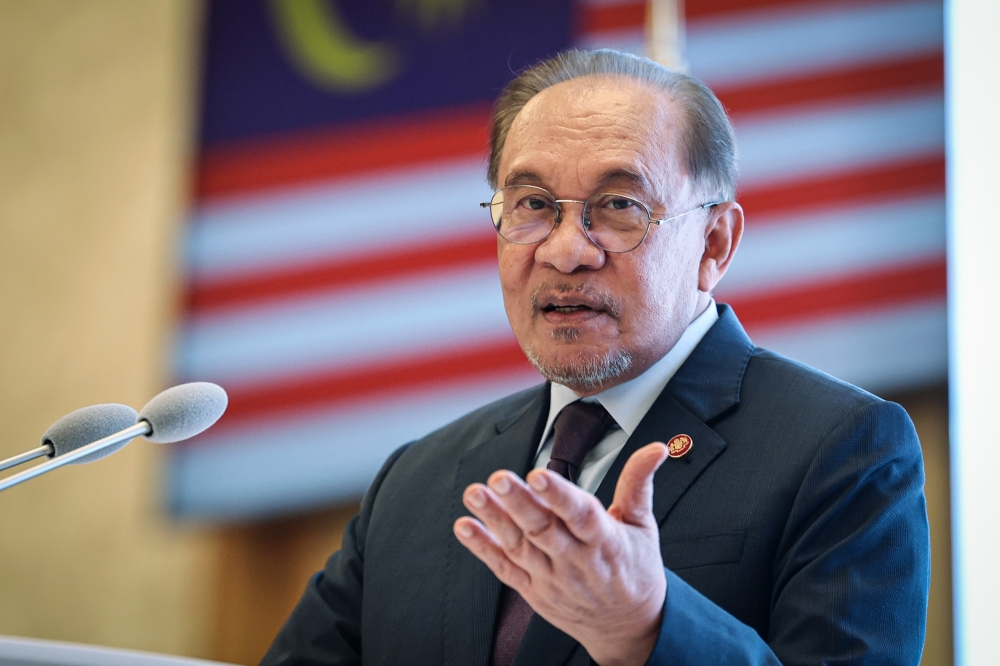
Prime Minister Datuk Seri Anwar Ibrahim has publicly acknowledged the prayers and well-wishes extended to him by citizens, underscoring the personal connection many Malaysians maintain with their nation's leadership during periods of public concern. His remarks, made in Kuala Lumpur on August 11, reflected gratitude toward those who had expressed support while signalling his continued commitment to parliamentary duties despite any personal health considerations that may have prompted such expressions of concern.
The timing of Anwar's statement proved significant not merely for its expressions of appreciation, but for the substantive announcement it contained regarding Malaysia's legislative agenda. The Prime Minister confirmed that a special sitting of Parliament would proceed as scheduled to deliberate on the Royal Commission of Inquiry findings concerning Tabung Haji, the government-backed Islamic pilgrimage savings institution. This confirmation represented an important signal of continuity in governance and the administration's determination to address matters of public scrutiny regardless of prevailing circumstances.
Tabung Haji occupies considerable importance within Malaysia's Islamic financial ecosystem and holds deep cultural resonance among Muslim Malaysians who utilise the institution to accumulate savings for the Hajj pilgrimage. The institution manages billions of ringgit in deposits and has historically served millions of contributors seeking to fulfil one of Islam's Five Pillars. Any inquiry into its operations therefore carries implications extending far beyond technicratic financial analysis, touching upon matters of public trust, governance standards, and fiduciary responsibility toward a vulnerable savers population.
The establishment of the Royal Commission of Inquiry itself signalled recognition by authorities that questions surrounding Tabung Haji's management, investments, and stewardship of depositor funds warranted formal, independent investigation. Such commissions typically emerge when concerns about institutional governance, financial irregularities, or systemic weaknesses demand scrutiny beyond routine regulatory oversight. The commission's mandate would have encompassed examination of leadership decisions, investment strategies, risk management practices, and compliance with regulatory frameworks governing Islamic financial institutions in Malaysia.
Parliament's forthcoming special sitting to debate the RCI report represented a crucial juncture in Malaysia's accountability mechanisms. Unlike routine parliamentary sittings confined to scheduled legislative business, special sessions dedicated to single issues typically indicate matters of heightened national significance demanding focused deliberation and high-level governmental attention. The decision to convene such a sitting underscored the administration's commitment to transparency and legislative oversight of institutional performance, principles central to Malaysia's democratic functioning.
For Malaysian investors and Hajj pilgrims who have placed their financial trust in Tabung Haji, the forthcoming parliamentary debate promised eventual clarity regarding institutional governance and any remedial measures deemed necessary. The public airing of RCI findings within Parliament's chamber would ensure that concerns were addressed through democratic forums accessible to elected representatives answerable to their constituents, rather than through closed administrative channels. This transparency mechanism constitutes an important safeguard for institutional accountability within Malaysia's governance architecture.
The Tabung Haji matter also intersects with broader regional conversations about Islamic financial governance and institutional integrity. As Southeast Asia's Muslim-majority economies develop increasingly sophisticated Islamic finance sectors, the performance and reputation of flagship institutions like Tabung Haji influences international confidence in regional Islamic banking standards. Parliamentary scrutiny of the RCI report therefore carried implications extending beyond domestic political considerations to encompass regional financial market perceptions and Malaysia's positioning within the global Islamic finance ecosystem.
Anwar's emphasis on proceeding with the parliamentary special sitting despite personal circumstances demonstrated executive prioritisation of institutional business over individual considerations. Such signals matter considerably in parliamentary democracies, where political leadership must maintain public confidence in governance continuity and demonstrate that individual circumstances, however significant, do not impede the functioning of state institutions. The Prime Minister's stance thus reinforced broader principles of institutional supremacy and democratic governance that underpin Malaysia's constitutional framework.
The anticipated parliamentary debate would likely encompass detailed examination of the RCI's investigative findings, recommendations for institutional reform, and government responses to commission conclusions. Lawmakers would presumably scrutinise management decisions, question accountability mechanisms, and probe whether depositor protections functioned adequately. Such robust questioning, informed by independent commission findings, represents the legislative branch fulfilling its constitutional obligation to exercise oversight over executive bodies and quasi-governmental institutions managing public resources.
Looking ahead, the special parliamentary sitting on the Tabung Haji RCI report constitutes a test of Malaysia's capacity to conduct institutional investigations transparently and act decisively on findings. International observers and domestic stakeholders will assess whether the parliamentary deliberation translates into meaningful governance reforms, enhanced transparency measures, and strengthened depositor protections. Such outcomes would reinforce public confidence in Malaysian institutions' responsiveness to accountability demands while advancing standards across the region's Islamic financial sector.

