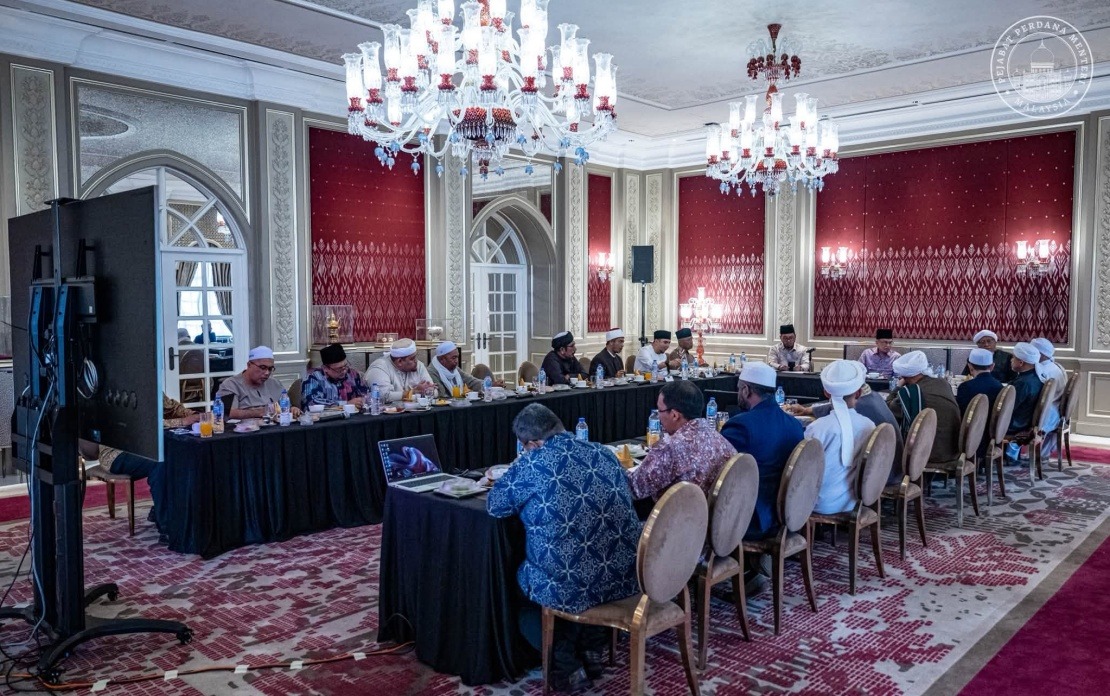
Prime Minister Datuk Seri Anwar Ibrahim has underscored the strategic value of engaging Malaysia's Islamic scholarly community in shaping policy directions, characterising such consultations as essential mechanisms for ensuring government initiatives remain grounded in theological knowledge and contemporary relevance. Speaking following a series of discussions held in observance of Maulidur Rasul, Anwar framed these engagements not as ceremonial protocol but as substantive opportunities for institutional reflection and intellectual refinement across the bureaucratic apparatus.
The Prime Minister's emphasis on scholarly consultation reflects a broader administrative philosophy that positions Islamic expertise as foundational to governance effectiveness, particularly in a nation where Islam holds constitutional prominence and religious affairs carry significant political weight. By elevating these dialogues as more than routine meetings, Anwar signals an intentional recalibration of how government bodies incorporate religious perspectives into decision-making frameworks, a positioning that carries particular resonance given Malaysia's complex religious and constitutional landscape.
Among the scholars consulted was Sheikh Dr Muhyiddin Awwamah, representing Darul Hadis al-Awwamiyyah, a respected institution within Malaysia's Islamic education ecosystem. The selection of such figures reflects deliberate outreach toward established intellectual networks rather than ad-hoc consultation, suggesting a systematic approach to knowledge-gathering across multiple scholarly traditions and institutional affiliations within the Muslim community.
Anwar specifically acknowledged Sheikh Dr Muhyiddin's lineage within Islamic scholarship, noting the considerable influence of his father, Al-'Allamah Sheikh Muhammad bin Awwamah, a preeminent hadith specialist whose scholarly contributions have shaped Islamic jurisprudence across generations. This intergenerational framing carries symbolic weight, positioning contemporary policy consultation within a continuum of Islamic intellectual tradition rather than as disconnected from historical scholarly authority. The Prime Minister's appreciation for the father's written works characterises intellectual legacy not merely as archival material but as a living transmission of knowledge that bridges scholarly generations.
The government's consultative approach addresses a persistent tension in modern Islamic governance: the need to honour traditional scholarly frameworks while remaining responsive to evolving community expectations and contemporary realities. By explicitly acknowledging that government efforts must be "refined according to the needs of the Muslim community and the demands of the times," Anwar articulates recognition that static interpretations prove insufficient for addressing complex contemporary challenges facing Malaysia's Muslim population, whether economic, social, or technological.
For Malaysian readers, this consultation model carries practical implications across multiple policy domains. Religious scholars' counsel on matters ranging from Islamic education standards, to Islamic finance regulations, to religious freedom interpretations, to family law administration can directly influence how federal and state governments operationalise Islam's constitutional position. The Prime Minister's public endorsement of scholarly consultation thus establishes an expectation that such voices will receive serious consideration rather than serve merely decorative functions within policy deliberation.
The timing of these discussions during Maulidur Rasul celebrations, commemorating the Prophet Muhammad's birth, embeds policy consultation within Malaysia's Islamic ritual calendar rather than treating it as secular administrative routine. This ceremonial positioning reinforces the spiritual and intellectual dimensions of governance, suggesting that consultation with religious scholars constitutes an act of devotion and intellectual humility rather than a technocratic exercise.
From a Southeast Asian perspective, Malaysia's institutional engagement with religious scholarship offers a distinctive model compared to neighbouring countries. Unlike secular governance frameworks that compartmentalise religious affairs, and unlike explicitly theocratic systems, Malaysia's approach attempts to integrate scholarly Islamic counsel within democratic administrative processes. This balance remains perpetually contested, with ongoing debates about whether sufficient weight is accorded to religious expertise versus other knowledge systems.
Anwar's framing also addresses a recurring critique within Malaysia's Muslim community that governments insufficiently consult with learned scholars before implementing policies affecting Islamic affairs. By publicly elevating such dialogue, the Prime Minister attempts to build confidence that Islamic scholarship will meaningfully inform policy trajectory rather than function as an afterthought to decisions reached through other channels. This confidence-building holds particular importance given historical tensions between certain government policies and religious scholars' interpretations of Islamic law and ethics.
The emphasis on dialogue also reflects pragmatic recognition that religious scholars command considerable influence over public opinion within Muslim communities, particularly regarding implementation of policies touching on religious practice, family life, or Islamic education. Securing scholars' buy-in before policy announcement potentially smooths implementation and reduces grassroots resistance that could otherwise complicate enforcement.
Looking forward, Anwar's consultation model will face testing as government policies inevitably encounter situations where scholarly advice conflicts with other policy objectives, whether fiscal constraints, international commitments, or competing community interests. The substantive question underlying his rhetoric involves whether consultation will genuinely shape outcomes or serve primarily as legitimation for decisions reached through other deliberative processes.
The Prime Minister's investment in framing government-religious scholar relations carries significance extending beyond administrative process. It addresses fundamental questions about knowledge authority in modern Malaysia, about whose expertise guides policy in a multicultural nation with Islamic constitutional foundations, and about whether elected governments can effectively integrate theological wisdom into secular administrative structures. These conversations, conducted with figures like Sheikh Dr Muhyiddin Awwamah, represent ongoing negotiation of Islam's institutional role within Malaysia's governance architecture.

