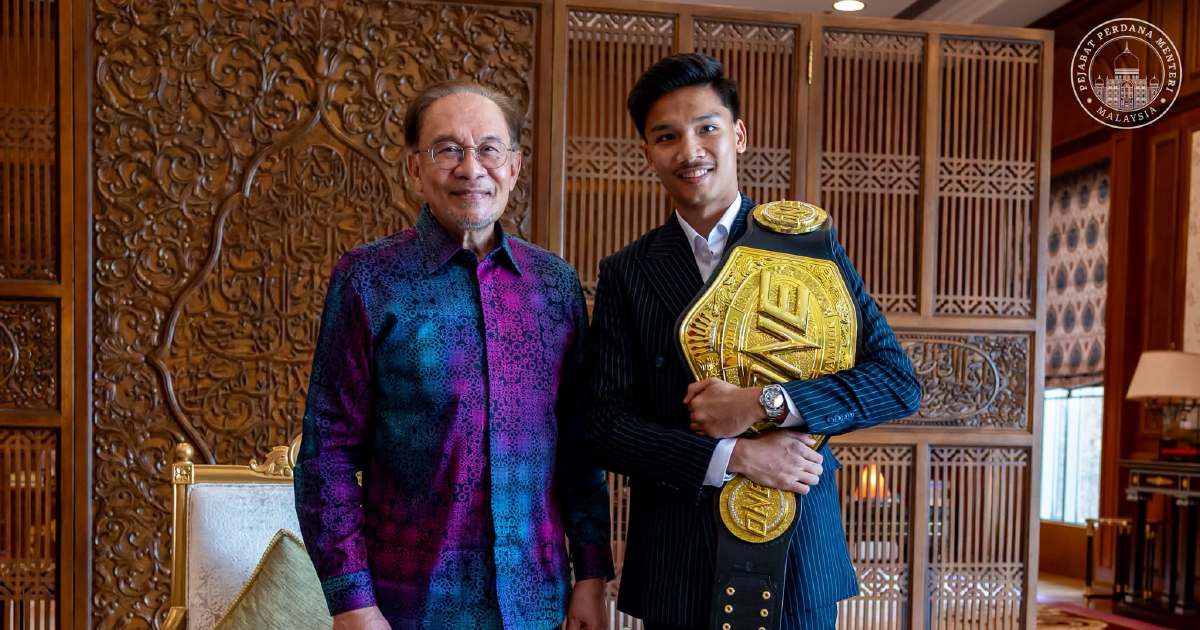
Prime Minister Datuk Seri Anwar Ibrahim has extended his congratulations to Muay Thai athlete Aliff Rakib following the fighter's groundbreaking victory at ONE Championship, where Rakib secured the Interim Muay Thai Strawweight World Championship title. The achievement places Rakib in an exclusive category as the first Malaysian competitor to reach this pinnacle within one of Asia's premier mixed martial arts and combat sports organisations.
The significance of Rakib's accomplishment extends well beyond individual accolade. In a sporting landscape where Malaysian athletes have traditionally gravitated towards football, badminton, and squash, the emergence of homegrown talent in international combat sports represents a tangible diversification of the nation's sporting portfolio. ONE Championship, founded in 2011, has grown into a behemoth organisation rivalling the UFC globally, with programming broadcast across more than 150 countries and territories. For a Malaysian fighter to claim championship gold within this ecosystem underscores the competitive quality and international standards that Malaysian combat athletes are now reaching.
Aliff Rakib's ascent through the professional Muay Thai ranks illuminates a broader trend of Southeast Asian fighters gaining prominence at the highest competitive echelons. Thailand, with its centuries-old Muay Thai tradition and cultural reverence for the sport, has historically dominated international rankings. Malaysia's emergence as a talent pool for world-class strikers and combat athletes suggests that investment in coaching infrastructure, fighter development programmes, and access to premier training facilities across the region has begun yielding measurable results. The strawweight division, where Rakib competes, has become increasingly competitive as global interest in women's combat sports—and lighter weight classes generally—has surged over the past decade.
The interim championship designation carries particular weight in combat sports vernacular. Interim titles typically emerge when the champion is unavailable for competition due to injury or other circumstances, yet the organisation seeks to maintain divisional momentum and provide championship-calibre competition. Winning an interim belt therefore represents conquering a field of elite contenders and positions Rakib prominently for future championship unification bouts. This trajectory suggests Malaysian combat sports enthusiasts may witness sustained success from Rakib in coming seasons.
Prime ministerial recognition of sporting achievement holds cultural resonance within Malaysia's governance structure. When sitting government leaders acknowledge athletic milestones, the implicit message extends beyond personal congratulation—it signals state-level investment priority and public affirmation of the endeavour. This form of acknowledgment can catalyse grassroots interest and influence younger generations' sporting aspirations, potentially channelling talent into previously underexplored competitive domains. Within the Malaysian context, where government support often determines resource allocation for athlete development, such recognition may facilitate improved funding mechanisms for combat sports infrastructure.
Muay Thai's global expansion has accelerated considerably over the past two decades, driven partly by Southeast Asian migration patterns and growing international appreciation for striking arts. Malaysia's multicultural demography, substantial Thai migrant population, and geographic proximity to Thailand's training epicentres have created favourable conditions for developing homegrown Muay Thai expertise. Training camps throughout Thailand have increasingly welcomed Malaysian trainees, establishing knowledge transfer pipelines that benefit domestic fighters. Rakib's success validates this strategic positioning and may encourage further Malaysian investment in elite combat sports facilities.
The financial implications of ONE Championship victories extend across sponsorship opportunities, appearance fees, performance bonuses, and career trajectory enhancement. For Malaysian fighters breaking through to championship level, the earning potential facilitates full-time professional pursuit of combat sports—a relatively recent phenomenon in Malaysia where athletic careers traditionally relied on government grants or substantial external patronage. Rakib's championship status elevates his marketability within Southeast Asia's increasingly lucrative combat sports ecosystem, potentially opening ancillary revenue streams through media appearances, brand partnerships, and instructional ventures.
ONE Championship's business model emphasises regional talent development as a competitive advantage. By championing fighters from developing markets and smaller nations, the organisation builds loyal audiences across underserved territories whilst identifying cost-effective talent before mainstream ascendancy. Malaysian fighters reaching championship status therefore benefit from the organisation's commitment to regional star-building, though success ultimately derives from individual athletic excellence and rigorous preparation.
The broader implications for Malaysian sporting culture merit consideration. Combat sports remain somewhat peripheral to mainstream sporting consciousness in Malaysia compared to traditional strongholds like badminton. However, demographic shifts, rising disposable incomes among younger populations, and increased digital access to international competition have expanded combat sports' appeal. Aliff Rakib's achievement provides a domestically relevant success narrative that may accelerate normalisation and legitimisation of Muay Thai and other combat disciplines within Malaysian sporting discourse.
Moving forward, Rakib's championship status establishes a benchmark against which future Malaysian combat athletes will be measured. The achievement demonstrates that world-class performance is attainable for Malaysian fighters willing to undertake rigorous international training and competition. Should Rakib successfully defend the interim title or capture the undisputed championship, the accomplishment could catalyse broader Malaysian interest in professional combat sports and encourage deeper organisational investment in talent pipelines from grassroots through elite levels.

