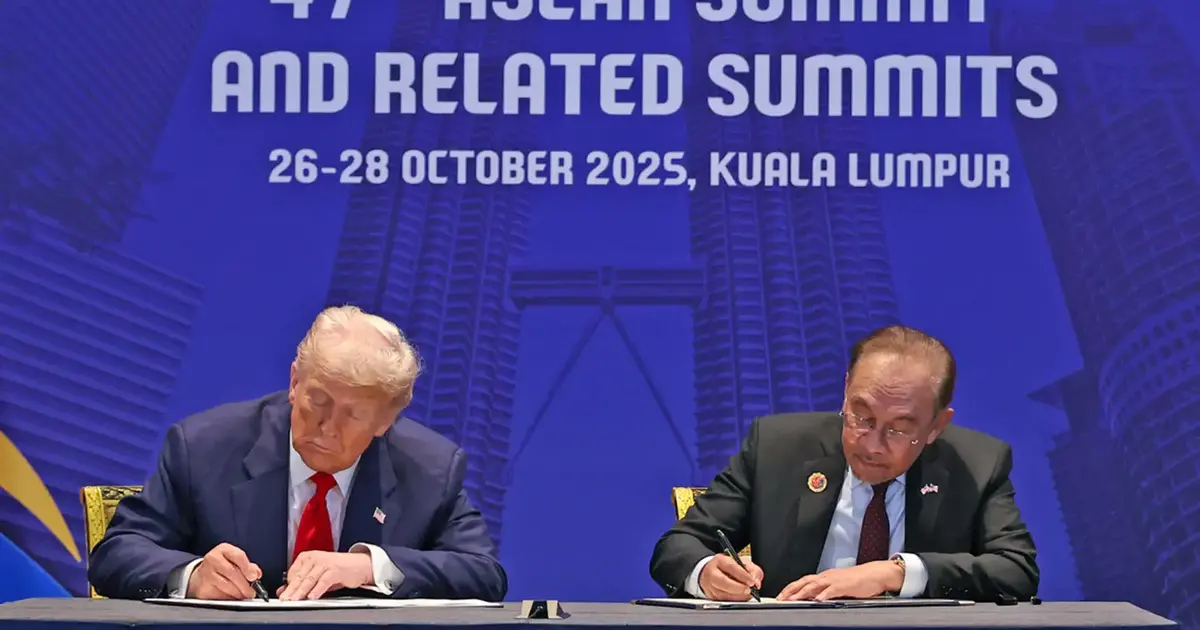
The administration led by Prime Minister Anwar Ibrahim and the Malaysian government have submitted formal applications to have a high-profile legal challenge dismissed, one that was initiated by opposition parliamentarians contesting the validity of a reciprocal trade agreement with the United States. The filing represents an escalation in the constitutional and political dispute surrounding the bilateral commerce arrangement, which has become a focal point of parliamentary scrutiny and public debate since its negotiation.
Opposition members have countenanced the dispute by launching their own procedural manoeuvre, simultaneously lodging an application with the Federal Court requesting that it determine constitutional questions arising from the trade deal. This dual-track legal strategy reflects the seriousness with which the opposition regards potential implications of the agreement and signals their determination to challenge executive action through judicial avenues when parliamentary opposition has proven insufficient. The constitutional referral pathway allows the highest court to examine whether the trade pact complies with Malaysia's constitutional framework and existing legal structures governing international commerce.
The Malaysia-US reciprocal trade agreement has emerged as a contentious policy issue within parliament, with opposition MPs arguing that it may require legislative scrutiny beyond what has been afforded to it thus far. Their concerns encompass questions about parliamentary sovereignty, the extent to which trade agreements should be subject to legislative ratification, and whether the government's handling of negotiations and implementation has respected constitutional conventions. These objections touch upon fundamental questions about the separation of powers and the proper role of elected representatives in authorising international commitments affecting Malaysian citizens and economic interests.
The government's application to strike out the suit seeks to dispose of the case without proceeding to substantive hearings on the merits of the opposition's arguments. Such dismissal applications typically rest on procedural grounds, such as assertions that the court lacks jurisdiction, that the plaintiffs lack legal standing, or that the matter is not justiciable. By attempting to eliminate the case at this preliminary stage, the administration would avoid a full examination of the trade agreement's constitutional status and the processes by which it was undertaken. This tactical manoeuvre reflects common government litigation strategy in defending executive decisions against parliamentary challenge.
The reciprocal trade framework between Malaysia and the United States carries substantial economic implications for both nations and affects numerous sectors of the Malaysian economy. The agreement encompasses tariff reductions, regulatory alignment, and enhanced market access in both directions, influencing everything from agricultural exports to manufactured goods. For Malaysian businesses, clarification of the agreement's legal foundation and durability matters considerably, as they require confidence in the stability of trade terms when making investment and production decisions. Uncertainty stemming from ongoing legal challenges creates commercial risk that extends beyond the immediate political dispute.
The constitutional questions raised by the opposition MPs strike at enduring tensions within Westminster-derived parliamentary systems regarding the Crown's prerogative powers in foreign relations. Historically, governments have enjoyed considerable discretion in negotiating and entering international agreements without detailed parliamentary approval, treating such matters as executive functions. However, contemporary democratic practice increasingly expects parliamentary engagement with trade agreements, particularly when they contain provisions affecting domestic legislation or imposing substantial commitments. Malaysia's constitutional settlement, like those of many Commonwealth nations, has not entirely resolved whether trade agreements of significant scope require parliamentary ratification or merely notification.
Precedent from other Commonwealth jurisdictions offers instructive context for understanding how courts approach these disputes. Australia and Canada have seen comparable litigation challenging trade agreements, with courts generally declining to examine the merits of trade negotiations themselves but remaining willing to address whether proper constitutional procedures were followed. The outcomes in such cases often hinge upon statutory frameworks specifically governing trade agreements rather than broader constitutional principles, suggesting that Malaysian courts may similarly focus on whether relevant legislation was properly invoked or circumvented. Such analysis would determine whether the government possessed valid legal authority to implement the trade pact without further parliamentary action.
The opposition's constitutional referral application provides an alternative avenue should the government succeed in striking out the direct challenge. The Federal Court's power to determine questions of constitutional law allows it to pronounce upon the proper legal framework for trade agreements generally, potentially establishing principles that would guide future executive action. Even if the immediate suit is dismissed, a successful constitutional referral could establish judicial guidance constraining government discretion in negotiating and implementing subsequent international commerce agreements. This represents a more expansive victory for the opposition than merely defending their particular lawsuit.
Regional trade diplomacy extends beyond Malaysia's relationship with Washington and influences broader Asian engagement with major powers. How Malaysia resolves domestic constitutional questions about trade agreements affects its credibility as a negotiating partner and signals to other nations whether commitments made by Malaysian governments remain stable across political transitions. Southeast Asian governments and regional organisations closely observe how individual member states handle trade agreement disputes, as such outcomes influence expectations for implementing regional agreements such as those negotiated through ASEAN frameworks. The way Malaysia's courts and government navigate this particular dispute carries implications resonating throughout the region.
The timing of this dispute arrives amid broader global repositioning of trade relationships and renewed attention to whether trading arrangements adequately protect diverse national interests. Developing nations including Malaysia have increasingly scrutinised the distributional consequences of trade liberalisation and questioned whether frameworks negotiated by previous administrations reflect current government priorities. The opposition's challenge therefore intersects with legitimate governance questions about accountability for major international commitments and parliamentary oversight of executive power in an era when trade agreements encompass far more than tariffs, extending into investment, intellectual property, labour standards, and environmental obligations.
As proceedings advance through both the dismissal application and the constitutional referral track, courts will ultimately determine whether opposition MPs have established sufficient legal standing and whether the constitutional questions they raise are properly framed for judicial determination. The Federal Court's eventual pronouncements may establish enduring principles governing how Malaysian governments approach trade agreements, regardless of whether the immediate challenge to the US accord succeeds. This case exemplifies the ongoing negotiation between executive prerogative and parliamentary democracy in managing international economic relationships, a tension likely to resurface whenever trade agreements attract significant political opposition.