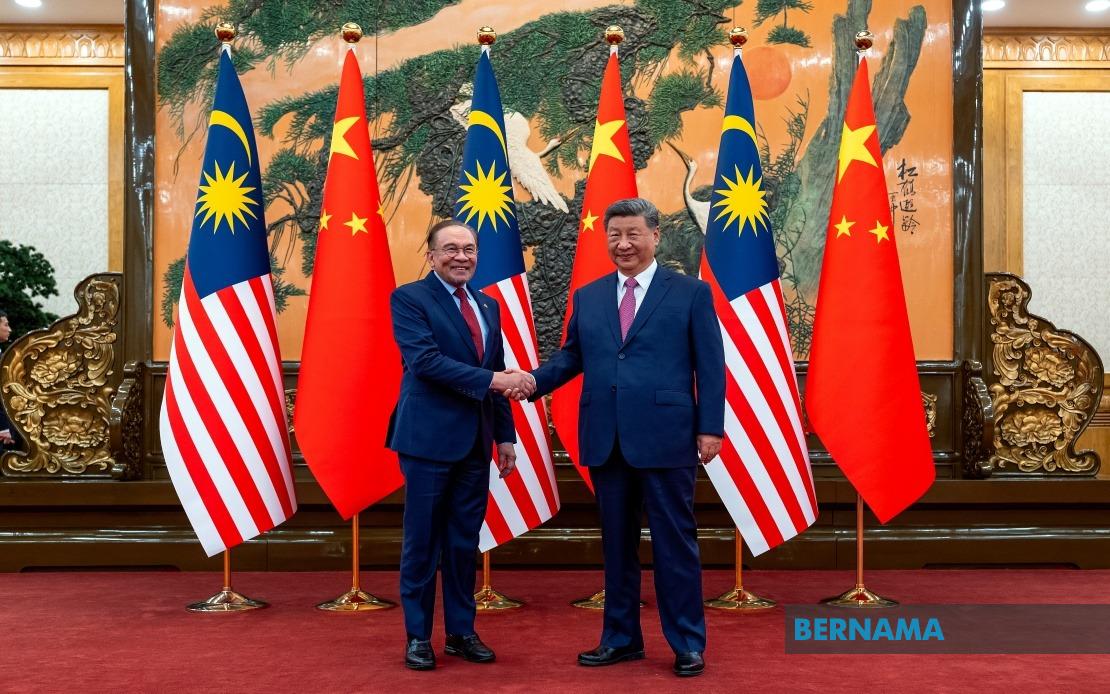
Prime Minister Datuk Seri Anwar Ibrahim has formally conveyed Malaysia's congratulations to China on a significant milestone for the country's ruling party, using the occasion to reaffirm the deep bonds between Kuala Lumpur and Beijing. Through a letter addressed to Chinese President Xi Jinping, Anwar extended greetings on behalf of both the Malaysian government and its people as the Communist Party marked its 105th anniversary, underscoring the warm diplomatic ties that characterise the bilateral relationship.
In announcing the correspondence via social media, Anwar took the opportunity to recognise the trajectory of China's political establishment and its role in guiding national development. The Prime Minister specifically acknowledged the party's stewardship of the country's advancement, attributing its success to deep institutional roots grounded in civilisational heritage, historical continuity, and values accumulated over centuries. This framing reflects a diplomatic appreciation for China's own narrative of stability and civilisational continuity, concepts that resonate across Asia's older nation-states.
Anwar's gesture carried particular symbolic weight given Malaysia's pioneering position in Southeast Asia's engagement with the People's Republic of China. The Prime Minister invoked May 31, 1974, a watershed moment when Malaysia became the first non-socialist nation in the region to extend diplomatic recognition to Beijing. This decision, made during the tenure of Prime Minister Tun Abdul Razak Hussein, represented a bold and prescient strategic calculation that has fundamentally shaped the subsequent trajectory of bilateral relations and Malaysia's role within regional geopolitics.
The significance of referencing this 1974 recognition cannot be overstated for Malaysian readers and policymakers. At that time, the decision was contentious and demanded considerable political courage, occurring during the height of Cold War tensions when most Western-aligned Southeast Asian nations maintained distance from communist states. Malaysia's willingness to break ranks—grounded in pragmatism and an understanding of shared regional interests—established a foundation upon which subsequent governments have built increasingly sophisticated economic, cultural, and strategic partnerships. This early recognition has afforded Malaysia particular standing within Chinese foreign policy calculations across Southeast Asia.
The Prime Minister's letter reflected Malaysia's commitment to deepening what he characterised as strategic cooperation with China, explicitly grounding this commitment in principles of mutual respect, confidence, and reciprocal benefit. These are carefully chosen diplomatic formulations that acknowledge both nations' sovereign interests while creating space for collaboration on matters of mutual concern. By emphasising shared benefits rather than ideological alignment, Anwar articulated an approach that allows Malaysia to engage pragmatically with Beijing without compromising its own pluralistic political model or its existing security partnerships with Western nations.
For Malaysian policymakers and observers, understanding Anwar's diplomatic messaging is essential context for comprehending contemporary Southeast Asian geopolitics. Malaysia sits at the intersection of multiple competing spheres of influence—Chinese, American, Indian, and its own ASEAN-centred orientation—requiring careful calibration of messaging and relationship management. The celebration of the 1974 recognition and emphasis on five decades of deepening ties serves to anchor Malaysia's China engagement within a longer historical narrative, suggesting continuity across governments rather than opportunistic alignment.
The focus on regional peace, stability, and prosperity in Anwar's statement also warrants attention, particularly given ongoing tensions in the South China Sea and great power competition affecting Southeast Asia. Malaysia, as a claimant state in maritime disputes and a member of ASEAN, must maintain relationships with China while pursuing its own interests in regional order. By framing cooperation as contributing to broader regional well-being rather than narrow bilateral advantage, Anwar positioned Malaysia's engagement with Beijing as compatible with its broader regional security interests and ASEAN's collective approach to managing tensions.
The timing of this formal congratulation also merits consideration within Malaysia's domestic political context. Anwar, having consolidated his position as Prime Minister following the November 2022 general election, has sought to project an image of steady, professional governance and predictable foreign policy. Engaging in standard diplomatic courtesies with major powers—from Beijing to Washington to New Delhi—serves to demonstrate Malaysia's even-handedness and commitment to maintaining functional relationships across the international system, qualities that enhance investor confidence and regional standing.
Anwar's invocation of Malaysia's decision-making wisdom and foresight regarding the 1974 recognition suggests an implicit message about contemporary policymaking as well. By celebrating the prescience of past leaders who recognised China's trajectory and Malaysia's shared interests with Beijing, the Prime Minister implicitly endorses continued engagement and cooperation. This framing counters any suggestion that Malaysia should distance itself from China despite current geopolitical tensions, instead positioning sustained and deepening engagement as consistent with Malaysia's established national interests and historical precedent.
Looking forward, Anwar's letter represents more than ceremonial diplomacy. It signals Malaysia's intention to maintain robust China engagement despite the complex regional security environment and great power competition. For Southeast Asian watchers, Malaysia's balancing act—maintaining warm relations with China while preserving security partnerships elsewhere and advancing ASEAN unity on regional issues—remains instructive. As the region navigates interconnected challenges from maritime security to trade and technological competition, Malaysia's approach of principled pragmatism, grounded in historical relationships and shared regional interests, offers one model for smaller powers managing great power engagement.

