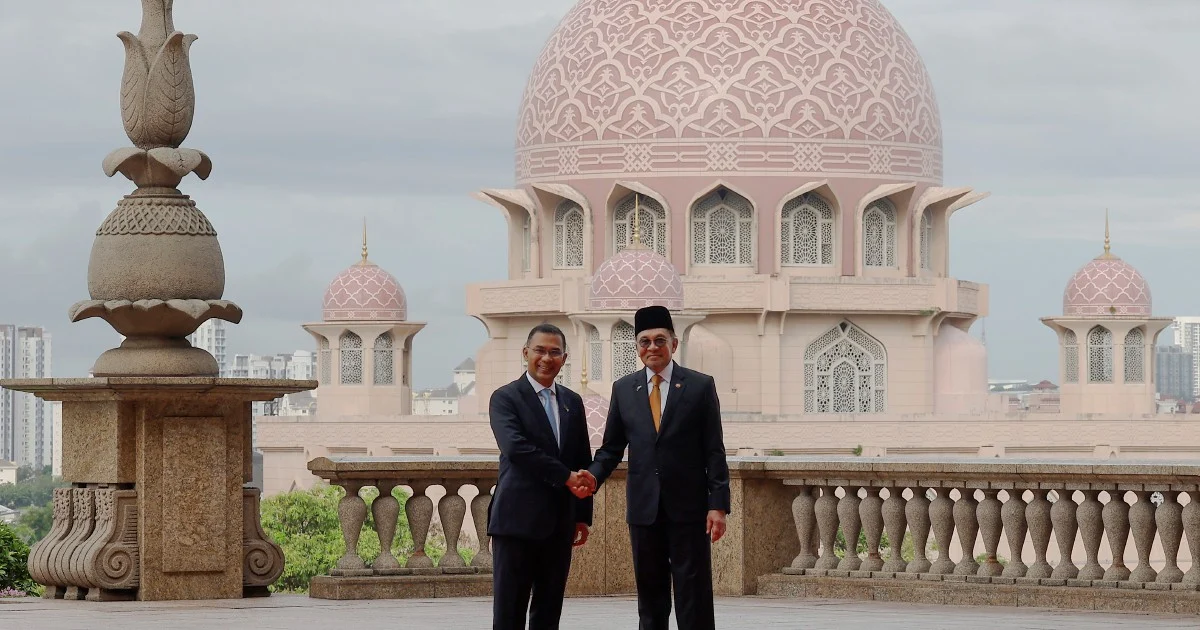
Prime Minister Anwar Ibrahim rolled out the red carpet for Bangladesh's leading political figure, Tarique Rahman, who touched down in Malaysia on an official two-day state visit that underscores the deepening ties between the two nations. The ceremony at the Perdana Putra Complex in Putrajaya marked the formal commencement of diplomatic engagements scheduled to unfold over Rahman's stay, signalling the importance both countries place on their bilateral relationship at this particular juncture.
The official welcome ceremony, replete with traditional state protocol, reflected Malaysia's commitment to honouring high-level visiting dignitaries from neighbouring and friendly nations. Putrajaya, as Malaysia's administrative capital and the seat of governmental power, provided the appropriate venue for such ceremonial encounters, emphasising the gravity of the occasion within the broader framework of regional diplomacy.
Tarique Rahman's positioning as Bangladesh's prime minister carries significant weight in South Asian geopolitical considerations. His administration has navigated complex domestic and regional challenges, making engagement with Southeast Asian partners like Malaysia increasingly vital for Bangladesh's strategic interests. The visit represents an opportunity for the two nations to explore areas of mutual concern and collaborative potential across multiple policy domains.
For Malaysia, receiving high-profile visitors from South Asia demonstrates its role as a significant player in intra-Asian diplomacy and its capacity to serve as a bridge between different regional groupings. The country's geographical position and established diplomatic networks make it a natural convening point for leaders seeking to strengthen ties with the broader Asian community.
The bilateral relationship between Malaysia and Bangladesh has historically centred on economic cooperation, cultural exchanges, and people-to-people connections. With substantial numbers of Bangladeshi workers in Malaysia contributing to various sectors of the economy, and considerable Malaysian investments in Bangladesh's emerging markets, the two nations share tangible mutual interests that extend beyond ceremonial diplomacy.
Tarique Rahman's visit arrives at a moment when both countries face evolving regional dynamics. The global economic landscape, shifts in trade relationships, and emerging security challenges create impetus for strengthening bilateral channels and exploring coordinated responses to transnational issues. Discussions during the visit would likely touch upon these contemporary concerns alongside traditional areas of cooperation.
The two-day timeframe allocated for the visit suggests a substantive engagement schedule encompassing meetings between government officials, potential signing of cooperative agreements, and possibly business or cultural forums. Such structured visits typically produce tangible outcomes that shape subsequent bilateral relations and establish the trajectory for deeper integration across sectors.
Bangladesh's strategic importance has grown considerably in recent years, particularly given its role in regional trade, its substantial population representing significant demographic and economic potential, and its positioning along critical maritime routes. Malaysia's engagement with Dhaka reflects recognition of Bangladesh's ascending profile in Asian affairs and the mutual benefits derivable from stronger institutional ties.
The reception extended to Tarique Rahman also carries symbolic significance for ordinary citizens of both nations, communicating official commitment to peaceful coexistence and collaborative governance in the region. Such high-level visits contribute to normalising diplomatic relations and building the personal relationships among leaders that often facilitate easier resolution of disagreements and faster implementation of agreed frameworks.
Looking forward, the outcomes of this official visit will likely shape the nature and intensity of Malaysia-Bangladesh engagement over the coming months and years. Whether new agreements emerge regarding trade, education, labour arrangements, or security cooperation, the groundwork established during this visit will influence how both nations coordinate on regional platforms and multilateral forums.
As Southeast Asia continues to navigate complex regional relationships and global pressures, the strengthening of bilateral connections between its nations and South Asian partners becomes increasingly strategically significant. Malaysia's receptiveness to hosting such high-level visits and engaging substantively with Bangladesh demonstrates the country's understanding of the interconnected nature of modern regional security and prosperity, positioning both nations to benefit from enhanced cooperation across multiple domains.

%22%2F%3E%3C%2Fpattern%3E%3C%2Fdefs%3E%3Crect%20width%3D%22100%25%22%20height%3D%22100%25%22%20fill%3D%22url(%23ph3sqpyg)%22%2F%3E%3Crect%20width%3D%22100%25%22%20height%3D%22100%25%22%20fill%3D%22url(%23ph3sqpyp)%22%2F%3E%3Ctext%20x%3D%2250%25%22%20y%3D%2250%25%22%20text-anchor%3D%22middle%22%20dominant-baseline%3D%22central%22%20fill%3D%22rgba(255%2C255%2C255%2C0.95)%22%20font-family%3D%22Georgia%2C%20'Times%20New%20Roman'%2C%20serif%22%20font-weight%3D%22700%22%20font-size%3D%22320%22%20letter-spacing%3D%22-0.02em%22%3EPM%3C%2Ftext%3E%3C%2Fsvg%3E)
%22%2F%3E%3C%2Fpattern%3E%3C%2Fdefs%3E%3Crect%20width%3D%22100%25%22%20height%3D%22100%25%22%20fill%3D%22url(%23ph3l4smg)%22%2F%3E%3Crect%20width%3D%22100%25%22%20height%3D%22100%25%22%20fill%3D%22url(%23ph3l4smp)%22%2F%3E%3Ctext%20x%3D%2250%25%22%20y%3D%2250%25%22%20text-anchor%3D%22middle%22%20dominant-baseline%3D%22central%22%20fill%3D%22rgba(255%2C255%2C255%2C0.95)%22%20font-family%3D%22Georgia%2C%20'Times%20New%20Roman'%2C%20serif%22%20font-weight%3D%22700%22%20font-size%3D%22194%22%20letter-spacing%3D%22-0.02em%22%3EBersatu%3C%2Ftext%3E%3C%2Fsvg%3E)