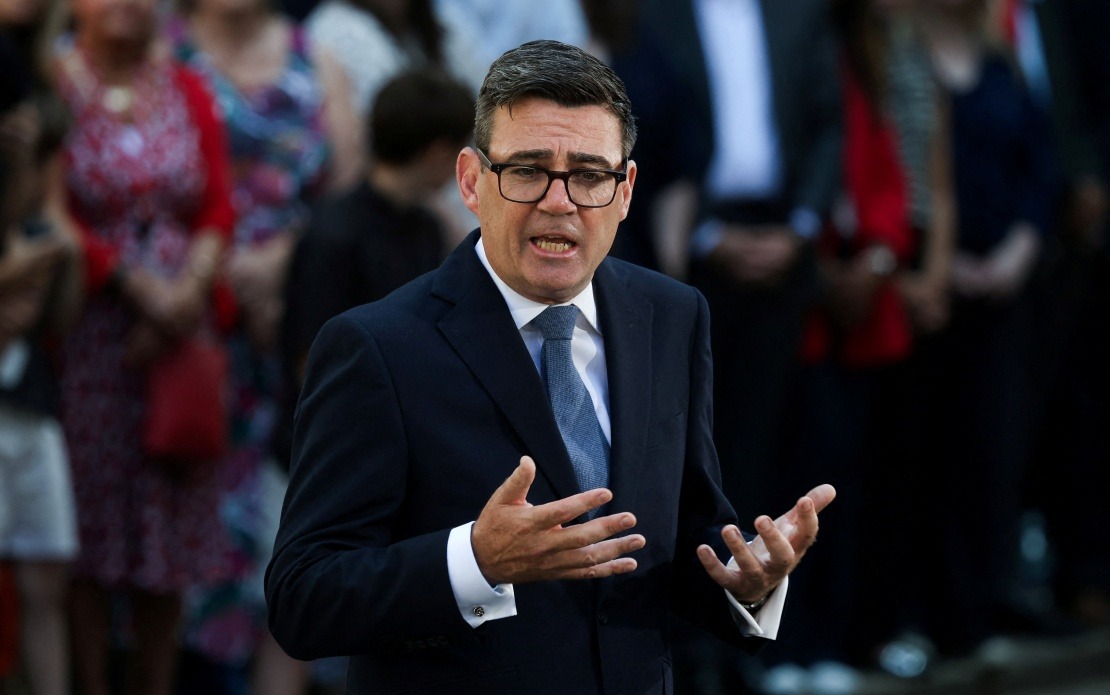
Prime Minister Datuk Seri Anwar Ibrahim has formally extended his felicitations to Andy Burnham following the latter's assumption of office as the United Kingdom's new Prime Minister, signalling Malaysia's readiness to forge closer bilateral relations under the Labour leader's administration. Through a statement posted on social media on July 20, Anwar articulated optimism about collaborating with Burnham to advance mutual interests and strengthen the longstanding Malaysia-UK connection across multiple sectors.
The Malaysian Premier outlined an ambitious agenda for the enhanced partnership, identifying several priority areas where both nations could deepen their engagement. Prominently featured among these objectives is the finalisation of a Digital Trade Agreement, which would facilitate increased commercial and technological exchange between the two countries. Beyond trade mechanics, Anwar emphasised the importance of joint endeavours in artificial intelligence development, broader digitalisation initiatives, renewable energy transitions, and defence collaboration—domains that reflect contemporary geopolitical and economic priorities shared by developed and developing nations alike.
Anwar's message carried particular weight in its acknowledgement of Burnham's statements regarding Britain's Middle East policy. The Prime Minister commended Burnham for candidly admitting that the United Kingdom's initial governmental response to the Gaza crisis had been insufficient, and for his subsequent calls for intensified international pressure against the Israeli regime. This recognition appears designed to signal alignment on a sensitive global issue and suggests Malaysia values Burnham's willingness to reassess previous policy positions based on evolving humanitarian circumstances.
In his remarks, Anwar characterised Burnham's moral stance as notably significant within the broader Western context. He observed that "at a time when many in the West have struggled to show the moral clarity this crisis demands, that recognition is a welcome and important first step." This framing positions Malaysia as attentive to international affairs and particularly appreciative when Western leaders demonstrate principled positions on matters affecting Muslim-majority regions—a consideration that resonates with domestic and regional audiences.
The Malaysian Premier strategically contextualised this diplomatic outreach within a historical framework. He noted that next year marks the seventieth anniversary of Malaysia-UK diplomatic relations, presenting what he characterised as an opportune juncture for both nations to reaffirm their foundational partnership and collectively determine their bilateral future. This temporal reference suggests Malaysia intends to leverage the anniversary as a symbolic and practical catalyst for reinvigorating ties that, while historically significant, have undergone periodic fluctuations reflecting changing global dynamics.
Anwar also extended measured appreciation toward outgoing UK Prime Minister Keir Starmer, acknowledging the latter's contributions to Malaysia-UK relations during his tenure. In wishing Starmer success in his future endeavours, Anwar demonstrated diplomatic courtesy while effectively closing one chapter and opening another in the bilateral relationship. This measured transition reflects standard diplomatic practice whilst maintaining continuity and goodwill across leadership changes.
Burnham's elevation to the highest political office in Britain represented a significant development in UK politics. The Labour Party leadership race concluded on Friday with Burnham assuming control of the party, followed by his formal appointment as Prime Minister on Monday—making him Britain's seventh Prime Minister within the span of a single decade, a statistic underscoring considerable instability in British political leadership. His appointment followed Keir Starmer's formal resignation submitted at Buckingham Palace, completing the transition process.
The Malaysian response to Burnham's appointment carries implications for Southeast Asian diplomacy more broadly. As a significant regional power with substantial economic interests and a Muslim-majority population, Malaysia's approach to new Western leadership typically influences broader regional perceptions and sets benchmarks for engagement. Anwar's proactive and substantive outreach signals that Malaysia intends to maintain robust diplomatic channels with the United Kingdom whilst pursuing concrete cooperation on contemporary challenges including digital trade and clean energy—areas where developed-developing nation partnerships remain underdeveloped.
The emphasis on digital trade and artificial intelligence collaboration reflects Malaysia's broader economic strategy to position itself as a technologically sophisticated middle-income nation capable of partnering with advanced economies on innovation-driven initiatives. The UK, possessing substantial expertise in financial technology and AI development, represents a natural collaborator for Malaysian ambitions in these sectors. Such partnerships can facilitate knowledge transfer, regulatory harmonisation, and investment flows that benefit both economies.
Defence collaboration, similarly highlighted by Anwar, addresses regional security considerations. Malaysia's strategic location within sea lanes crucial to global commerce and its historical defence relationships with Britain suggest that security partnerships remain mutually beneficial. Contemporary challenges including maritime security, cybersecurity threats, and regional stability concerns provide substantive foundations for defence cooperation extending beyond symbolic gestures.
The timing of this diplomatic overture, occurring immediately after Burnham's appointment, demonstrates Malaysia's strategic attentiveness to British political transitions and its commitment to maintaining influence within Commonwealth circles. By positioning itself as a constructive partner with clear priorities whilst addressing governance issues like the Gaza situation, Malaysia seeks to establish itself as a principled player in international affairs rather than a purely transactional diplomatic actor.

