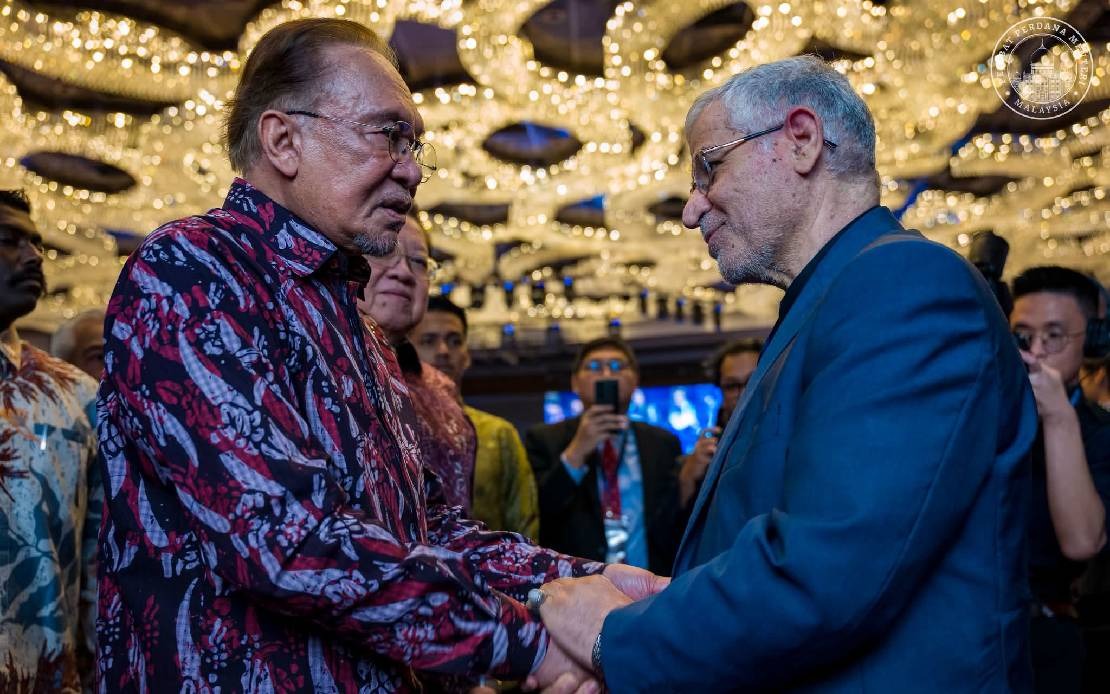
Prime Minister Datuk Seri Anwar Ibrahim has expressed his regret to the Iranian government for missing the state funeral and farewell ceremonies of Iran's Supreme Leader, the late Ayatollah Ali Khamenei, citing unavoidable official duties that prevented his attendance. The Prime Minister conveyed this message during a bilateral meeting with Iranian Ambassador to Malaysia Valiollah Mohammadi on the sidelines of the 39th Asia-Pacific Roundtable conference in Kuala Lumpur, reaffirming Malaysia's solidarity with Iran during the period of mourning.
The absence of the Prime Minister from such a significant state occasion reflects the delicate balance that Malaysian leadership must maintain when managing high-level diplomatic commitments across multiple fronts. By delegating representation to Agriculture and Food Security Minister Mohamad Sabu, Anwar has ensured that Malaysia maintains formal diplomatic presence at the ceremonies while addressing pressing domestic governance matters that required his personal attention during the same period.
Ayatollah Ali Khamenei, who was 86 years old at the time of his death on 28 February, had served as Iran's Supreme Leader since 1989. His passing marked a pivotal moment in Iranian politics, as the position represents the highest authority in Iran's theocratic system. The announcement of his death came approximately four months before the scheduled state ceremonies, allowing sufficient time for international delegations to arrange their attendance at what would be one of the year's most significant geopolitical events in West Asia.
The extended nature of the funeral arrangements underscores the ceremonial importance Iran places on honouring its supreme leaders. Spanning six days beginning from 4 July, the proceedings incorporate multiple locations symbolic of Khamenei's leadership and theological significance. Initial ceremonies commence with funeral processions through Tehran and Qom, two cities of profound religious importance in Shia Islam, before concluding with his burial at the Imam Reza Shrine in Mashhad on 9 July, one of the most sacred sites in the Islamic world.
For Malaysia, the diplomatic gesture of sending a ministerial representative carries particular weight. Southeast Asia's largest Muslim-majority nation has historically maintained pragmatic relations with Iran despite regional complexities and the varying positions adopted by other Muslim-majority states in the Middle East. The representation by Mohamad Sabu, a respected senior cabinet minister, signals Malaysia's commitment to maintaining constructive bilateral relations with Tehran regardless of broader geopolitical tensions.
The timing of Khamenei's death in late February—attributed to a joint military operation by the United States and Israel—had already generated significant international attention and regional implications. His passing occurred amid heightened tensions in the Middle East, making the subsequent state funeral not merely a ceremonial event but also a platform for various nations to reaffirm their positions and international alignments during a period of instability.
Anwar's personal apology, communicated through both direct diplomatic channels and public acknowledgement via social media, demonstrates the Malaysian government's sensitivity to diplomatic protocol and the importance of maintaining respectful relations with major powers in the Islamic world. Such gestures, though sometimes overlooked in analysis of high-level diplomacy, form the foundation of sustained bilateral goodwill and understanding between nations.
The Prime Minister's reiteration of condolences to both the Iranian government and its people reflects Malaysia's commitment to acknowledging the human and political dimensions of such transitions in leadership. For Iran, the death of a leader who had guided the nation for over three decades represented not only a political change but also a moment of collective reflection and uncertainty about the country's future direction under new leadership.
For Malaysian observers and policymakers, the attendance patterns at Khamenei's funeral provided insights into how various countries navigated their relationships with Iran in a context of international sanctions and regional competition. Malaysia's decision to send a ministerial delegation rather than the Prime Minister himself reflected a calculated approach—maintaining diplomatic respect without overextending political capital on a matter of internal Iranian significance.
The broader implication of this diplomatic exchange for Southeast Asia relates to how the region positions itself in an increasingly multipolar global order where engagement with major powers across different regions requires careful calibration. Malaysia's approach of maintaining equidistant relationships with major powers, including both Western nations and Islamic-majority regional actors like Iran, remains a cornerstone of its foreign policy philosophy.
Moving forward, such diplomatic courtesies and transparent communication about unavoidable absences help prevent misunderstandings that could otherwise strain bilateral relations. The precedent set by Anwar's direct communication with the Iranian ambassador demonstrates that reasoned explanation and sincere expression of regret can maintain the quality of diplomatic relationships even when circumstances prevent attendance at significant state events.
The funeral ceremonies themselves became a focal point for international observers seeking to understand the dynamics of Iran's leadership transition and how the international community responded to this significant development in West Asian politics. Malaysia's participation, through its ministerial representative, ensured the nation remained engaged with these developments while its Prime Minister addressed pressing national concerns requiring his direct involvement.

