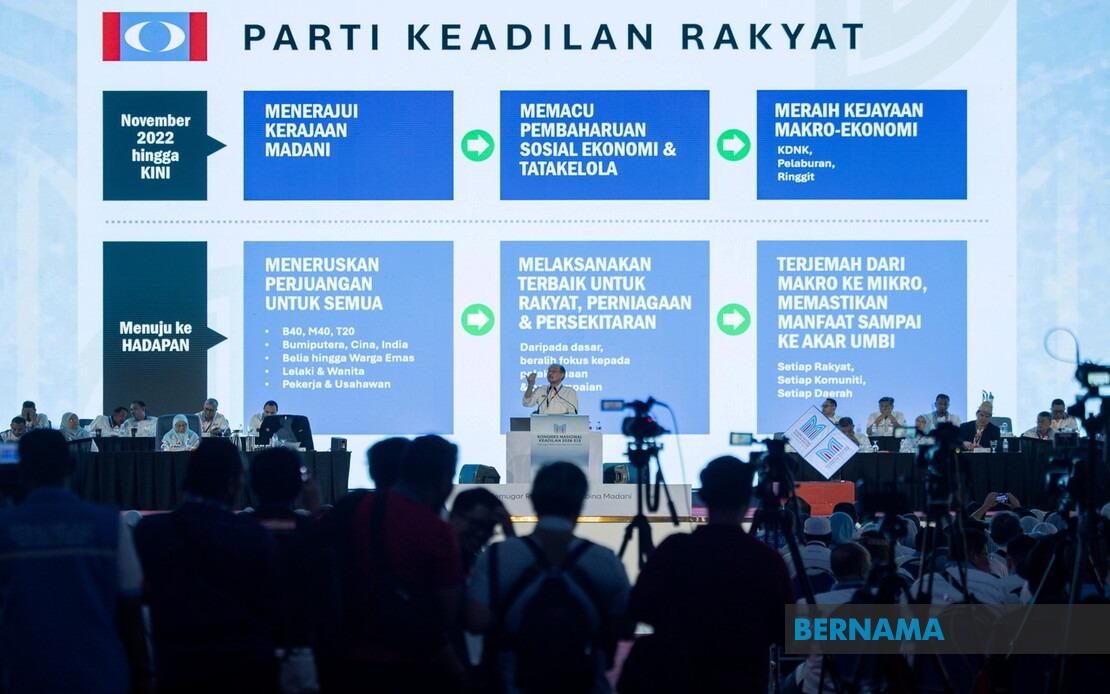
Prime Minister Datuk Seri Anwar Ibrahim has formally granted Home Minister Datuk Seri Saifuddin Nasution Ismail a full mandate to discharge the responsibilities of PKR's deputy president position while party vice-president Nurul Izzah Anwar takes a temporary leave of absence. The announcement came during Anwar's closing address at the PKR National Congress 2026, held at the Melaka International Trade Centre in Ayer Keroh on August 16, marking a significant internal reshuffle within Malaysia's ruling coalition.
The assignment of these duties to Saifuddin Nasution represents a strategic decision within PKR's leadership hierarchy at a critical juncture for the party and the broader political landscape. Although Anwar acknowledged that the additional responsibility would place extra demands on his long-standing political ally, he emphasized the Home Minister's suitability for the role given their extensive working relationship and mutual understanding. The move signals Anwar's confidence in Saifuddin Nasution's ability to manage party operations while maintaining his Cabinet-level portfolio.
The formal delegation followed an earlier decision by PKR's Central Leadership Council on August 6, when party information chief Datuk Seri Fahmi Fadzil announced that the council had approved granting Nurul Izzah a temporary leave and subsequently tasking Saifuddin Nasution with interim deputy president duties. This procedural approach allowed the party leadership to address the vacancy while preserving flexibility regarding future arrangements once Nurul Izzah concludes her leave period.
Anwar's public endorsement of Saifuddin Nasution carried considerable weight, as he explicitly called upon the broader PKR machinery to extend their support, cooperation, and loyalty to the interim leader. The Prime Minister's characterization of Saifuddin Nasution as "my old friend, most loyal and whom I have known for a very long time" underscored the personal trust embedded in this institutional decision, a factor that holds considerable significance in Malaysian politics where personal relationships often underpin organizational loyalty.
Beyond the deputy president appointment, Anwar announced several complementary leadership adjustments designed to strengthen PKR's organizational capacity. Vice-president Datuk Seri Amirudin Shari received appointment as the party's election director, positioning him to oversee crucial electoral preparations and campaign strategies. Simultaneously, Tengku Datuk Seri Zafrul Tengku Abdul Aziz was designated as coordinator in the Prime Minister's Office, a role that bridges party interests with executive government functions.
The reshuffling also addressed leadership matters in Negeri Sembilan, where PKR experienced electoral setback during the state election held on August 1. Anwar requested that vice-president Datuk Seri Aminuddin Harun redirect his focus entirely toward his party responsibilities and his portfolio overseeing cadre development and training initiatives. The Prime Minister emphasized that Aminuddin's extensive experience remained valuable for PKR's broader institutional development, particularly in cultivating the next generation of party members across multiple organizational levels.
This guidance came amid pressure from six Negeri Sembilan PKR division chiefs who had called for a review of Aminuddin's position as chairman of the state party leadership council. Rather than acceding immediately to these demands, Anwar pledged to personally examine the matter, effectively signaling that leadership decisions would remain firmly under central authority while the party processed its recent electoral disappointments. The approach balanced acknowledgment of grassroots concerns with maintenance of upper-level control.
Regarding the August 1 state election loss, Anwar rejected attributing responsibility solely to individual leaders, instead characterizing the outcome as a collective setback requiring shared accountability across the party structure. This stance reflected political pragmatism, avoiding the scapegoating of specific officials while creating space for organizational learning and tactical adjustment. The Prime Minister's assertion that PKR must "accept this outcome and correct the mistakes" with hope for future improvement acknowledged the reality of electoral volatility in competitive Malaysian politics while maintaining morale within the broader party framework.
For Malaysian observers, these leadership adjustments reveal PKR's ongoing navigation of complex internal dynamics while maintaining coalition stability essential to the government's functioning. The consolidation of deputy president responsibilities under Saifuddin Nasution, combined with strategic appointments for Amirudin and Zafrul, demonstrates Anwar's intention to maintain tight organizational coherence at the center while delegating specific functional responsibilities. The careful handling of Aminuddin's situation, neither promoting nor removing him, suggests an effort to preserve party unity during a period of electoral vulnerability.
These developments hold implications extending beyond PKR's internal affairs, as the party remains a crucial component of the ruling Pakatan Harapan coalition. The stability of PKR's leadership structure directly affects coalition stability and, consequently, the government's legislative capacity and political durability. Anwar's decisive action in clarifying the deputy president succession and assigning clear organizational roles aims to prevent the kind of internal instability that could threaten broader coalition cohesion during parliamentary sessions or major policy initiatives.
The timing of these announcements at the party congress itself served multiple functions: it provided official acknowledgment of the leadership changes before the broader party membership, demonstrated Anwar's continued command over party direction, and offered reassurance to delegates regarding organizational clarity moving forward. For PKR members and observers tracking Malaysian politics, the congress represented a moment of institutional realignment designed to position the party for recovery following the Negeri Sembilan disappointment and prepare for forthcoming electoral challenges in other states.

