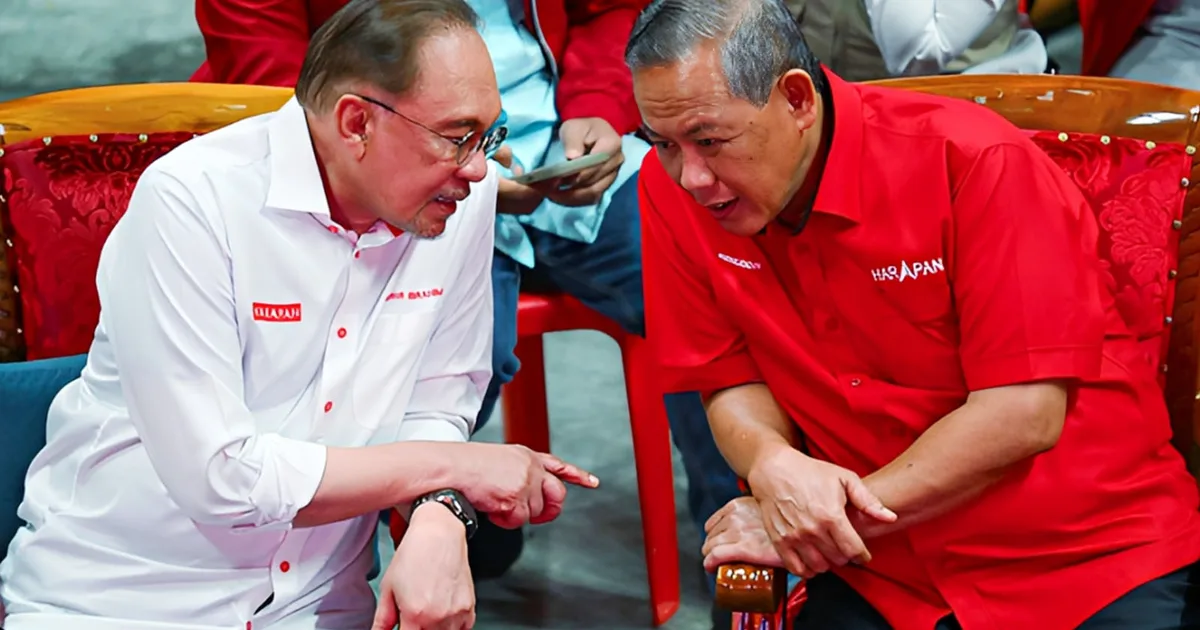
PKR president Anwar Ibrahim has signalled that the former Negeri Sembilan menteri besar Aminuddin Harun will continue to play a significant role within the party despite recent electoral challenges, emphasizing that his experience and conduct remain invaluable assets for developing the party's leadership pipeline. Anwar's remarks underscore the multiethnic coalition's commitment to retaining seasoned politicians even after disappointing results, reflecting broader succession planning concerns within Malaysia's largest opposition-aligned party.
Aminuddin's political standing has come under scrutiny following electoral setbacks, but Anwar's public endorsement suggests PKR leadership views his departure as counterproductive to the organization's long-term institutional health. The party president specifically highlighted Aminuddin's manner of handling defeat—accepting responsibility without directing blame toward others or making excuses—as exemplary conduct that younger party members should emulate. This emphasis on accountability and grace under pressure speaks to a leadership philosophy increasingly rare in contemporary Malaysian politics, where post-election recriminations and finger-pointing frequently dominate party discourse.
For Malaysian readers, the significance of Anwar's statement extends beyond PKR's internal dynamics. The decision to retain experienced figures like Aminuddin despite electoral reversals reflects a recognition that party institutions require continuity and mentorship structures to prevent the organizational fragmentation that frequently plagues opposition movements. In Malaysia's competitive political landscape, where coalition stability remains perpetually fragile, maintaining the confidence and engagement of respected senior members serves practical purposes beyond sentiment. Aminuddin's willingness to absorb electoral disappointment without publicly fracturing party unity sends important signals to other senior figures about acceptable conduct during difficult periods.
The former Negeri Sembilan menteri besar's track record in that state provides substantive ground for his continued relevance. His administration oversaw several significant development projects and maintained relatively stable governance during his tenure, building a reputation for administrative competence rather than merely factional positioning. Such credentials become particularly valuable during mentorship roles, where demonstrating effective governance experience carries more weight than political rhetoric alone. Younger PKR members aspiring to executive positions can benefit from exposure to someone whose political education spans different eras and contexts within Malaysian governance.
Anwar's emphasis on Aminuddin's exemplary conduct also addresses a persistent challenge within opposition politics: managing the disappointment and frustration that inevitably follows electoral losses. In Malaysia, where electoral outcomes often disappoint opposition expectations despite significant popular support, the psychological and institutional damage caused by recrimination can prove more destructive than the electoral loss itself. By publicly celebrating Aminuddin's dignified acceptance, Anwar models the kind of emotional maturity and institutional thinking that opposition parties must cultivate if they hope to maintain cohesion through multiple electoral cycles.
The retention and visible valuation of figures like Aminuddin also carries symbolic weight for PKR's broader coalition partners and potential supporters. Democratic party structures require visible mechanisms for learning from failure and recycling experienced talent rather than disposing of it at the first setback. In an environment where Malaysian voters remain skeptical about opposition competence and unity, demonstrating that parties can maintain internal stability and rational decision-making after losses helps address those concerns. Anwar's comments suggest PKR understands that electoral viability depends partly on projecting organizational maturity and forward-thinking governance capacity.
Within the Southeast Asian context, Malaysia's opposition movements face particular structural disadvantages compared to ruling coalitions. Resources, media access, and institutional advantages favor governing parties substantially. Under such circumstances, opposition parties must maximize the value they extract from existing talent and experience. Wasting experienced administrators by sidelining them after a single electoral disappointment represents the kind of strategic error that can compound over multiple election cycles. By retaining and deploying figures like Aminuddin in mentorship capacities, PKR demonstrates an understanding of these structural realities and commits to long-term competitive viability.
The mentorship framework that Anwar envisions for Aminuddin also reflects changing generational dynamics within Malaysian opposition politics. As founding generation figures gradually age out of frontline positions, opposition parties must develop robust systems for transferring institutional knowledge to younger cadres. Informal mentorship relationships, while valuable, cannot replace deliberate organizational structures for capability building. Anwar's public recognition of Aminuddin's mentorship value suggests PKR is beginning to formalize these processes rather than leaving them to chance or personal networks.
Looking forward, how effectively PKR implements the mentorship vision that Anwar articulates will determine whether statements like these translate into genuine institutional strengthening. Creating meaningful mentorship roles requires more than honorific titles; it demands genuine integration into decision-making, strategic planning, and capability-building programs. The true test will emerge in how younger party members actually access Aminuddin's experience and whether PKR creates structured channels for such knowledge transfer. Success in this regard could position the party substantially ahead of regional competitors in developing sustainable opposition leadership pipelines.

