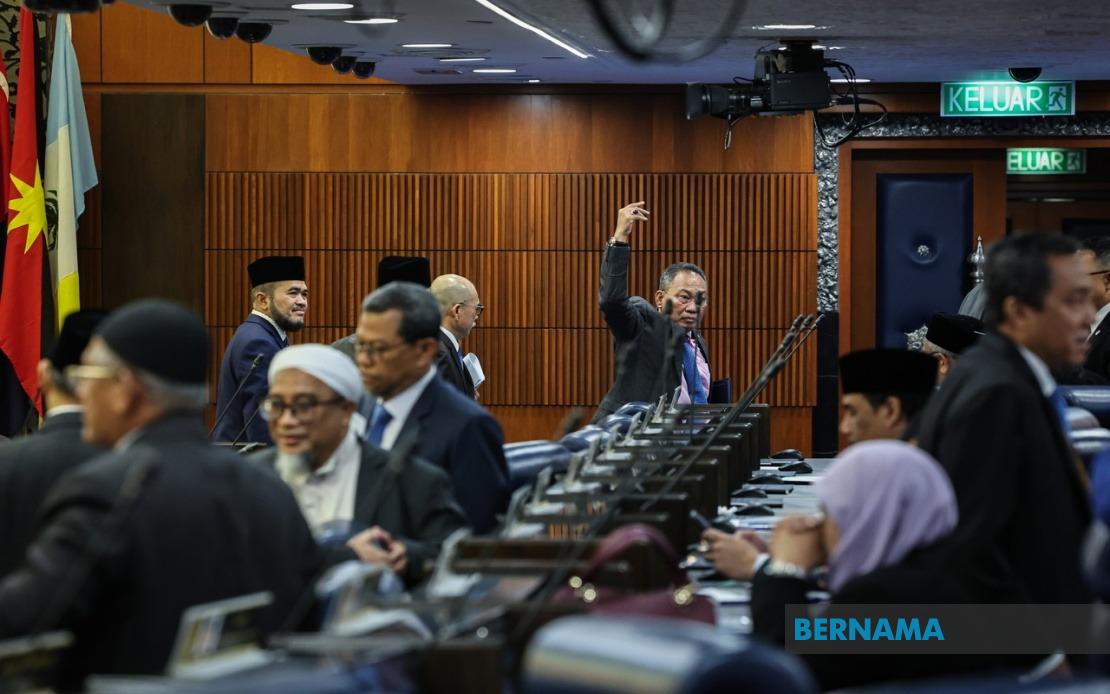
Prime Minister Datuk Seri Anwar Ibrahim has publicly castigated Opposition parties for exploiting the Tabung Haji crisis as a vehicle for political theatre rather than addressing the core institutional failures that have compromised the Islamic pilgrimage savings scheme. In a strongly-worded Facebook statement released on August 11, the Prime Minister rejected what he characterised as attempts to shift focus away from those responsible for mismanaging the institution and betraying the interests of its depositors. His remarks came at a moment of heightened parliamentary tension, as Opposition lawmakers staged a coordinated walkout from a special Dewan Rakyat sitting convened to debate the findings of a lengthy Royal Commission of Inquiry into Tabung Haji's operations.
Anwar framed the dispute as a fundamental choice between accountability and distraction, questioning whether parliamentary debate should centre on him personally or on the institutional betrayal that has affected millions of Malaysian Muslims attempting to save for the Hajj pilgrimage. The Prime Minister's intervention highlights the deep divisions in how the political establishment is approaching one of the most significant governance failures within a government-backed institution serving as a financial pillar for Malaysia's Muslim community. His approach suggests the government intends to move forward with addressing the inquiry's recommendations rather than becoming consumed by blame-gaming that he views as counterproductive.
The parliamentary drama that prompted Anwar's rebuke unfolded when Opposition Members of Parliament, led by the PAS-dominated Perikatan Nasional coalition, walked out in protest against Speaker Tan Sri Johari Abdul's decision to proceed with a ministerial briefing without the Prime Minister's presence. They had requested an adjournment, viewing the absence of the Prime Minister as undermining the significance of the special sitting. Anwar had been unable to attend due to ongoing physiotherapy following an elective surgical procedure to address a para-umbilical hernia, a constraint he acknowledged in his public apology. The walkout effectively transformed a scheduled accountability session into a confrontation over parliamentary procedure and political leverage.
Anwar's criticism extended specifically to Perikatan Nasional and its leader PAS, challenging them on their claimed commitment to protecting Malay and Muslim interests. He posed pointed questions about whether the Opposition coalition truly cared about the financial security of ordinary Malaysians—fishermen, farmers, teachers, police officers, soldiers, and pensioners—whose accumulated savings in Tabung Haji have been jeopardised by institutional mismanagement. This rhetorical strategy attempts to reframe the Opposition's parliamentary tactics as hypocritical, suggesting that their pursuit of political advantage contradicts their avowed dedication to community welfare. The message carries implications for Malaysia's broader political landscape, where competing claims to represent Muslim and Malay interests have become increasingly polarised.
The underlying issue that both sides are navigating centres on a devastating Royal Commission of Inquiry report released on July 29, spanning 211 pages with extensive findings about systemic weaknesses in Tabung Haji's management and operational practices between 2014 and 2020. The inquiry, established by the government in 2021 with members appointed in January 2022, documented governance failures that permitted misallocation of depositors' funds and inadequate financial oversight. The RCI presented 25 specific recommendations for institutional reform and recovery, of which approximately 75 per cent had been implemented by the institution as of late July, indicating some progress in remedial action. However, the ongoing financial and reputational damage to an institution serving over 9 million Muslims underscores the severity of the original failures.
The timing of the special parliamentary sitting and the subsequent political confrontation underscores how governance crises in Malaysia inevitably become entangled with partisan competition. The government's decision to proceed with the ministerial briefing despite the Prime Minister's absence and the Opposition's objections demonstrates a determination to maintain parliamentary momentum around the inquiry's recommendations and implementation timelines. Simultaneously, the Opposition's walkout reflects frustration at what they perceive as attempts to minimise accountability through procedural control. This dynamic reveals broader tensions within Malaysia's political system regarding how institutions address failures that have affected millions of ordinary Malaysians.
For the broader Malaysian public and particularly the millions of Tabung Haji depositors, the parliamentary dispute represents a secondary concern compared to the practical question of how quickly and effectively the institution can recover its financial stability and restore confidence in its governance. Many depositors—drawn from lower and middle-income segments of Malaysia's Muslim population—depend on Tabung Haji for both savings accumulation and access to Hajj financing. The institutional crisis has created legitimate anxiety about financial security and the reliability of government-backed savings mechanisms. The political dispute, while symbolically important for assessing accountability frameworks, risks becoming disconnected from the concrete measures necessary to prevent future institutional failures.
Anwar's public intervention attempting to reclaim narrative control around the Tabung Haji issue reflects broader political calculations about accountability, blame attribution, and forward momentum. By characterising Opposition responses as partisan theatre disconnected from depositor interests, the government seeks to position itself as pragmatically focused on solutions rather than recriminations. This framing carries strategic value, particularly if implementation of the RCI's 25 recommendations proceeds demonstrably and transparently over coming months. However, it also risks appearing dismissive of legitimate concerns about how such institutional failures occurred and which specific officials bear responsibility for mismanagement.
The Tabung Haji crisis illuminates fundamental questions about institutional governance in Malaysia that extend well beyond this particular scheme. How government-backed institutions maintain fiduciary responsibility, how oversight mechanisms function in practice, and how accountability is assigned when failures occur—these issues affect numerous other government-linked entities and statutory bodies. The Opposition's parliamentary tactics, while potentially obstructionist, also reflect legitimate demands for transparency and clear lines of accountability. Anwar's challenge to the Opposition's motives does not eliminate these underlying governance questions, though it may affect the tone and trajectory of parliamentary scrutiny.
Moving forward, the success or failure of Tabung Haji's recovery will ultimately determine whether the government's pragmatic approach yields results or whether it appears as a mechanism for minimising accountability. Implementation of the RCI's recommendations, transparent communication with depositors about the institution's path toward financial stability, and clearly identified consequences for those responsible for the original mismanagement will be essential benchmarks. The political dimensions of the crisis—including the confrontational parliamentary tactics and the Prime Minister's public criticism of Opposition motives—will fade in significance if concrete institutional recovery materialises. Conversely, if implementation stalls or financial recovery proves elusive, the Opposition's demands for more stringent accountability will likely intensify, regardless of current parliamentary divisions.

