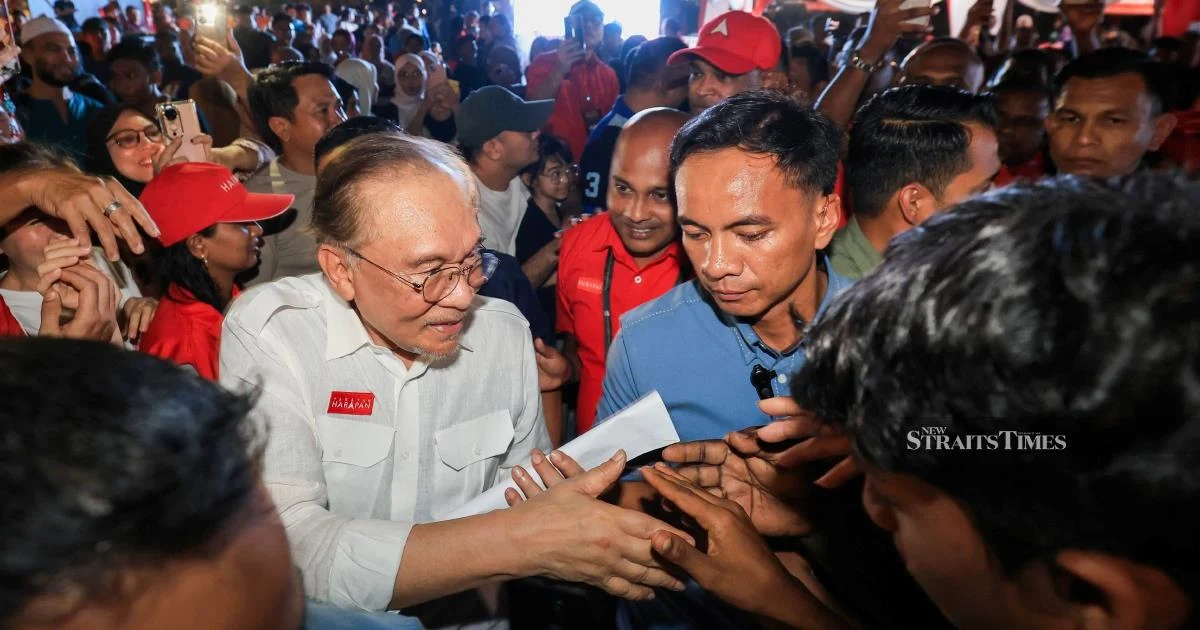
Prime Minister Datuk Seri Anwar Ibrahim has firmly rejected mounting pressure for an early dissolution of Parliament, reaffirming his administration's confidence in its governing mandate and commitment to completing its policy agenda. The dismissal comes amid recurring speculation about the stability of Malaysia's unity coalition government, which has been navigating a complex political landscape since assuming office.
Anwar's statement reflects the government's determination to maintain stability and focus on substantive governance rather than engage in electoral cycles that could distract from its priorities. The unity coalition, which brought together disparate political factions in the interest of national cohesion, has maintained that premature elections would undermine continuity and frustrate efforts to address pressing economic and social challenges facing the nation.
The calls for early elections have emerged from various quarters within Malaysia's fractious political environment, where shifting alliances and regional power dynamics create perpetual pressure on any governing coalition. Such demands typically intensify during periods when governments face economic headwinds or policy difficulties, as opposition forces seek to exploit perceived vulnerabilities. However, the Prime Minister's response underscores his administration's view that the current political arrangement remains intact and functional despite occasional friction between coalition partners.
Maintaining a broad-based coalition government in Malaysia's multiparty system presents distinct challenges, as consensus-building across ideological and ethnic lines requires constant negotiation and compromise. The unity government was explicitly established to move beyond the polarization that had characterised Malaysian politics in preceding years, offering voters a vision of inclusive governance. Early elections would risk dismantling this arrangement and reverting to the zero-sum competition that had previously dominated the political arena, a prospect that Anwar's government appears committed to avoiding.
The government's insistence on its mandate carries particular weight given the electoral circumstances of its formation. The previous general election delivered a fractured Parliament where no single bloc commanded an outright majority, forcing the formation of a coalition. This result itself suggested public backing for multi-party cooperation rather than single-party dominance, implying that voters had endorsed the collaborative model that the unity government represents.
From a policy perspective, the government has articulated ambitious priorities spanning economic restructuring, fiscal consolidation, and social investments. Disrupting governance through early elections would delay implementation of these initiatives and create prolonged uncertainty in markets and among citizens. The business community and international observers generally favour political stability that allows governments to pursue coherent economic strategies rather than face constant electoral contestation.
The rejection of early election calls also reflects practical considerations regarding electoral timing and campaign readiness. Conducting premature polls would impose substantial costs on the public exchequer and political parties, resources that could otherwise be directed toward service delivery and development. Additionally, parties within the coalition may hold differing assessments of their current electoral prospects, making consensus on election timing inherently difficult.
Regionally, Malaysia's political stability holds significance beyond national borders. As a major Southeast Asian economy and an important player in regional institutions, prolonged political uncertainty could affect investor confidence across the broader region. International partners and trading partners typically prefer continuity and predictability in Malaysia's governance, making the government's emphasis on stability strategically important for maintaining bilateral relationships and foreign investment flows.
The unity government's approach also responds to lessons learned from Malaysia's recent political history, which witnessed multiple government transitions and electoral contests within compressed timeframes. That period of frequent changes created fatigue among the electorate and contributed to policy inconsistency. By resisting pressure for early elections, the current administration signals a commitment to the longer-term governance horizon that sustained economic transformation and institutional development require.
However, maintaining coalition unity over an extended period remains inherently challenging. Partner parties must balance cooperation with their distinct electoral interests, and public disagreements on policy issues occasionally surface. The Prime Minister's firmness on rejecting early elections may also serve to demonstrate that the coalition commands sufficient resolve to govern its full term, potentially deterring splinter movements or defections among coalition partners who might otherwise be tempted to seek electoral advantage through early contests.
Looking ahead, the success of Anwar's position will depend on the government's ability to deliver tangible results on its policy agenda while managing coalition dynamics. If economic conditions improve significantly or major legislative achievements materialize, public support for the government will likely strengthen, validating the decision to resist early election pressures. Conversely, if governance challenges mount or coalition friction intensifies, pressure for early elections may resurface with greater intensity.
The debate over timing ultimately reflects fundamental questions about Malaysia's political maturity and institutional capacity. A government confident in its agenda and its coalition's resilience can afford to take a longer view, whereas one preoccupied with immediate survival may view early elections as preferable to the uncertainties of extended coalition management. Anwar's dismissal of early election calls suggests confidence in both dimensions, positioning the unity government to pursue substantive governance objectives rather than remain trapped in perpetual campaign mode.

