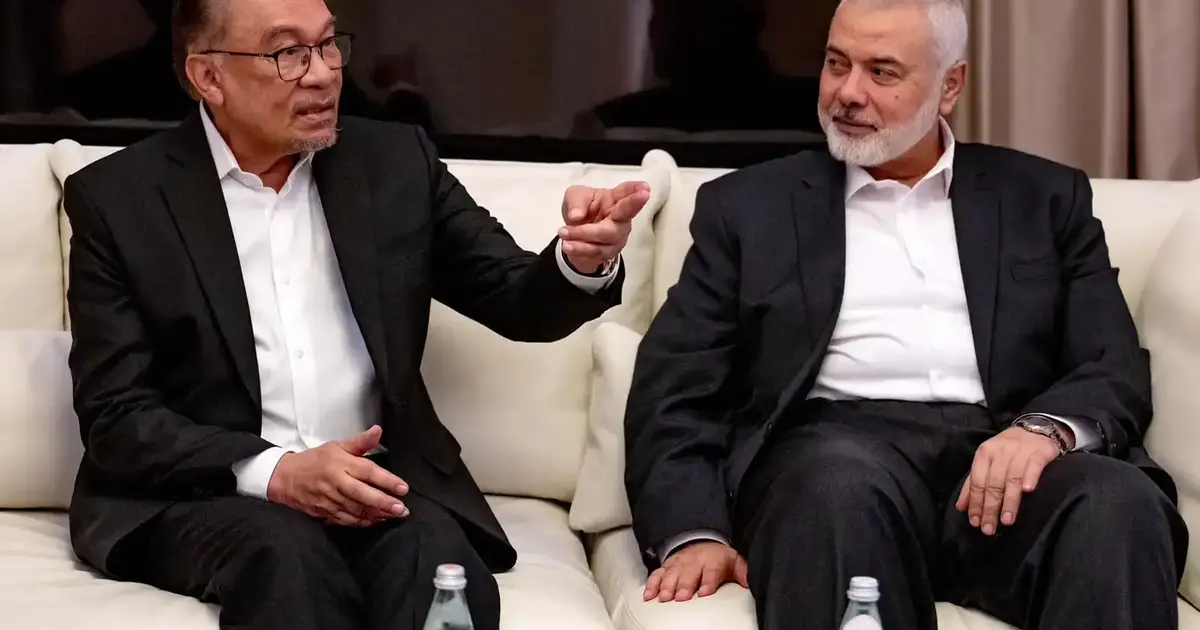
Prime Minister Anwar Ibrahim has firmly rejected claims suggesting that members of Hamas underwent military or operational training within Malaysia, characterizing such assertions as groundless and lacking substantive evidence. The categorical denial comes amid renewed scrutiny of Malaysia's international relations and the government's historical engagement with various Palestinian movements during different political periods.
Anwar also disclosed that he has already apprised US President Donald Trump of his previous meetings with Hamas leadership figures, placing these interactions within the proper diplomatic and informational context. This preemptive clarification suggests an effort to manage perceptions in Washington regarding Malaysia's stance on Palestinian affairs and to demonstrate transparency in the country's foreign policy posture toward the United States.
The prime minister's statements address a sensitive geopolitical issue that touches upon Malaysia's longstanding support for the Palestinian cause, a cornerstone of the nation's foreign policy for decades. Malaysia has historically maintained a vociferous position advocating for Palestinian rights and has provided various forms of support to Palestinian organizations, though this has occasionally invited scrutiny from Western governments, particularly the United States and Israel, regarding the nature and extent of such engagement.
Anwar's decision to personally address these allegations underscores the political weight they carry in Malaysia's current diplomatic environment. The timing appears connected to broader discussions about Malaysia's counterterrorism credentials and its role as a responsible member of the international community. By proactively communicating with Trump, the premier is attempting to ensure that historical interactions do not become liabilities in contemporary bilateral relations during a period when United States policy toward the Middle East is shifting under new administration directives.
The refutation gains particular significance given Malaysia's efforts to maintain balanced relationships across multiple global actors. As a Muslim-majority nation with substantial economic interests in Western markets and as a participant in regional security frameworks, Malaysia faces the perpetual challenge of reconciling its principled positions on Palestinian issues with its pragmatic diplomatic and commercial requirements. Any perception of institutional support for organizations designated as terrorist entities by major Western powers could jeopardize trade relationships, investment flows, and security cooperation.
The allegation itself reflects broader regional tensions and the competitive information landscape surrounding Middle Eastern conflicts. Claims regarding the training or facilitation of activities by designated militant groups frequently emerge from various intelligence sources and advocacy organizations, some of which possess institutional interests in characterizing particular nations as problematic actors. Without verified evidence, such allegations can nonetheless damage international reputations and strain bilateral relationships, particularly when amplified through media channels or official diplomatic channels.
Anwar's clarification regarding his personal history with Hamas leadership also provides insight into Malaysia's evolving relationship with Palestinian resistance movements. His engagement with such figures predates his current position as prime minister and reflects an era when discussions with Palestinian leadership across various organizational structures was considered legitimate political engagement in many quarters. The premier's transparency about these interactions suggests confidence that historical contact with political figures does not implicate current government policy or institutional complicity in any questionable activities.
The prime minister's communication with Trump represents a strategic approach to managing perceptions and preventing misunderstandings from calcifying into diplomatic friction. By addressing the matter directly rather than allowing it to fester or become fodder for speculation, Anwar is attempting to establish the factual record and demonstrate Malaysia's commitment to transparent engagement with its American counterpart. This reflects an understanding that in contemporary international relations, proactive information management is as crucial as the substance of foreign policy itself.
For Malaysian readers, these statements carry implications regarding how their government navigates the complex terrain of supporting Palestinian causes whilst maintaining robust relationships with major Western powers. The ability to articulate a principled position on Middle Eastern issues without being characterized as harboring security threats requires careful diplomatic calibration, sustained engagement with international partners, and consistent messaging from the highest levels of government. Anwar's interventions suggest an administration attuned to these nuances and determined to protect Malaysia's international standing.
The broader context includes ongoing global discussions about counterterrorism cooperation, designation of organizations as terrorist entities, and the distinction between state-level diplomatic engagement and institutional support for militant activity. Malaysia's positioning within these debates will influence its capacity to maintain its foreign policy principles whilst securing the economic, security, and diplomatic benefits that come from strong relationships with developed democracies. The statements from the prime minister represent an attempt to navigate these tensions with credibility and clarity.

