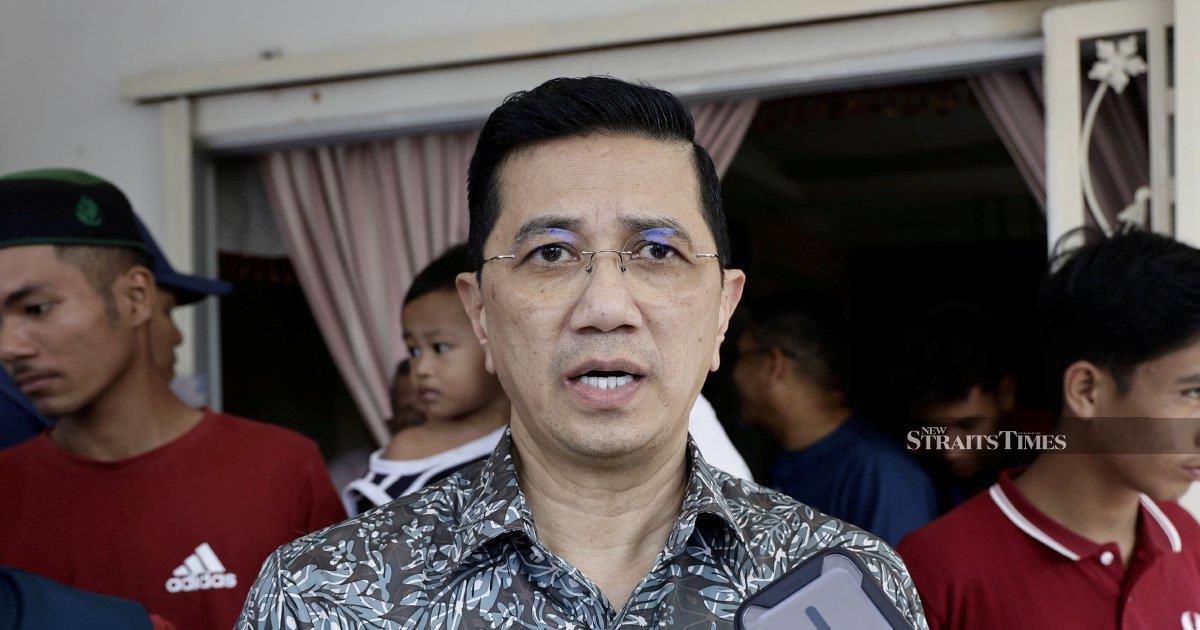
Prime Minister Datuk Seri Anwar Ibrahim has publicly challenged former PKR deputy president Datuk Seri Mohamed Azmin Ali's recent announcement that he will not be rejoining the party, with the premier appearing to question the circumstances surrounding any potential invitation. The sharp exchange marks another chapter in the complex relationship between the two politicians, whose fortunes have diverged significantly in recent years following their earlier partnership within the People's Justice Party.
Anwar's comments came in response to Azmin Ali's definitive statement that he had ruled out a return to PKR, the party he previously served in a senior leadership capacity. Rather than accepting the former deputy president's declaration at face value, the prime minister suggested there may be ambiguity about whether Azmin Ali had actually been formally approached to rejoin, with Anwar questioning: "Was he invited?" This rhetorical challenge implies that Azmin Ali's refusal may have been premature or based on assumptions rather than a concrete offer from the party.
The tension between Anwar and Azmin Ali reflects deeper fractious dynamics within Malaysia's political landscape, particularly regarding the stability and direction of multiethnic coalition politics. Their relationship has been marked by periods of alignment and significant rupture, with personal and political differences contributing to their divergent career trajectories. Azmin Ali's earlier departure from PKR and his subsequent political manoeuvres have been sources of considerable internal party friction.
For Malaysian observers, the exchange highlights ongoing questions about party loyalty and cohesion within PKR, which continues to navigate complex internal politics following its merger with the Amanah party in 2018, though their separate identities have been maintained in practice. The party has faced periodic challenges in maintaining unity among its diverse membership base spanning both urban and rural constituencies across multiple states. The public sparring between Anwar and Azmin Ali serves as a visible reminder of these underlying tensions.
Azmin Ali's position within Malaysia's political structure has evolved considerably since his previous prominence in PKR leadership. His various political affiliations and strategic choices have positioned him differently within the broader coalition framework. His statement regarding his unwillingness to return to PKR carries implications for how former party members may be perceived and whether reconciliation remains possible within the party's evolving structure.
The prime minister's dismissive tone towards Azmin Ali's announcement suggests that Anwar views the former deputy president's statement as either presumptuous or strategically motivated. By questioning whether Azmin Ali was genuinely invited, Anwar appears to be deflecting from any suggestion that PKR might actively be seeking to bring the politician back into the fold. This rhetorical approach allows Anwar to maintain that PKR remains the primary decision-maker regarding its own membership and leadership composition.
For Malaysian political analysts, the exchange between these two figures provides insight into how senior politicians manage their public personas and navigate the complicated terrain of Malaysian coalition politics. The public nature of their exchange, rather than any private discussions, suggests that both leaders are using the issue as a vehicle for broader political messaging. Such public disagreements can shape perceptions among party members and the voting public regarding party unity and direction.
The question of whether politicians who have left a political party should be invited back remains a persistent issue in Malaysian politics, where party loyalty has traditionally held significant importance. The difficulty of successfully reintegrating former members, particularly those who held senior positions, presents ongoing challenges for parties seeking to present a unified front. PKR's handling of such situations reflects broader questions about forgiveness, reconciliation, and whether past political conflicts can be resolved or whether they create lasting divisions.
Anwar's public remarks may also serve a function in managing expectations among current PKR members regarding the party's direction and hierarchy. By appearing dismissive of the possibility of Azmin Ali's return, Anwar reinforces his control over party decision-making and signals to existing members that the party's current leadership structure is stable. This messaging can be important in maintaining morale and preventing speculation about potential leadership challenges or shifts in the party's internal balance of power.
The broader context of Malaysian politics includes ongoing challenges facing coalition governments in maintaining unity across multiple parties and factions with sometimes competing interests. PKR, as a key component of the ruling coalition, faces internal dynamics that inevitably affect its broader political alignment and effectiveness. How such high-profile figures resolve their differences, or whether they remain locked in public disputes, carries implications for the stability of the overall political arrangement.

