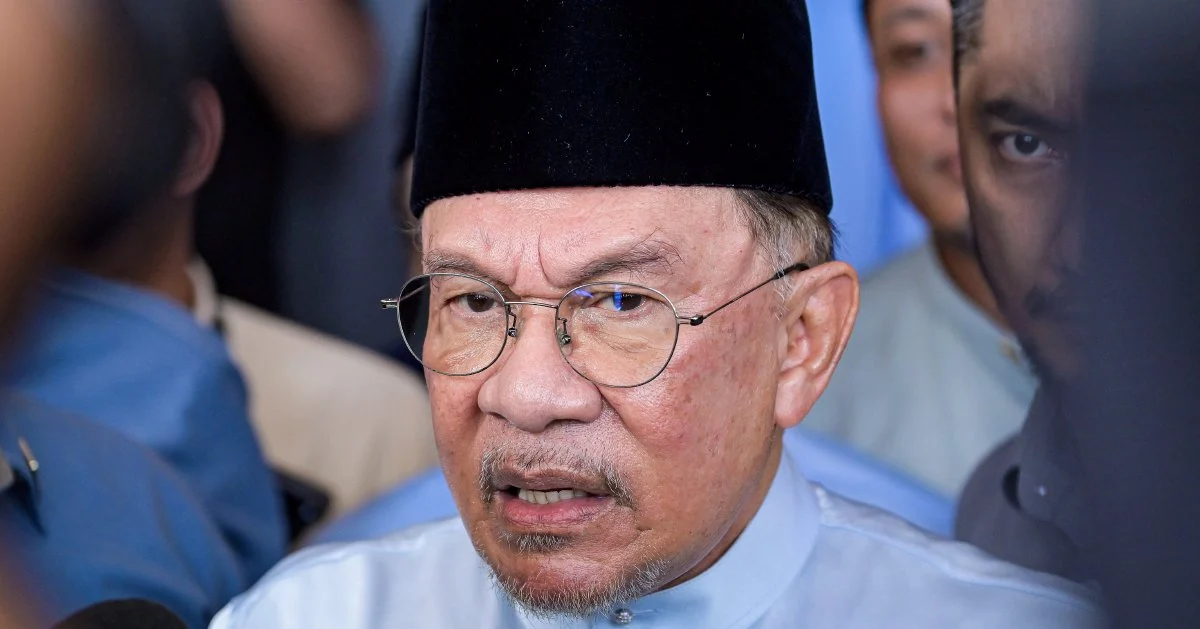
Prime Minister Datuk Seri Anwar Ibrahim has publicly rejected allegations that caretaker Johor Menteri Besar Datuk Onn Hafiz Ghazi was prevented from accessing Felda settlements during an official event, addressing speculation about friction within Malaysia's political leadership at a time of heightened electoral sensitivity.
The denial came as Anwar visited Dengkil, underscoring the government's commitment to managing Felda-related matters at the highest level. The episode reflects ongoing scrutiny of relationships among senior figures in Johor and federal politics, particularly as the state prepares for electoral transitions and political realignment.
Felda, the Federal Land Development Authority, remains one of Malaysia's most strategically important rural institutions, overseeing vast agricultural settlements and commanding significant political influence among smallholder communities. Any perception of exclusion or political division affecting Felda events carries weight beyond mere procedural matters, as these settlements represent core constituencies for multiple political parties and shape electoral calculations across the peninsula.
Onn Hafiz's position as caretaker Menteri Besar places him in a transitional role laden with political implications. Caretaker appointments typically precede formal election cycles or leadership transitions, making them inherently sensitive periods where every action and omission is scrutinised for signals about future political alignments and power distribution. The rumours of his exclusion from Felda gatherings suggested deeper tensions that Anwar's categorical denial now seeks to dispel.
The Prime Minister's intervention at Dengkil represents more than a simple factual correction. It signals the federal government's intent to maintain cohesion among Barisan Nasional and allied structures heading into potentially consequential electoral contests. By personally addressing the issue, Anwar effectively elevated the matter's importance while simultaneously attempting to neutralise it through authoritative dismissal of what he characterised as unfounded claims.
The timing of such rumours and their subsequent refutation warrants consideration. In Malaysian politics, reports of exclusion or marginalisation often precede broader shifts in party positioning or coalition dynamics. That Anwar felt compelled to address these allegations publicly suggests the narrative had gained sufficient traction to require direct intervention, even if he frames the original claims as baseless.
Felda's institutional significance cannot be understated in understanding this episode's political dimensions. The organisation encompasses hundreds of settlements across Malaysia, affecting the livelihoods of hundreds of thousands of smallholders and their families. Control over narrative around Felda programming, resource allocation, and political participation directly influences grassroots sentiment and electoral behaviour. Any perception of divided leadership regarding Felda matters risks fragmenting the carefully maintained consensus required to secure rural support.
Johor's particular importance amplifies these dynamics further. As Malaysia's southernmost state and home to significant Felda concentrations, Johor represents crucial electoral territory where multiple political forces compete for influence. The state's position within broader Barisan Nasional calculations makes internal coherence essential. Onn Hafiz's caretaker status and any complications surrounding his participation in major state or federal events therefore carry implications extending well beyond immediate protocol questions.
Anwar's categorical refutation also addresses implicit concerns about federalism and centre-state relations. Any credible suggestion that federal leadership might obstruct or circumscribe a state leader's movements or event participation strikes at foundational governance principles. By swiftly denying such reports, the Prime Minister reasserts the legitimacy and functionality of Malaysia's federal structure, signalling that constitutional protocols remain intact regardless of political complexities.
The broader context of Malaysian political management cannot be ignored. In an environment where coalition stability remains perpetually contested and electoral prospects uncertain, maintaining visible unity among senior figures becomes paramount. Opposition forces continuously scan for evidence of cracks within ruling structures, seeking opportunities to exploit divisions. Reports of Onn Hafiz's exclusion, whether accurate or not, provided precisely such fodder for destabilising narratives that the government moved swiftly to neutralise.
Moving forward, Anwar's public stance establishes a clear marker regarding acceptable discourse around state and federal leadership relations. By rejecting the exclusion narrative entirely rather than offering qualified explanations or partial clarifications, he removes ambiguity and establishes authoritative framing that downstream political actors must navigate. This approach reflects sophisticated political communication aimed at controlling the information environment in an increasingly fragmented media landscape.
The episode ultimately illustrates how Malaysian politics operates simultaneously at multiple levels—institutional, personal, electoral, and symbolic. A seemingly straightforward question about event access becomes freighted with implications about coalition stability, state-federal relations, leadership coherence, and electoral positioning. Anwar's intervention, while superficially addressing a discrete factual claim, actually serves broader stabilisation purposes essential to maintaining the coalition's political viability.

