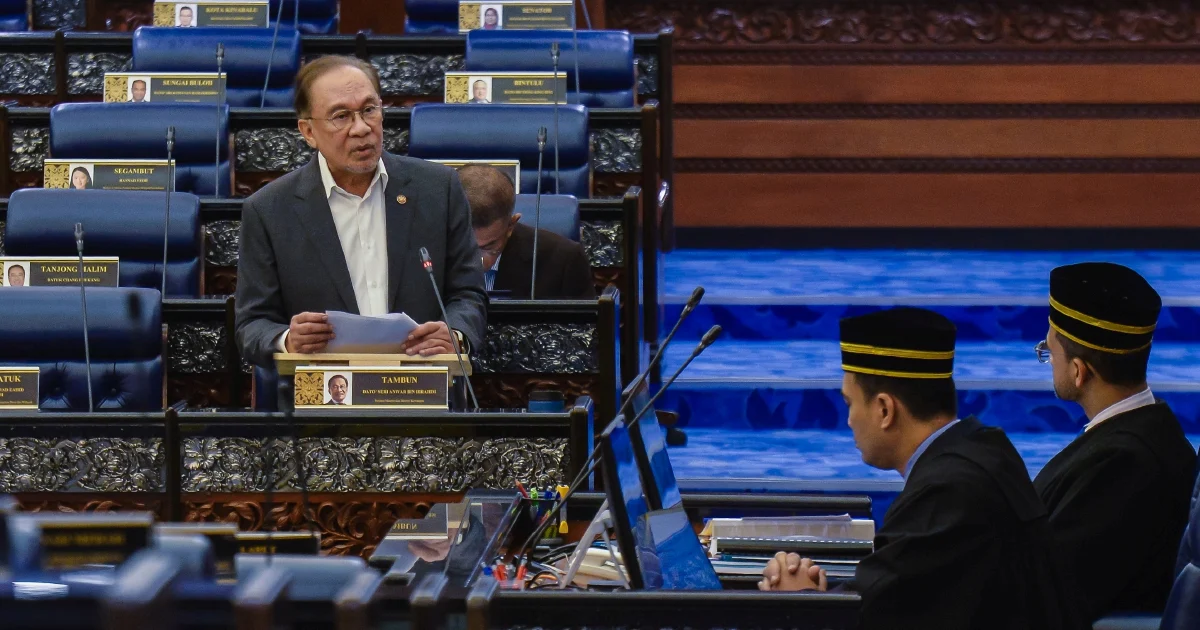
Prime Minister Datuk Seri Anwar Ibrahim has firmly rejected allegations that he instructed the cancellation of next year's Johor Felda Settlers' Day celebration, which was scheduled to take place in Kluang. The denial came after reports suggesting that an order to halt the event had been issued earlier in the month, prompting confusion and speculation about the circumstances surrounding the proposed event.
The clarification from the Prime Minister's office underscores the sensitivity surrounding public events and commemorations involving the Federal Land Development Authority (Felda), a historically significant institution in Malaysia's rural development framework. Felda settlers represent an important constituency, particularly in states like Johor where the scheme has deep roots and considerable influence over local communities and political dynamics.
The 2026 Johor Felda Settlers' Day was envisioned as a major celebration honouring the contributions of settlers who have worked the land under Felda schemes over decades. Kluang, a town in the Johor district, has strong historical connections to the settlement programme, making it a symbolically important venue for such a commemoration. The proposed event would have served to recognise the agricultural heritage and economic contributions of settler families in the state.
The misunderstanding, whether arising from miscommunication, unofficial reports, or procedural confusion, highlights the importance of clear administrative channels in government decision-making. Such ambiguities, particularly when they concern events honouring established constituencies, can generate considerable political and social reverberations if left unaddressed. The Prime Minister's prompt denial suggests an intent to restore clarity and confidence in the government's commitment to honouring its obligations to Felda communities.
For Malaysian readers, particularly those with family or community ties to Felda settlements, such matters carry genuine significance beyond mere administrative procedure. The scheme itself remains a defining feature of Malaysia's post-independence development strategy, having enabled thousands of rural families to establish productive agricultural livelihoods. Celebrations marking Felda's milestones and honouring its settlers reflect broader national narratives about land development, rural prosperity, and social mobility.
Johor's political landscape has long been shaped by the strength of Felda settler support, with many of the state's constituencies maintaining strong demographic ties to settlement communities. Any perceived shift in government priority regarding such commemorations could register as a political signal, whether intentional or not. The Prime Minister's swift clarification appears designed to prevent the narrative from becoming a focal point of concern or criticism among settler communities.
The 2026 celebration represents more than a single event; it encapsulates questions about continuity in government support for institutions and communities that have been central to Malaysia's development trajectory. Felda has faced various operational and financial challenges over the years, and settlers have sometimes expressed concerns about their economic viability and government backing. A public celebration serves both symbolic and practical purposes in reinforcing government commitment to these communities.
Regional considerations also matter here. Johor's position as a major economic hub and its strategic importance to both federal and state politics makes clarity on such matters important for broader governance and public confidence. The state's settler communities, while diverse in their current circumstances, represent a politically engaged and historically conscious constituency that monitors government actions closely.
The incident, whatever its origin, underscores the importance of transparent administrative processes and clear communication channels within government. In an era of rapid information dissemination through various media, misunderstandings about government directives can quickly gain traction and create unintended consequences. The Prime Minister's intervention to personally deny the allegation signals that such matters warrant high-level attention and response.
Moving forward, the stated intention to proceed with the 2026 Johor Felda Settlers' Day celebration should provide reassurance to affected communities and restore confidence in the government's commitment to honouring historical and cultural milestones tied to the settler programme. The celebration remains positioned as an opportunity to reflect on Felda's role in Malaysia's development and to strengthen relationships between government and settler communities.
For the broader region, Malaysia's approach to honouring and supporting agricultural settlement schemes carries relevance as other Southeast Asian nations pursue similar rural development initiatives. The visibility of such commitments and the clarity with which governments communicate their support for such programmes influence both domestic stability and regional development narratives. The Prime Minister's clarification thus serves purposes beyond domestic politics, affirming Malaysia's continued engagement with settled agricultural communities and their aspirations.

