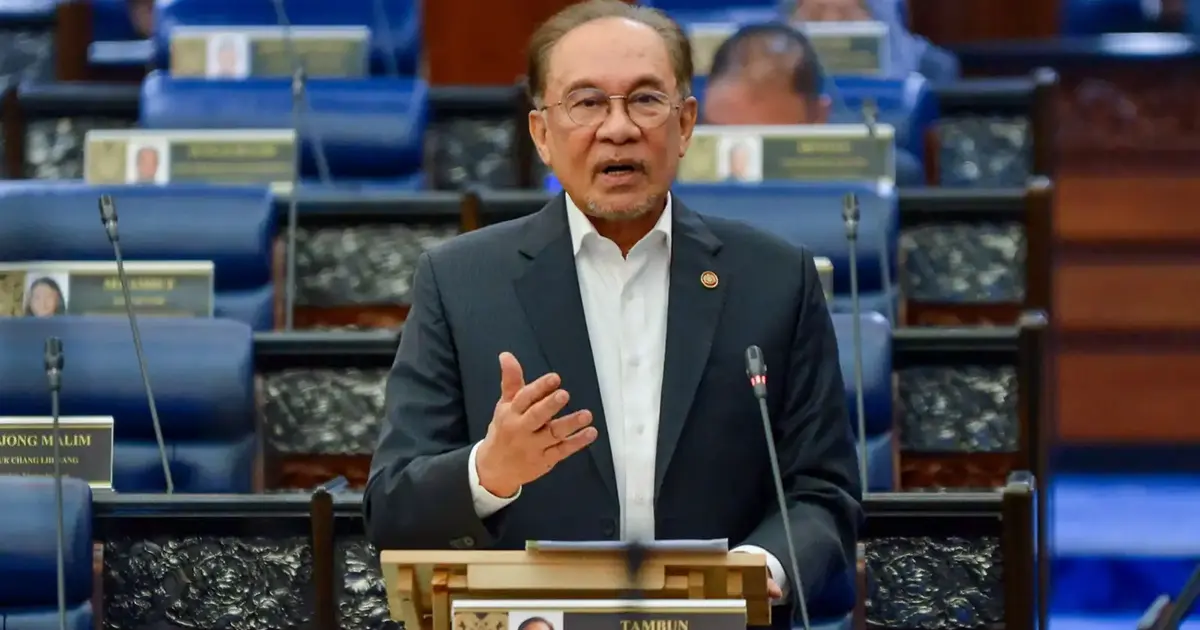
Prime Minister Anwar Ibrahim has doubled down on his position that the government requires sufficient time to execute its policy agenda, firmly rebuffing renewed pressure for an early dissolution of Parliament. In remarks that underscore tensions within Malaysia's political landscape, Anwar emphasised that the electorate's primary concern is achieving tangible improvements in living standards and macroeconomic performance, not participating in another costly electoral cycle.
The premier's latest intervention arrives as speculation persists about the timing of the next general election. Coalition partners and opposition factions have occasionally floated the possibility of early polls, prompted by shifting political dynamics and calculations about electoral advantage. However, Anwar's repeated assertions suggest the government intends to maintain its current parliamentary term, allowing it to advance flagship initiatives across multiple sectors before facing voters again.
Anwar's reasoning reflects a pragmatic political argument: that electoral contests consume resources, create uncertainty for investors, and divert ministerial focus from implementation. The sentiment aligns with broader aspirations in Southeast Asia for policy continuity and institutional stability. Malaysia's economy, like its regional peers, faces persistent headwinds including sluggish growth, inflationary pressures, and labour market challenges. A government preoccupied with campaigning struggles to address these structural difficulties effectively.
The prime minister's position also carries implications for Pakatan Harapan, the coalition governing Malaysia. Internal cohesion has occasionally been tested, with component parties pursuing distinct agendas and sometimes clashing over resource allocation and candidate selection. By insisting that the government's mandate remains valid and untested, Anwar seeks to maintain coalition discipline and focus collective energy on delivering measurable results that might improve the coalition's electoral prospects when voters eventually return to the polls.
For Malaysian business and investor communities, the prime minister's message offers reassurance. Prolonged political uncertainty dampens capital formation, delays infrastructure projects, and complicates long-term planning. A government committed to multi-year programmes can offer the predictability that enterprises require. Given Malaysia's competitive position within ASEAN and the global economy, such stability carries material significance for job creation and foreign direct investment flows.
The public dimension of Anwar's case warrants examination as well. Recent years have seen Malaysian voters express fatigue with frequent electoral contests and political drama. Governing coalitions that cycle in and out repeatedly create voter scepticism and erode public trust in institutions. By framing early elections as self-serving and contrary to national interest, Anwar attempts to position his government as responsive to popular sentiment and focused on the public good rather than partisan advantage.
Regionally, Malaysia's political stability influences broader Southeast Asian dynamics. As the region's major economies grapple with geopolitical competition, climate change, and economic transformation, Malaysia's internal political health shapes its capacity to contribute to ASEAN initiatives and maintain regional balance. A government able to concentrate on policy execution strengthens Malaysia's diplomatic standing and ability to advance regional interests.
Yet the prime minister's repeated rejection of early election calls suggests underlying anxiety about timing. Electoral mathematics are complex in Malaysia's multi-party system. Anwar appears confident that postponing polls maximises the probability of a coalition victory, implying that current conditions—whether economic improvements, administrative achievements, or evolving voter sentiment—may shift before the government faces mandatory re-election. This strategic patience reflects the game theory of coalition politics in a diverse polity.
The economic dimension proves crucial to understanding Anwar's argument. If government-backed programmes successfully generate employment, reduce inflation, or improve public services, voters will likely reward the coalition at the ballot box. Conversely, early elections risk accountability before such benefits materialise or become widely felt. The prime minister's insistence on time appears calibrated to this calculus: allow policies sufficient runway to generate tangible results that resonate with voters.
Critically, Anwar's stance does not eliminate the possibility of early elections entirely. Malaysian politics remains fluid, and unforeseen circumstances—coalition ruptures, major economic shocks, or shifting parliamentary mathematics—could alter calculations. However, the prime minister's consistent messaging signals serious governmental intent to govern through the full parliamentary cycle unless extraordinary circumstances intervene.
For ordinary Malaysians, the debate carries immediate relevance. Whether the government commands sufficient time to address cost-of-living pressures, improve education and healthcare systems, and create sustainable employment directly affects household welfare. Anwar's argument essentially asks citizens to defer electoral judgement in exchange for concentrated governmental effort on these matters. Whether voters will embrace this implicit bargain remains an open question that will shape Malaysian politics through the next electoral contest.

