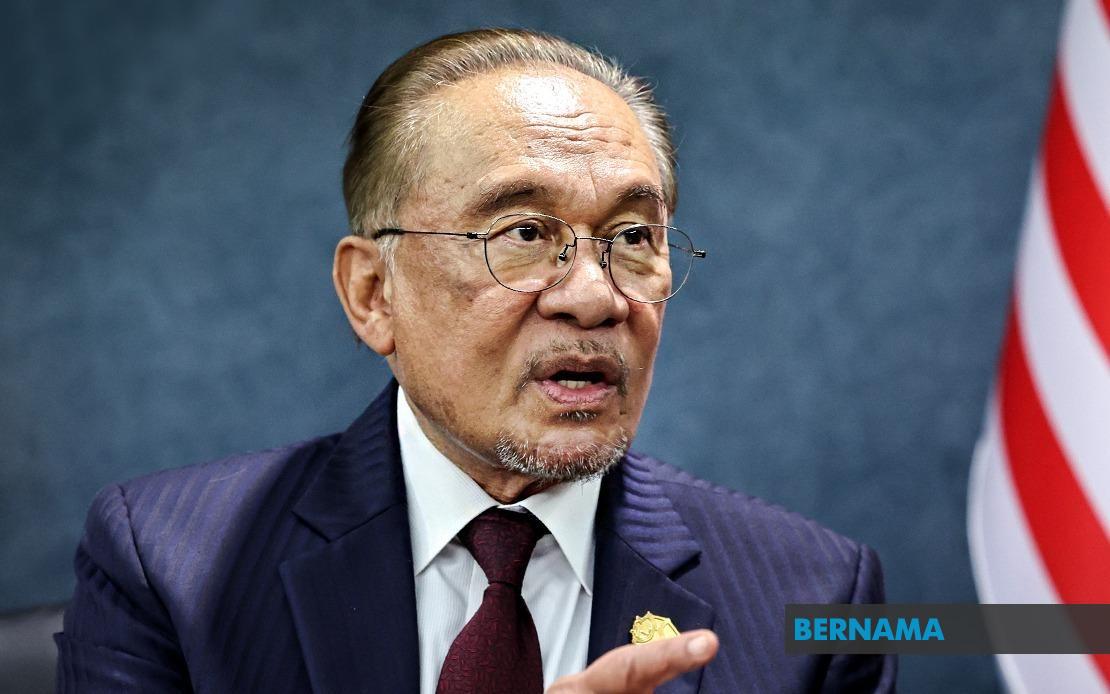
Prime Minister Datuk Seri Anwar Ibrahim extended formal congratulations to Senator Datuk Nur Jazlan Mohamed on his reappointment as Deputy Senate President for a second consecutive term, underscoring the continued confidence in his parliamentary leadership. The recognition came during proceedings at the Dewan Negara, where Anwar publicly acknowledged the senator's return to the upper house position alongside other reappointed members.
Nur Jazlan's reappointment reflects his sustained influence within Malaysia's legislative framework and the government's broader strategy in maintaining experienced hands within the Senate's administrative structure. The Deputy Senate President role carries significant responsibility in managing parliamentary business and maintaining order during legislative sessions, positioning Nur Jazlan as a key figure in the smooth functioning of the Dewan Negara.
In addition to honouring Nur Jazlan's reappointment, the Prime Minister also extended recognition to Senator Musoddak Ahmad, who similarly returned to his senatorial position. Both individuals underwent the formal oath-taking procedure administered by Senate President Datuk Awang Bemee Awang Ali Basah, marking the official commencement of their new terms. This dual reappointment suggests continuity in the government's approach to upper house leadership and reflects strategic choices about who will shape legislative deliberations.
Anwar's public acknowledgement of these reappointments during Question Time carries symbolic weight beyond mere formality. By prioritising these congratulations at the outset of parliamentary proceedings, the Prime Minister signalled the importance of Senate leadership stability to his administration's governing agenda. The timing and prominence of his remarks suggest that maintaining effective parliamentary management remains a priority even as the government navigates broader policy challenges.
The Senate, or Dewan Negara, occupies a distinctive position within Malaysia's bicameral parliament. Unlike the lower house, senators are not directly elected but appointed through various mechanisms, including state governments and institutional bodies. This appointed character means that reappointments and leadership selections often reflect behind-the-scenes negotiations and political calculations about representation and influence, making Nur Jazlan's continuation particularly noteworthy.
The reappointment process itself demonstrates the ongoing functioning of Malaysia's institutional mechanisms during a period of significant political evolution. The past several years have witnessed substantial changes to Malaysia's political landscape, including shifts in coalition alignments and government composition. That established figures like Nur Jazlan retain positions of authority suggests institutional stability beneath surface-level political turbulence.
Beyond parliamentary matters, Anwar injected a moment of levity into proceedings by remarking on his support for Spain's 2026 FIFA World Cup victory—a fictional outcome that drew apparent amusement from fellow parliamentarians. In this alternate scenario, Spain would have triumphed over Argentina through a late-minute goal by Ferran Torres at MetLife Stadium in East Rutherford, with Argentina finishing the match reduced to ten players following Enzo Fernández's dismissal.
While this lighter comment appeared purely for entertainment value, it served a subtle political function. Humour deployed strategically during parliamentary sessions can ease tensions and foster collegial relationships among legislators, helping to build consensus on routine matters even amid deeper disagreements on substantive policy questions. Such moments humanise political leaders and create informal bonds that facilitate legislative business.
The combination of formal recognition and casual remarks within the same parliamentary moment illustrates the multifaceted nature of modern legislative leadership. Anwar's approach—mixing earnest institutional acknowledgement with spontaneous humour—reflects an effort to maintain both the gravitas and approachability necessary for effective executive-legislative relationships.
Nur Jazlan's trajectory within Malaysian politics spans several decades and multiple political reorganisations, making him a figure of considerable legislative experience. His reappointment at the upper house level, particularly in a leadership capacity, speaks to the value placed on institutional continuity and experienced stewardship within parliamentary processes. For Malaysian readers following legislative developments, his retention suggests stable governance amid broader political transitions.
The Senate's role in Malaysia's legislative process, while often overshadowed by lower house proceedings, remains constitutionally significant and strategically important. Deputy Senate President positions hold real authority over parliamentary scheduling, debate management, and the advancement of legislation through the chamber. Nur Jazlan's continued tenure in such a role therefore has practical implications for how legislation moves through parliament and which matters receive priority attention.

