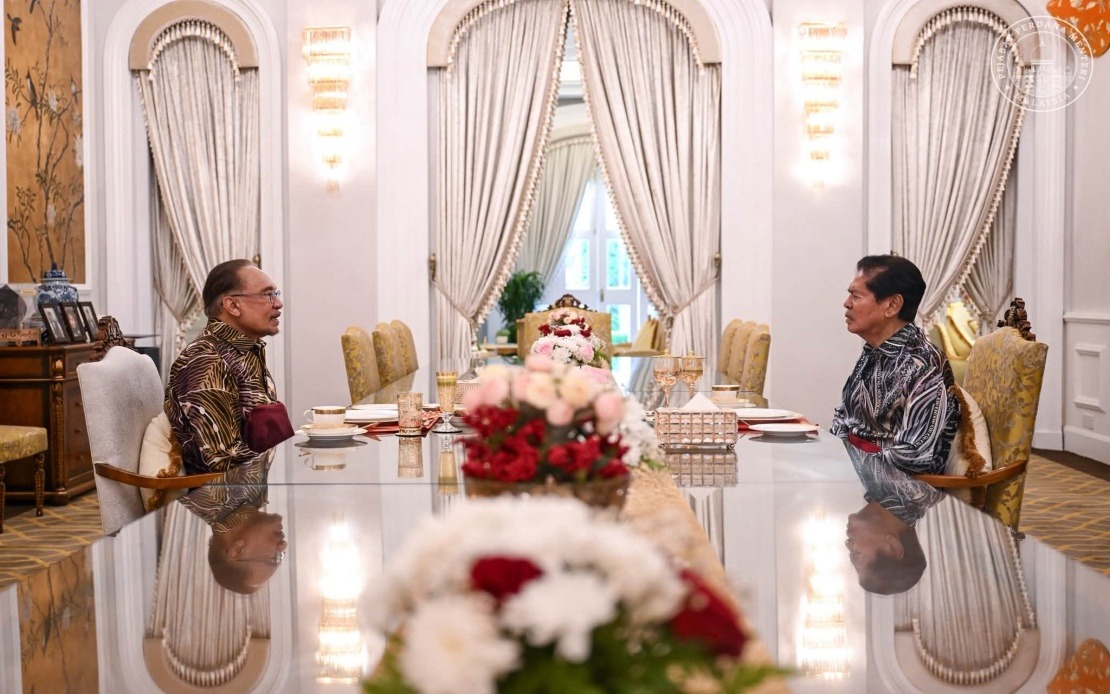
Prime Minister Datuk Seri Anwar Ibrahim brought his two-day working visit to Penang to a close on August 29 with a formal tea reception hosted by Governor Tun Ramli Ngah Talib at his official residence, Seri Mutiara. The occasion marked the culmination of an intensive schedule that had seen the Prime Minister engage with various constituencies and initiatives across the state, signalling the government's commitment to strengthening ties with Penang despite ongoing political complexities in the northern corridor.
In remarks shared on social media, Anwar emphasised that the gathering with the Governor had deepened the working relationship between federal authorities and Penang's state administration. He underscored their mutual dedication to advancing developmental priorities and improving living standards for Penang residents, a message that carries particular significance given the state's historical role as Malaysia's economic powerhouse and its strategic importance for national growth.
The reception itself was infused with a more personal touch when Governor Ramli reflected on the encounter. He expressed genuine pleasure at hosting the Prime Minister, characterising the meeting as a valuable occasion to discuss contemporary matters affecting both Penang and the broader nation. This candid perspective from the head of state suggests substantive conversations occurred beyond ceremonial pleasantries, touching on governance challenges and opportunities relevant to Malaysia's largest Chinese-majority state.
In his own Facebook account of the event, Ramli added a humanising dimension to the formal proceedings by recounting how his grandson, Aldrey Alfi, had participated enthusiastically in the gathering. The youngster's animated questions and Anwar's gracious engagement with the child underscored the informal camaraderie that the Governor sought to highlight. Such moments, though seemingly minor, often carry symbolic weight in political contexts, suggesting accessibility and warmth in high-level government interactions.
Anwar's packed itinerary throughout his Penang sojourn reflected the administration's priorities and the breadth of governance concerns being addressed. The Prime Minister's participation in the Permatang Pauh Entrepreneur Revival Programme demonstrated focus on economic rejuvenation and small business support, areas critical to post-pandemic recovery in communities across the state. This particular engagement held additional symbolic weight given Anwar's long association with the Permatang Pauh constituency and its voters.
The 15th Malaysia Scout Jamboree was another significant fixture on the schedule, highlighting the government's emphasis on youth development and character building through established national institutions. Scout organisations have traditionally served as breeding grounds for leadership and civic responsibility, making such engagements a culturally resonant priority for Malaysian administrations. Anwar's participation signalled governmental investment in mentoring the next generation of citizens and leaders.
Equally important was the Prime Minister's involvement in the MADANI Sahabat 2026 National Day Countdown Programme, which appears designed to build momentum toward Malaysia's forthcoming National Day celebrations while embedding the government's MADANI framework into community consciousness. This forward-looking initiative suggests deliberate efforts to align local celebration planning with national messaging and development philosophy, embedding federal direction into state-level activities.
The close coordination between Anwar's office and Penang's state administration, evident from the packed schedule and high-level protocols, reflects broader dynamics within Malaysia's federal structure. Penang, governed by the Democratic Action Party, has generally maintained pragmatic working relationships with federal authorities despite different political alignments. The visit underscores the importance of functional cooperation across party lines for addressing shared challenges in infrastructure, economic development, and social welfare.
For Malaysian observers monitoring federal-state relations, Anwar's visit exemplified the balancing act required in Malaysia's complex political landscape. Penang's development carries national implications—its manufacturing output, port operations, and technological ecosystem make it strategically vital to Malaysia's economic performance. Any deterioration in federal-state coordination could theoretically impede progress on projects transcending administrative boundaries.
The emphasis on entrepreneur revival programmes and youth engagement also reveals the administration's response to economic pressures facing Malaysian households. With inflation concerns and employment uncertainties affecting consumer confidence, government initiatives targeting small business growth and youth opportunity represent attempts to build bottom-up resilience alongside macro-economic policy management.
The informal elements of the visit—the tea reception, the interaction with the Governor's family, the social media documentation—reflect how contemporary Malaysian politics increasingly incorporates personal connection and accessibility narratives alongside formal governance. These touchpoints matter for public perception and for maintaining the networks of trust necessary for effective administration across different levels of government.

