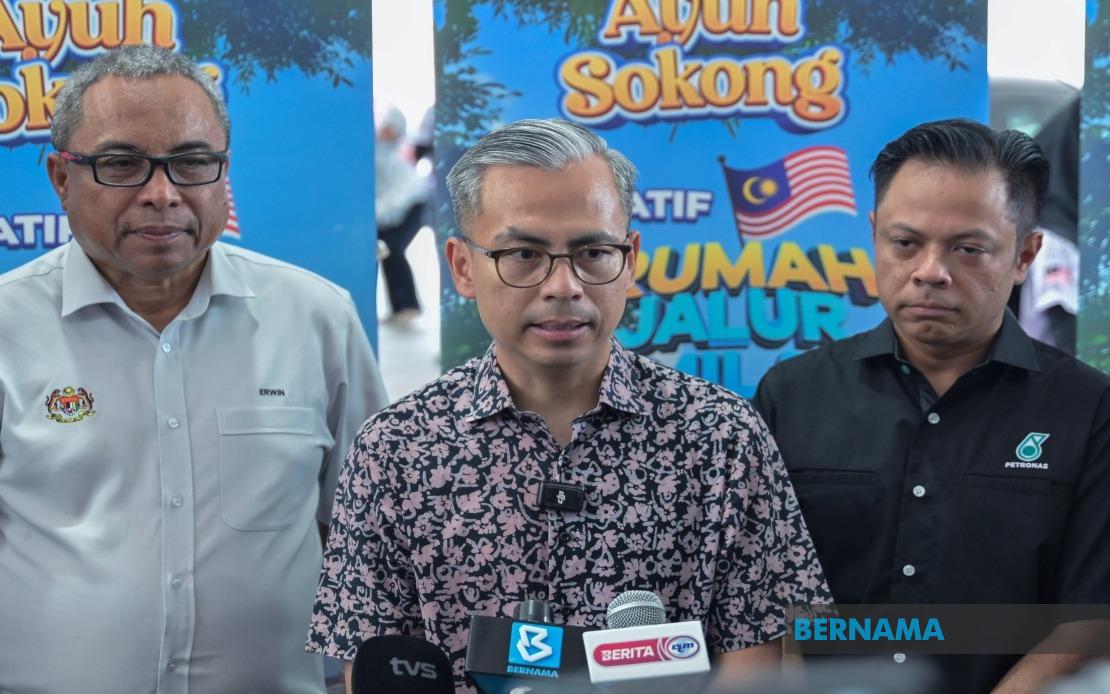
Prime Minister Datuk Seri Anwar Ibrahim has pledged to move forward with a significant electoral restructuring in Sarawak, instructing the Election Commission to deliver a fresh assessment of plans aimed at expanding the state legislature. The announcement, made through MADANI Government spokesman Datuk Seri Fahmi Fadzil, signals renewed momentum behind a constitutional amendment that has been awaiting implementation for several months. The development comes as the federal government navigates multiple state-level political considerations while consolidating its coalition arrangements in East Malaysia.
Fahmi revealed that the Prime Minister raised the redelineation matter during a recent Cabinet session, reaffirming his administration's determination to see the process through to completion. The Cabinet discussion underscored that several procedural steps remain pending before formal implementation can commence, with the Election Commission playing a crucial coordinating role. The government's explicit request for an updated report suggests that officials are preparing comprehensive groundwork to address logistical and administrative requirements before the redelineation takes effect.
The proposed expansion would increase Sarawak State Legislative Assembly seats from 82 to 99, adding 17 new electoral constituencies across the state. This amendment, formally titled the Sarawak State Legislative Assembly (Composition of Membership) Bill 2025, underwent its initial legislative stages last July. The expansion represents a substantial structural change to Sarawak's political landscape, with implications for future state elections and the balance of power within the assembly. Such redelineations typically occur once per decade or when demographic shifts justify reconfiguration of electoral boundaries.
The impetus for this redelineation reflects Sarawak's growing population and evolving settlement patterns, particularly in rapidly urbanizing areas and emerging towns. By redistributing and increasing seats, the amendment aims to ensure more equitable representation across the state's diverse regions, from densely populated urban centres to less densely populated rural areas. The process aligns with international standards for regular boundary reviews, which most established democracies undertake periodically to maintain electoral fairness.
Women, Family and Community Development Minister Datuk Seri Nancy Shukri and Works Minister Datuk Seri Alexander Nanta Linggi championed the issue during the recent Cabinet deliberations, demonstrating cross-ministerial support for the initiative. Their advocacy suggests that the redelineation enjoys backing from senior officials with stakes in East Malaysian development and representation. The collaborative approach signals that the government views this not merely as a technical electoral matter but as a substantive governance priority affecting Sarawakian citizens' democratic participation.
Fahmi acknowledged that while the Cabinet has received confirmation of the Prime Minister's commitment, a specific implementation timeline has not yet been communicated. This cautious sequencing reflects standard procedure for major constitutional amendments, which require coordination between multiple agencies and careful planning to ensure smooth execution. The Election Commission's role proves critical, as it must validate boundary proposals, assess demographic data, and ensure compliance with electoral legislation before any changes take effect.
While addressing Sarawak's electoral future, Fahmi also outlined the government's preparations for the Melaka state election, demonstrating the administration's simultaneous focus on multiple electoral contests. He emphasized that his party has begun logistics coordination, particularly regarding media facilities and digital infrastructure at polling centres. The focus on internet connectivity reflects lessons learned during recent state elections in Johor and Negeri Sembilan, where reliable communications proved essential for efficient vote processing and result transmission.
Fahmi announced that the Malaysian Communications and Multimedia Commission has been directed to collaborate with the Election Commission in identifying and securing internet access requirements at every Melaka polling station. This proactive approach aims to eliminate technical bottlenecks that might complicate voting procedures or delay official results. The emphasis on learning from previous elections demonstrates institutional capacity-building within Malaysia's electoral administration, enhancing operational efficiency across different state contests.
The Sarawak redelineation initiative holds particular significance for the federal coalition's strategic positioning in East Malaysia, where competition for state control remains vigorous. An expanded assembly with more seats theoretically provides opportunities for coalition parties to consolidate influence, though the actual impact depends on boundary configurations and voter preferences. For Malaysian politics more broadly, the amendment represents an important exercise in maintaining electoral system integrity through periodic review and adjustment.
Perspectives from Sarawak's various political parties and civil society organizations regarding the specific seat allocation methodology remain varied. Rural constituencies expressed concerns about potential under-representation if boundaries are drawn without careful attention to geographic dispersal and transportation challenges. Urban areas welcomed the prospect of additional seats reflecting their demographic weight. These competing interests underscore the technical and political complexity inherent in any redelineation exercise.

