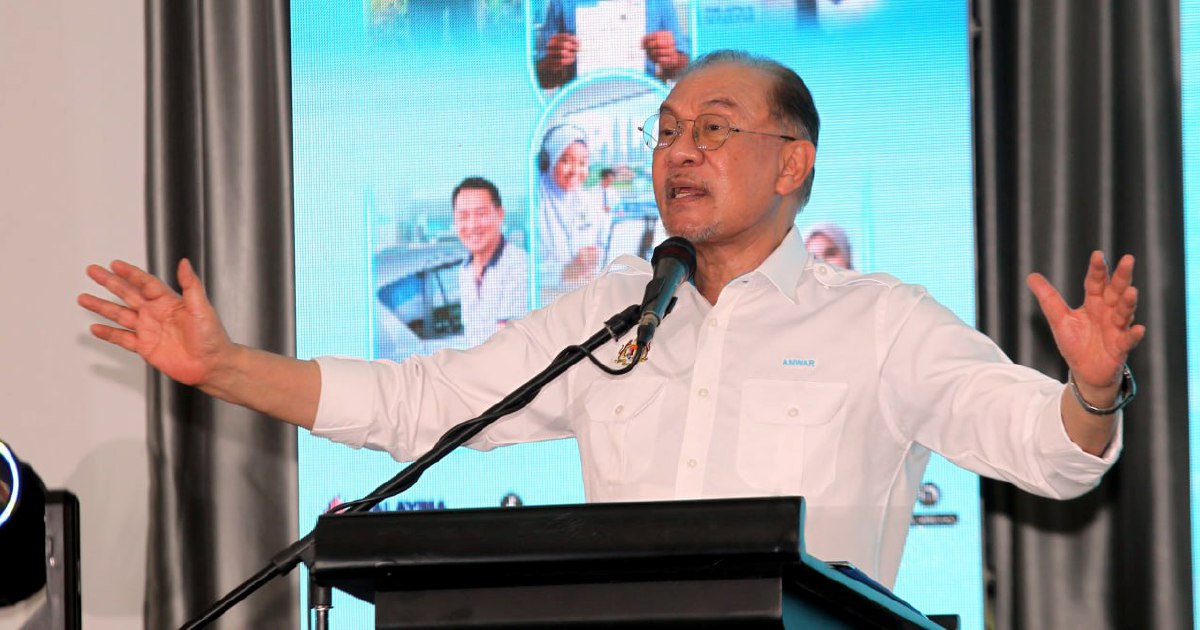
Prime Minister Datuk Seri Anwar Ibrahim has pledged RM15.3 million to enhance religious and pondok schools in Perak, underscoring the Madani government's determination to strengthen the Islamic education ecosystem across Malaysia. The commitment represents a strategic investment in an educational sector that plays a crucial role in developing human capital and preserving Islamic values among the nation's youth.
Anwar's announcement during his visit to Ipoh signals the administration's recognition that religious and pondok schools constitute an essential pillar of Malaysia's diverse education landscape. These institutions, which combine secular academics with Islamic theological instruction, serve hundreds of thousands of students nationwide and maintain a vital position in the country's spiritual and intellectual development.
The RM15.3 million allocation for Perak specifically underscores how the government is directing resources toward states beyond the federal territory, ensuring that educational disparities are gradually addressed through targeted funding mechanisms. Perak, as one of the larger states with substantial Muslim populations and established networks of religious schools, becomes a focal point for demonstrating the government's inclusive approach to education financing.
This funding package likely encompasses improvements to physical infrastructure, teacher training and development programmes, curriculum enhancements, and student welfare initiatives. Religious schools across Malaysia have historically faced resource constraints compared to fully government-funded national schools, making such investments particularly significant for modernising facilities and expanding access to quality education.
The Madani government's sustained focus on religious education reflects its broader policy framework that emphasises inclusivity and recognition of various educational pathways. Rather than viewing religious schools as separate from the mainstream education system, the administration seeks to integrate and elevate them as complementary institutions that serve Malaysia's pluralistic society.
Pondok schools, which range from small village establishments to large boarding institutions, play an especially important cultural and social role in Malaysian Muslim communities. These traditional Islamic schools often provide boarding facilities for students from disadvantaged backgrounds, making government support essential for maintaining their operations and educational quality.
The commitment also addresses workforce development concerns in the Islamic education sector. Teachers in religious schools require competitive compensation and professional development opportunities to attract and retain talent, particularly as Malaysia competes for skilled educators across all sectors. Investment in teacher welfare and training helps elevate educational standards and ensures these institutions attract committed professionals.
Regionally, Malaysia's approach to supporting religious education reflects a broader Southeast Asian trend of governments engaging more actively with Islamic institutions. Unlike some neighbouring countries where religious schools operate with minimal state support or oversight, Malaysia's model involves constructive partnership and targeted funding, creating opportunities for better coordination and quality assurance.
The funding announcement comes amid ongoing discussions about education reform and the integration of various schooling systems within Malaysia's broader developmental framework. Policymakers recognise that religious schools often serve geographically isolated communities and economically disadvantaged populations, making government support essential for equity and social cohesion.
For Perak specifically, the allocation demonstrates the state's continued importance in the federal government's policy considerations. With its significant Muslim population and established religious school infrastructure, Perak benefits from investments that will have ripple effects across local communities and contribute to human capital development in the state.
The pledge also reflects Anwar's personal commitment to education as a priority area for his administration. Since assuming office, the Prime Minister has consistently emphasised the importance of strengthening Malaysia's education system across all its diverse components, from primary schools to higher education institutions.
Moving forward, the success of this investment will likely depend on effective implementation mechanisms, transparent disbursement of funds, and regular monitoring of outcomes. Establishing clear performance metrics and accountability frameworks ensures that the RM15.3 million generates tangible improvements in educational quality and access.
As Malaysia continues navigating broader education policy challenges including digitalisation, skill development, and ensuring equitable access across socioeconomic groups, supporting religious and pondok schools remains a critical component of national educational strategy. The government's continued investment signals that these institutions remain integral to Malaysia's vision of comprehensive, inclusive education that serves all communities.

