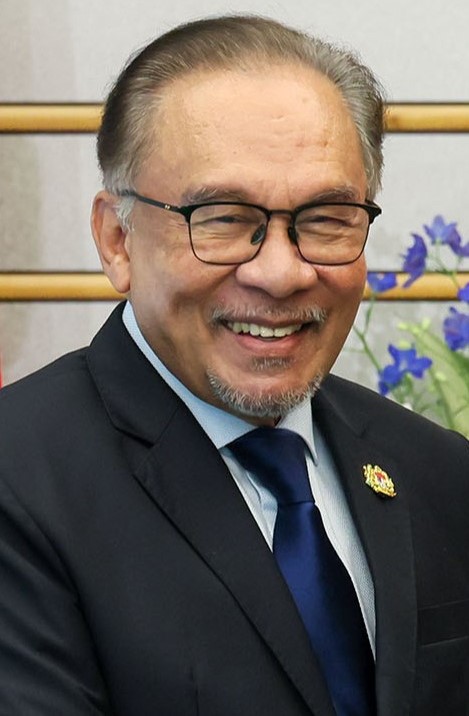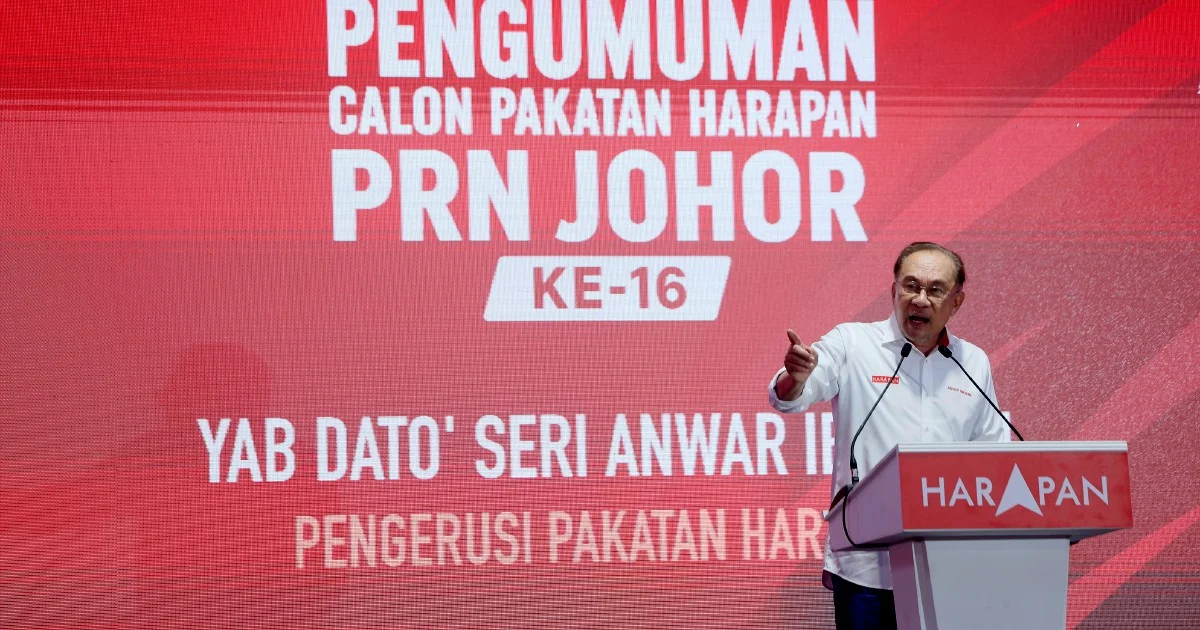
Prime Minister Datuk Seri Anwar Ibrahim has encouraged state-level officials in Johor to scrutinize financial arrangements imposed by previous federal administrations, particularly regarding assertions that the prosperous southern state fell short of its entitled revenue share during those periods of governance.
The call came during a campaign visit to Tangkak, where Anwar emphasised the importance of state leadership pursuing accountability for historical revenue distribution decisions. His remarks represent an escalation of the federal government's messaging on fiscal transparency and highlight ongoing tensions between the current Pakatan Harapan-led administration and the opposition coalitions that previously held power.
Johor's revenue generation capacity and its relationship with the federal government have been contentious issues in Malaysian politics. The state, which produces significant oil and gas revenues alongside manufacturing and tourism income, has periodically raised concerns about the proportion of federally collected taxes and resource royalties returned to state coffers. These disputes touch on fundamental questions about economic federalism and the distribution of national resources.
Anwar's intervention in this matter carries particular weight given the political dynamics currently at play. The Pakatan Harapan coalition, which governs at the federal level, has positioned itself as champion of transparency and accountability—themes that resonate with the broader anti-corruption agenda that brought it to power in 2018 and sustained it through subsequent electoral contests. By encouraging Johor's exco members to dig into historical revenue decisions, the Prime Minister is weaponizing governance narratives while simultaneously inviting state-level scrutiny of federal conduct.
For Johor administrators aligned with different political coalitions, Anwar's suggestion presents a strategic dilemma. Taking up the challenge could lead to uncomfortable findings that implicate state-level decision-makers who were complicit in whatever arrangement preceded the current administration. Conversely, failing to investigate might appear as tacit acceptance of previous arrangements or political unwillingness to pursue accountability.
The broader context matters significantly for Malaysian readers. Johor, governed by Barisan Nasional, occupies a delicate position within the current political landscape. While the state maintains its own administration, federal revenue policies directly impact state spending capacity on healthcare, education, infrastructure, and development. Questions about whether Johor received equitable treatment under previous BN and PN federal governments inevitably touch on how much confidence residents should place in either coalition's stewardship of national finances.
Anwar's remarks also reflect calculations about political momentum heading into electoral contests. By raising questions about historical revenue decisions attributed to BN—the dominant force in Malaysian politics for decades before 2018—the Prime Minister activates voter concerns about accountability and fairness. For opposition supporters, such statements may feel like belated accountability for administrations they have already rejected. For government supporters, they reinforce narratives about the necessity of continuing current federal leadership.
The technical dimensions of revenue distribution involve complex calculations around oil and gas royalties, Petronas payments, federal allocations, and resource-sharing agreements negotiated over decades. Whether Johor received fair treatment depends partly on how "fair share" is defined—a question that economists, accountants, and lawyers have debated without reaching consensus. Anwar's challenge to state officials implicitly acknowledges that determining fairness requires expert analysis rather than political assertion.
From a Southeast Asian perspective, Malaysia's federal revenue challenges mirror broader regional questions about centre-state fiscal relationships. Thailand, Indonesia, and the Philippines all grapple with similar tensions between central governments and regional administrations over resource distribution. How Malaysia resolves these questions through institutional mechanisms rather than political confrontation offers lessons—positive or cautionary—for neighbouring democracies navigating similar tensions.
For Johor specifically, the stakes extend beyond historical accounting. State leaders must consider whether investigating previous federal administrations serves current residents' interests or merely reopens old political wounds. The state's ability to secure adequate federal funding for present and future needs may depend partly on relationships with the federal government, suggesting potential trade-offs between pursuing accountability and maintaining productive working relationships.
Anwar's intervention also underscores how Malaysian politics increasingly devolves into battles over historical narrative and institutional accountability. Rather than focusing solely on forward-looking policy proposals, political actors invest energy in litigating the conduct of predecessors. While accountability serves important democratic functions, sustained focus on past failings can distract from present governance challenges requiring immediate attention.
The coming months will reveal whether Johor's state administration takes up Anwar's implicit challenge. If they do, findings could reshape conversations about federal-state relations and influence how voters assess the competing claims of different political coalitions regarding economic stewardship. If they do not, the silence itself becomes politically meaningful, suggesting calculations that pursuing such investigations carries costs outweighing potential benefits.